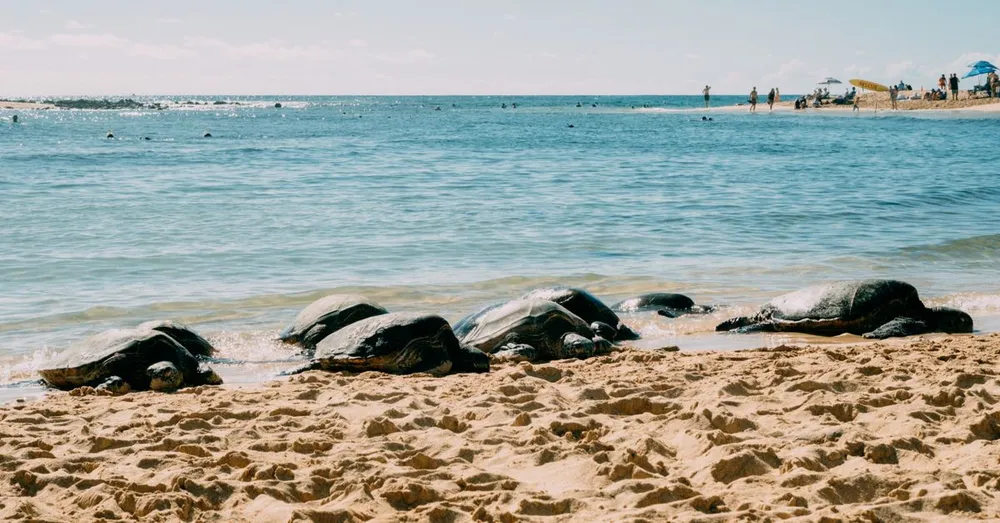
Spotting turtles in Guadeloupe isn’t a matter of luck: on certain seagrass beds along the Côte-sous-le-Vent, green turtles graze just a few metres from shore almost every day of the year. After years of outings to Malendure, I can count on one hand the times I didn’t come across a single one. But this privilege comes with responsibilities: sea turtles are strictly protected species in France, and a few clumsy moves are enough to drive them away from a site, sometimes for good. Here’s where to see them, when, at what price, and above all how to do it right.
Why Guadeloupe is a sanctuary for sea turtles
The Guadeloupe archipelago is home to five species of sea turtles, three of which regularly frequent its coasts:
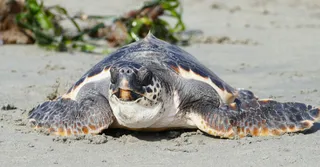
- The green turtle (Chelonia mydas): the easiest to observe. A herbivore, it grazes on the seagrass beds reachable with mask, snorkel and fins.
- The hawksbill turtle (Eretmochelys imbricata): recognisable by its hooked beak, it feeds on sponges in coral areas.
- The leatherback turtle (Dermochelys coriacea): the giant (up to 400 kg), which comes ashore only to lay its eggs, mainly on the beaches of Grande-Terre and Marie-Galante.
All are protected by the ministerial decree of 14 October 2005: it is forbidden to touch them, chase them, feed them or disturb their nesting. Offences carry penalties of up to €150,000 in fines and three years in prison. This strict framework explains why populations have been recovering for thirty years — and why your chances of spotting one today are excellent.
Malendure: the best spot to watch turtles in Guadeloupe
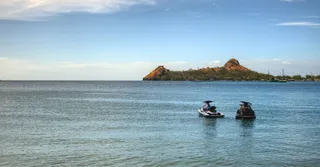
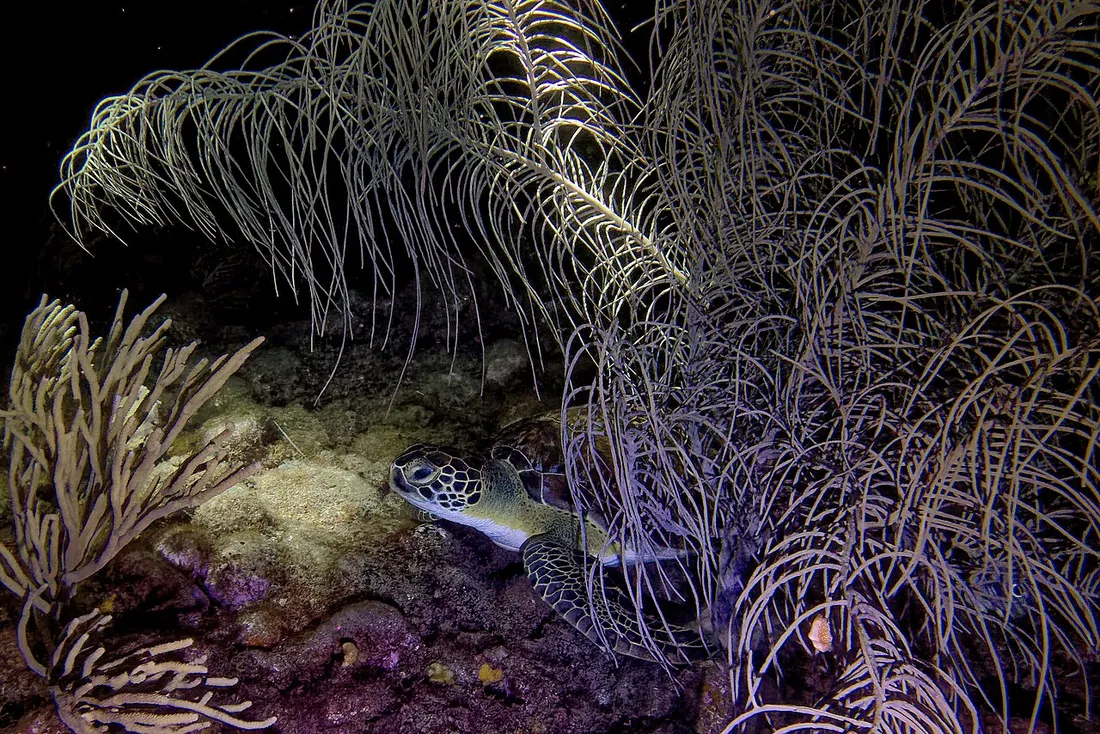
Malendure beach, in Bouillante on the west coast of Basse-Terre, facing the Îlets Pigeon and the Cousteau Reserve, is the number-one spot in the archipelago. The reason is simple: a vast seagrass bed stretches 20-50 metres from the black sand, in 2 to 5 metres of water, and green turtles graze there morning and afternoon.
How to get organised on site
- From the beach, on your own: put on mask, snorkel and fins straight from the southern part of the beach and swim gently over the seagrass. Expect 15 to 30 minutes before your first encounter, often less.
- Best window: between 8 and 10 a.m., when the sea is glassy and the beach still quiet. The water ranges between 27 and 29 °C all year round.
- Gear rental: about €10 to €15 a day for a mask-snorkel-fins kit from the clubs along the seafront.
- Glass-bottom kayak: about €25 to €30 for two hours, ideal with children who can’t yet swim for long.
- Guided snorkelling trip to the Îlets Pigeon: €25 to €40 per person, with a guide who knows the grazing areas and enforces the distances.
For divers, an introductory dive in the Cousteau Reserve costs between €60 and €75; hawksbill turtles regularly pass through among the coral heads.
Turtle nesting at Malendure and along the Côte-sous-le-Vent
It’s often overlooked: turtle nesting at Malendure and on the neighbouring beaches of Bouillante really does happen, especially for hawksbill turtles between June and September. If you’re staying nearby, you’ll sometimes see “tractor” tracks in the sand at dawn — the signature of a female that came up to lay her eggs during the night. Never dig, never plant a parasol over a suspected nest, and report any sighting to the Réseau Tortues Marines Guadeloupe.
Allow about 45 minutes’ drive (35 km) from Pointe-à-Pitre to reach Malendure. Our complete guide to Guadeloupe details the routes from each town.
Raisins Clairs beach: turtles on the Grande-Terre side
If you’re staying between Sainte-Anne and Saint-François, there’s no need to cross the butterfly: Raisins Clairs beach, also home to green turtles, is the ideal alternative on the Grande-Terre side. In Saint-François, about 35 minutes from Pôle Caraïbes airport, this white-sand beach shelters a gently sloping seagrass bed where several resident green turtles feed.
A few pointers to put all the odds on your side:
- Zone to aim for: the left-hand part of the beach (facing the sea), above the dark seagrass patches, in 1.5 to 3 metres of water.
- Ideal time: early morning on weekdays; on weekends, family crowds make the turtles more elusive.
- Conditions: generally calm sea as it is sheltered by the reef, perfect for a first snorkel with children from age 6-7.
- Bonus: the water here is turquoise and visibility is often over 10 metres in the dry season (December to April).
Other sites are worth the detour if you’re exploring the archipelago: the Petite-Terre nature reserve (full-day catamaran trip, €90 to €120 from Saint-François, turtles almost guaranteed), the Pain de Sucre cove in Les Saintes, and Grande Anse beach in Deshaies, a prime nesting site for leatherback turtles.
Snorkelling with turtles: the ethical rules to know
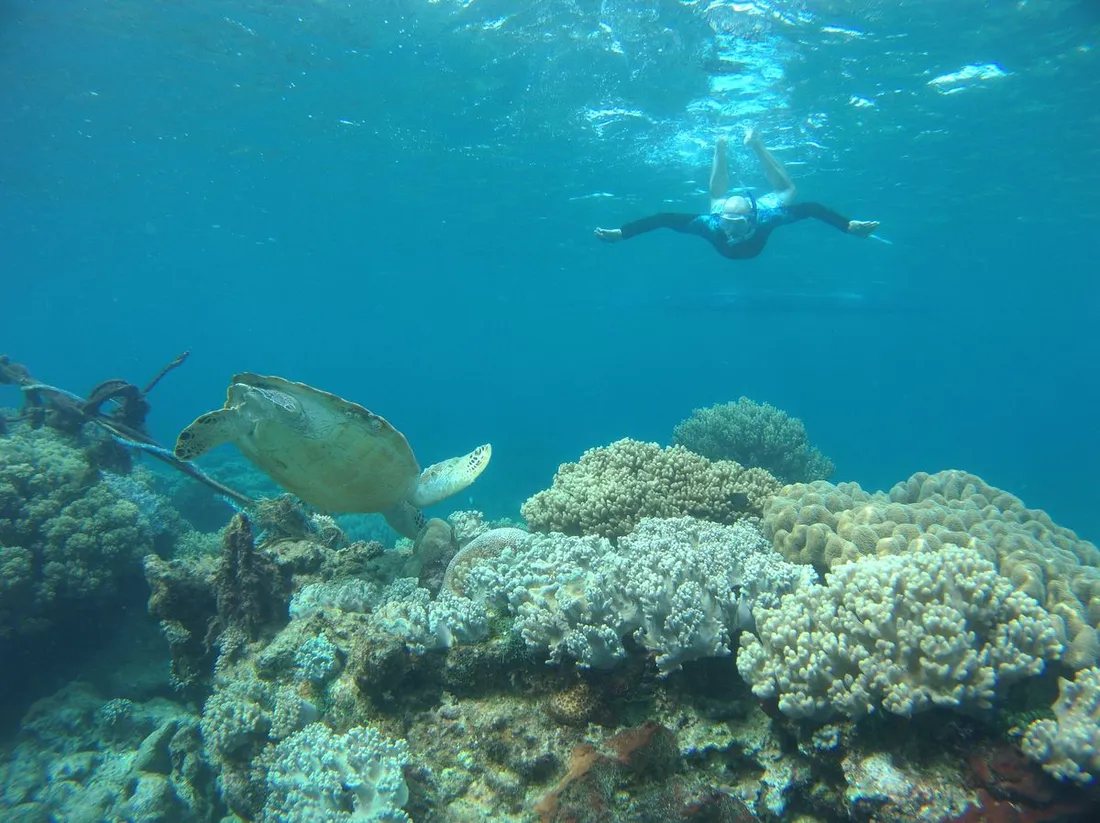
Snorkelling with turtles is a magical activity provided you follow the approach charter issued by the Réseau Tortues Marines Guadeloupe. These rules aren’t comfort recommendations: they determine whether the turtles stay on the sites.
- Keep at least 3 to 5 metres of distance, and more if the animal is rising to breathe: never place yourself between the turtle and the surface.
- Never touch a turtle, even “gently”: it’s a criminal offence, and contact transmits bacteria and stress.
- Don’t chase it: if it moves away, let it go. A turtle grazing peacefully is the sign you’re doing things right.
- No flash, no feeding: feeding changes its behaviour and puts it in danger.
- Sunscreen: prefer a UV-protective shirt; chemical filters damage the seagrass beds green turtles depend on.
- Limit the group: with more than 4-5 people around the same animal, step back and wait your turn.
Nesting calendar: the season not to disturb
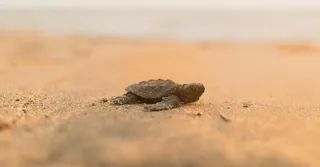
The nesting season runs broadly from March to October, peaking from June to September. Hatchlings emerge about 60 days later, through to December. If you’re staying near a nesting beach (Grande Anse in Deshaies, the beaches of Le Moule, Marie-Galante):
- Never light up the beach with a lamp or phone at night: light disorients females and newborns.
- Stay at least 10 metres from a nesting turtle, behind her, in silence.
- Never pick up a baby turtle to “help” it: it must reach the sea on its own.
- Instead, join an outing led by a local association: some offer free or pay-what-you-want nesting vigils in high season.
Where to stay to watch turtles stress-free?
The secret to a great sighting is proximity: being in the water at 8 a.m. changes everything. Aim for Bouillante or Deshaies on the Basse-Terre side, Saint-François or Sainte-Anne on the Grande-Terre side.
At Hostel Toucan, we manage holiday rentals in Guadeloupe that are hand-picked and looked after on the ground, with what makes the difference for this kind of nature trip: direct booking with no platform fees, free cancellation up to 7 days before arrival, and WhatsApp support 7 days a week — handy for asking at 7 a.m. whether the sea is calm at Malendure; we’ll get back to you. And if you own a property in the archipelago, our concierge service for owners takes care of everything, from guests to laundry.
FAQ
What’s the best time to watch turtles in Guadeloupe?
Green turtles are visible all year round on the seagrass beds of Malendure and Raisins Clairs. The dry season (December to April) offers the best underwater visibility. To witness a nesting, aim for June to September, preferably during a supervised vigil.
Can you swim with turtles without paying for an excursion?
Yes. At Malendure as at Raisins Clairs, the seagrass bed is reachable by swimming from the beach, free of charge. Only the snorkelling gear will cost you €10 to €15 to rent, or nothing if you bring your own.
What distance must you keep from a sea turtle?
Keep at least 3 to 5 metres while snorkelling, never blocking its rise to the surface, and 10 metres around a nesting female. Physical contact is forbidden by law and liable to heavy penalties.
Can children watch turtles easily?
Yes, Raisins Clairs beach is ideal from age 6-7 thanks to its shallow water and calm sea. At Malendure, the glass-bottom kayak (about €25-30 for 2 hours) lets the youngest observe without swimming.