Every owner I work with on the island knows the same chart: a calendar packed from December to April, then a deep trough from June to November. During Lent, demand is so strong you could rent the same property three times over; during the wet season, the phone goes silent while the bills keep running. Yet improving your Airbnb occupancy rate in Martinique during these slow months is no pipe dream: it’s actually where the real profitability of a rental is decided, because that’s when the competition gives up. As a resident and short-term rental manager in the French overseas territories (DROM), here is the method we apply to turn the low season into income rather than a money pit.
Understanding Martinique’s real seasonality
Before working on occupancy, you have to stop thinking like you would in mainland France. Martinique, a French overseas region on the euro, lives through two tourist seasons:
- The dry season, Lent, from December to April: the high season. Dry trade winds, carnival in February-March, mainland French school holidays that fill Aimé Césaire airport (Le Lamentin). Prices climb and occupancy nears 90% in prime locations.
- The wet season, from June to November: the rainy, cyclonic season. More rain, sargassum washing up on the Atlantic coast, mainland demand collapsing: the famous low season for rentals in Martinique.
The classic mistake is to passively endure this calendar. Yet the wet season is no desert: it has its own clientele, its own events and its own pricing logic. Filling up during summer and the wet season in the overseas territories rests on a change of target. For the month-by-month climate context, see our complete Martinique guide.
On the numbers, a rental left to fend for itself often runs around 45 to 55% over the year (wet season near 25-35%), whereas an actively managed property reaches 65 to 75% year-round by lifting the wet season to 50-60%. On a villa rented at €150 a night, moving from 30% to 55% occupancy over the six slow months means 45 additional nights, or nearly €6,750 in revenue that simply didn’t exist before. That’s the whole stake.
Lever #1: capturing local and regional guests
This is the least exploited secret among absentee owners. While mainland demand sleeps, Martinican and Caribbean guests travel within their own island — the main engine of the wet season, through three profiles:
- The nearby weekend: a Fort-de-France couple who want a change of scenery for two nights in Le Diamant, a family renting a villa with a pool for a birthday. Short bookings (2-3 nights), often booked Thursday for Saturday.
- Bank holidays and local festivals: Easter and Pentecost (the matoutou crabe outing on the southern beaches), patron saint festivals and long weekends create sudden demand spikes.
- Regional guests: visitors from Guadeloupe, French Guiana or mainland France coming for a family event, who don’t pick their dates based on the weather.
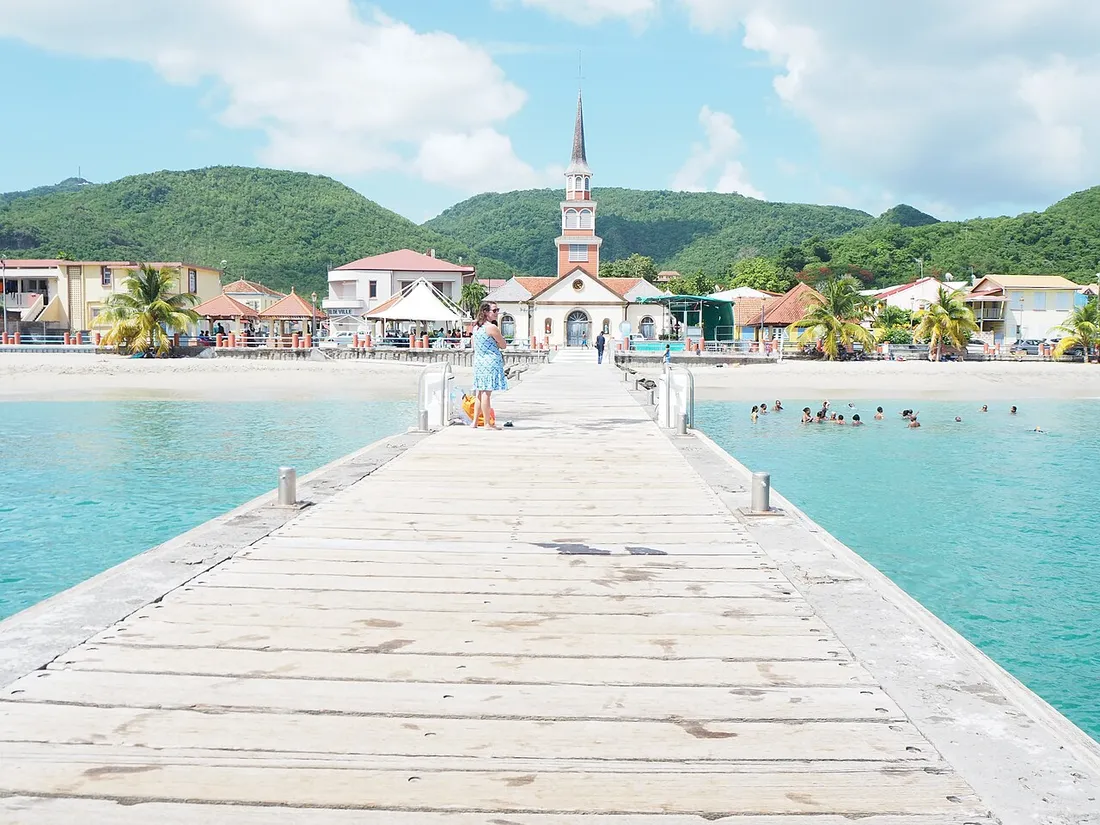
To win over this target: accept short stays (2 nights, even if you tighten the minimum during Lent); stay available on weekends, because locals book via WhatsApp (country code +596) and expect a reply within the hour; highlight family uses (barbecue, covered terrace) and proximity to a sheltered Caribbean-side beach like Anse Dufour or Grande Anse d’Arlet, less exposed to sargassum than the Atlantic.
Lever #2: a smart sliding-scale pricing policy
Lowering your prices during the wet season is not a shameful inevitability: it’s a strategy, provided you go about it methodically. A wet-season rate typically sits 20 to 35% below the Lent price: if your villa goes for €150 a night in high season, aim for €100 to €120 from June to November. The goal isn’t to dump prices, but to remain the best option against competitors who keep high-season pricing on an empty calendar.
Above all, reward long stays with sliding-scale rates: -10 to -15% beyond 7 nights, -25 to -40% beyond 28 nights. The wet season indeed attracts two golden profiles: remote workers fleeing the European winter for a month or two (fiber Wi-Fi, a desk corner and good mobile coverage — mainland roaming included — become your selling points), and professional assignments of 3 to 6 weeks. A one-month stay at €100 a night with a 30% discount is €2,100 secured and zero cleaning turnover — often more profitable than a rental “full” of exhausting short stays.
Finally, rather than a permanently low price, keep your rate and open last-minute deals (the last 5-7 days before an open date): you fill the gaps without conditioning the market to rock-bottom prices or penalizing those who book early.
Lever #3: riding the events calendar
The wet season is punctuated by events that create localized demand spikes. Knowing them means knowing when to raise your prices instead of lowering them.
- The Tour des Yoles Rondes (late July-early August): the island’s major nautical event. The Atlantic-side stage towns — Le Robert, Le François, La Trinité — and the bay of Fort-de-France see demand explode for a week. A well-located rental can show fully booked at high-season rates in the middle of the wet season.
- Patron saint festivals and the Tour des Communes: every town has its summer festival, drawing families and regional visitors.
- All Saints’ holidays: a small uptick in October-November, just before Lent returns.
At the other extreme, the February-March carnival is the peak of the high season: anticipate bookings 3 to 4 months ahead and apply your highest rates around Fort-de-France. Well managed, its windfall finances the slow months that follow.
Finally, turn the weather into an argument rather than an obstacle: the wet season is still a far cry from winter (28-30°C, warm sea, brief showers). A well-written listing reassures by reminding guests that the Caribbean coast (Les Anses-d’Arlet, Le Diamant) is better protected from sargassum, and that the Route des Rhums, the Jardin de Balata or the distilleries (Clément, Depaz) can be visited in any weather.
Lever #4: responsiveness, on-the-ground presence and direct booking
All the previous levers collapse if no one picks up. Wet-season guests — local, last-minute — instantly punish slow listings, and with a time difference of -5h in winter and -6h in summer versus Paris, an absentee owner misses the evening requests from Martinique. Three reflexes are essential: reply in under an hour, weekends included, because delay weighs on platform rankings; manage a multi-target calendar (short minimum stay in the wet season, long during Lent, dates blocked for events); take care of reviews, because a wet-season traveler well received feeds your high-season bookings. The low season builds the high season.
The final lever, often neglected, is to break free from platform dependence: a loyal local clientele has no reason to pay OTA commissions. At Hostel Toucan, we develop direct booking with no platform fees, with free cancellation up to 7 days before arrival and WhatsApp support 7 days a week — meaning a higher net margin and a pool of loyal wet-season bookings. This is the work a local concierge service absorbs daily: our approach is detailed on the owners page, and you can compare the positioning of properties similar to yours among our Martinique rentals.
Optimizing your off-season occupancy rate in Martinique isn’t about waiting for the tourists to return: it’s about changing your target, adjusting your prices, leveraging the events calendar and staying responsive when others drop out.
FAQ
What occupancy rate can you hope for during the wet season in Martinique?
An actively managed rental, with adapted rates and targeted local guests, commonly reaches 50 to 60% occupancy between June and November, versus 25 to 35% with no strategy. Over the year, the gap amounts to several thousand euros of revenue on a mid-range villa.
Do you really have to lower your prices during the low season?
Yes, but methodically. A wet-season rate generally sits 20 to 35% below the Lent price: the goal is to remain the best offer against competitors with empty calendars, not to dump prices. Pair this drop with sliding-scale weekly and monthly discounts to capture long stays (remote workers, assignments), far more profitable than isolated nights.
Which events fill a rental during the low season in Martinique?
The Tour des Yoles Rondes in late July-early August creates a major spike on the Atlantic side (Le Robert, Le François, La Trinité). Add Easter and Pentecost with the matoutou crabe, the summer patron saint festivals and an uptick at All Saints’. Blocking and marking up your dates around these moments strongly lifts wet-season revenue.
How do you attract Martinican and regional guests?
Accept short stays (2 nights), reply very quickly including on weekends and in the evening, and highlight family uses: pool, barbecue, covered terrace, sheltered Caribbean-side beach. Locals often book at the last minute via WhatsApp and favor responsive properties. Direct booking builds loyalty with this nearby clientele year after year.