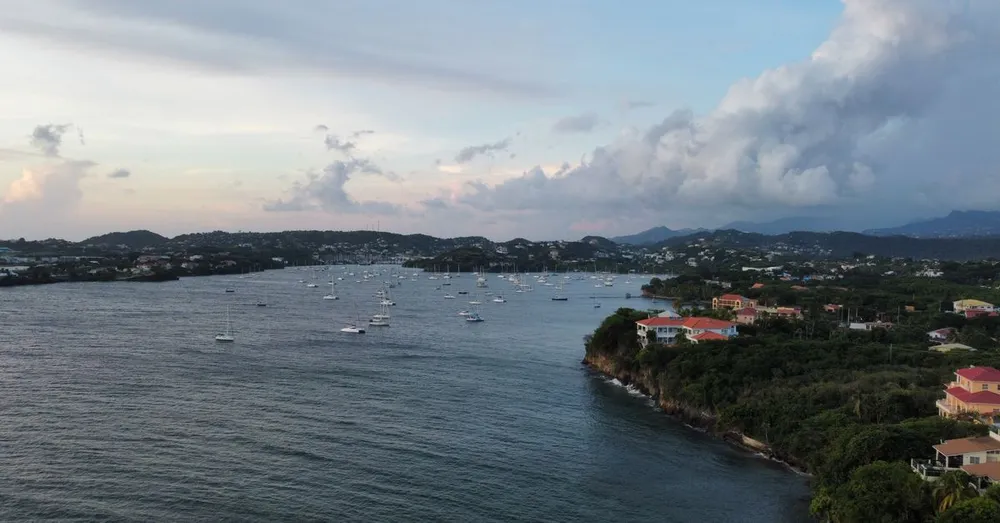
People come to Martinique for the beaches and leave marked by its trails. A Mount Pelée hike at daybreak, a crossing of the Trace des Caps facing the trade winds, the dizzying passage of the Canal de Beauregard: these hours on foot often turn out to be the most memorable. But in the tropics, improvising comes at a price. As island residents and regulars on its great trails, every season we watch under-equipped travellers turn back, or even trigger a rescue. This guide pulls together the health and safety checklist for setting out with confidence on the island’s most demanding hikes, along with a detailed route description of the volcano’s most popular trail, the Aileron.
Assessing the real difficulty of a hike in Martinique
The first mistake is to judge a trail by its distance. Here, humidity, sharp elevation gain and heat make the difficulty of a Martinique hike, far more than the kilometres: a 7 km tropical walk drains you like a 15 km one back in mainland France.
To put the three great classics in perspective:
- Mount Pelée (Aileron trail): roughly 580 m of elevation gain, 4 to 5 hours round trip, slippery volcanic terrain. Moderate to strenuous level, accessible to a fit walker.
- Trace des Caps: little elevation gain but 12 to 22 km fully exposed to the sun, with no shade or water. The difficulty is thermal, not technical.
- Canal de Beauregard (Fonds-Saint-Denis): 5 easy, flat kilometres, but alongside an irrigation channel with a drop of several metres on one side. Not recommended for those prone to vertigo or for young children.
Before choosing, be honest about your fitness. Jet lag (Martinique is 5 hours behind Paris in winter, 6 hours in summer) and a first day of travel take their toll: never schedule Pelée the day after landing at Aimé Césaire airport (Le Lamentin).
Why choose the Aileron trail for Pelée
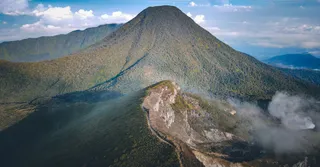
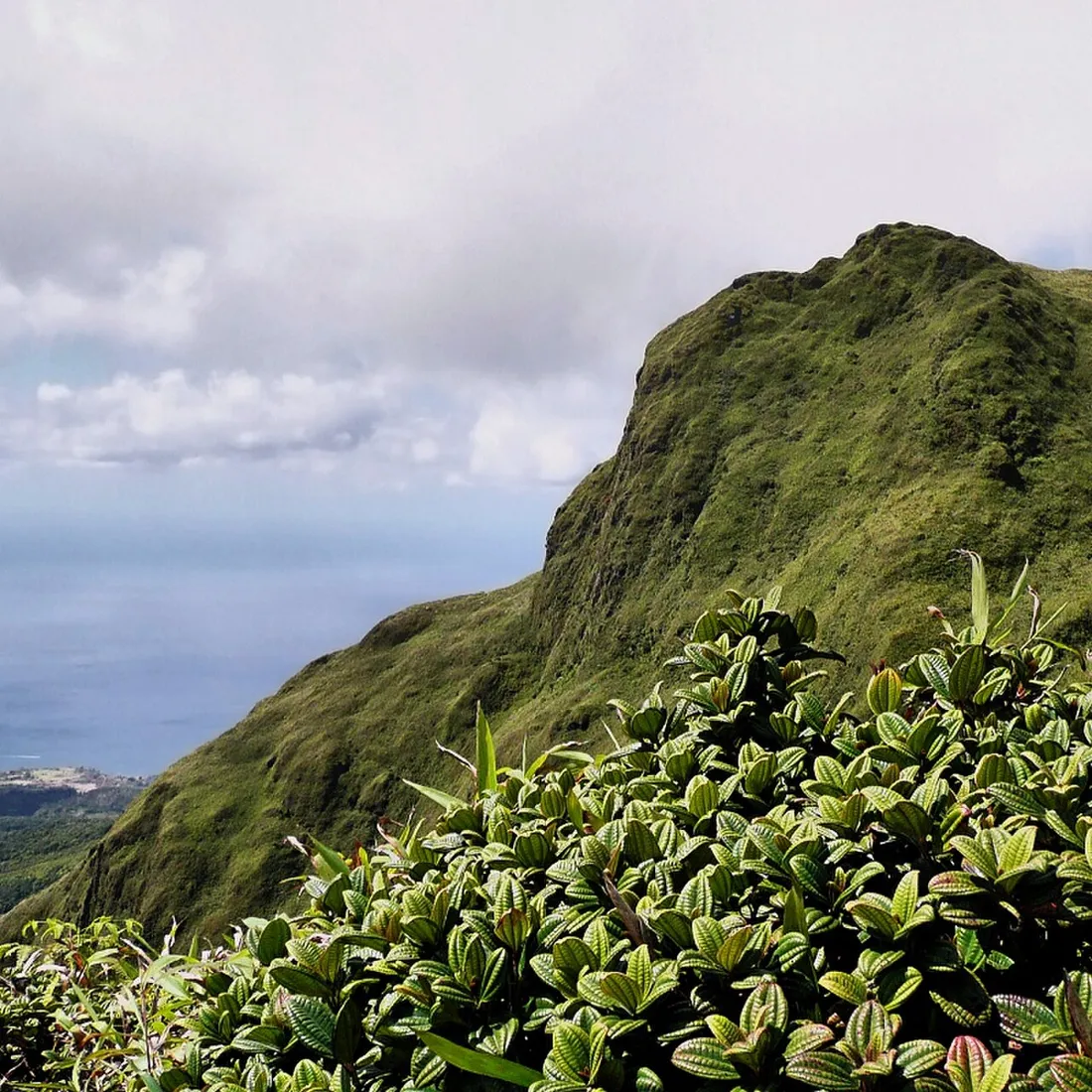
Mount Pelée peaks at 1,397 metres and dominates the entire north of the island. Three main routes lead to it: Grand Rivière (the longest and wildest), Morne Macouba, and the Aileron. The latter starts from the Aileron refuge car park, in the town of L’Ajoupa-Bouillon, at around 815 metres of altitude. It is the highest starting point, which reduces the elevation gain and the walking time: the best effort-to-reward ratio.
In concrete terms:
- Elevation gain: about 580 metres to the summit (Le Chinois).
- Round-trip distance: 7 to 8 km depending on the variant chosen.
- Duration: 4 to 5 hours round trip for an average walker, breaks included.
- Difficulty: moderate to strenuous, with improved sections (wooden steps, handrails).
The trail is well marked by the Martinique Regional Nature Park. You won’t get lost, but the volcanic terrain—slippery and exposed—calls for caution.
The Aileron route step by step
From the Aileron car park to the first refuge
The start is from the car park at the end of the Mount Pelée road (D39), reachable by car from the village of L’Ajoupa-Bouillon in about twenty minutes. Allow roughly 1 hr 15 of driving from Fort-de-France via the N3 (route de la Trace), a winding but magnificent journey through the rainforest.
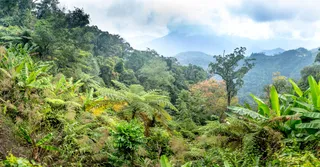
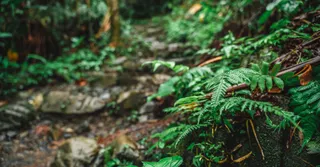
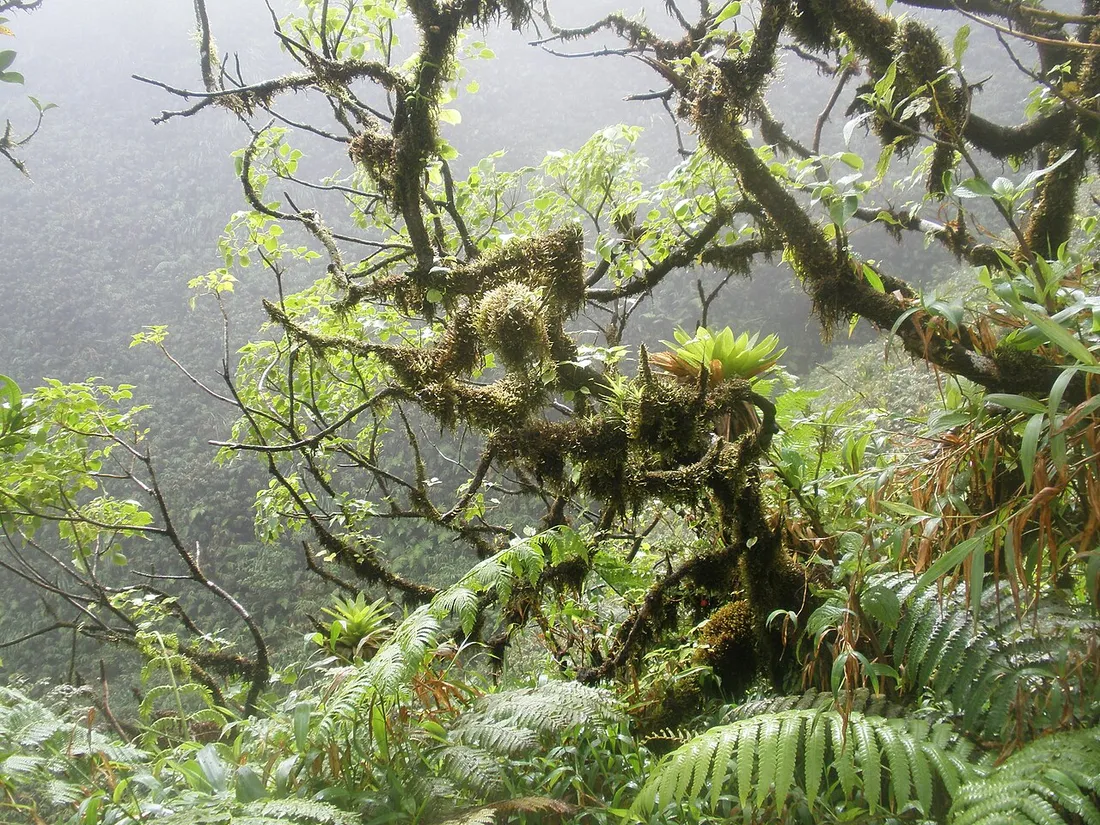
The first section climbs steadily through low vegetation and tree ferns. In 30 to 40 minutes, you reach the first refuge, a simple sheet-metal shelter where many take a first break. The panorama already opens onto the Caribbean coast and, on a clear day, onto the ruins of Saint-Pierre down below.
Crossing the plateau and the climb to the second refuge
Beyond the first refuge, the trail crosses a windier plateau before tackling a steeper climb. This is where the terrain becomes typically volcanic: scoria, compacted ash, black rock. The second refuge marks two-thirds of the route. Most hikers who are in a hurry or short on training stop at this point, already splendid.
The final ascent to Le Chinois
The last part is the most demanding. You climb into the caldera, skirt the 1902 dome (responsible for the eruption that destroyed Saint-Pierre) and reach the summit of Le Chinois, the high point. This section can be drowned in clouds: don’t be disappointed if the summit veils over. The reward, when the sky clears, is a 360° view over all of Martinique, from the Caravelle peninsula to the Pitons du Carbet.
Mountain weather, the number-one factor
This is the point we hammer home on every stay: Mount Pelée makes its own weather. By the sea it’s 30 °C and full sun; at the summit, at 1,397 m, you can find yourself in thick fog at 13 °C, in a wind fierce enough to knock you over. Understanding this mechanism changes everything for a successful Pelée ascent.
A few reliable markers, valid too for the Pitons du Carbet:
- Humidity rises from the valleys: fog sets in almost systematically around 10–11 a.m. on the northern peaks.
- Showers are brief but violent; they turn the volcanic scoria very slippery within minutes.
- The volcano is monitored around the clock. The yellow alert level does not ban hiking, but the day before, check the forecast dedicated to the volcano and the alert status of the Volcanological Observatory.
On the coast (Trace des Caps, Savane des Pétrifications), the problem is reversed: no fog, but a blazing sun reflected off the pale rock, with heatstroke as the real danger.
The favourable season: aim for Lent
The right calendar does half the work. The dry season, the Carême (Lent), from December to April, offers clear mornings, firm trails and a smoother sea for combining hiking and swimming: the window we recommend without hesitation for the great trails.
Conversely, the wet season (June to November) waterlogs the ground: the clayey sections of Pelée become ice rinks. This period also covers the hurricane season: keep an eye on the alert bulletins and stay flexible. Note finally that carnival (February–March) falls in the heart of the dry season: ideal for hiking, but accommodation goes fast, so plan ahead.
The timing rule: set out early, always
On a Mount Pelée hike as on the Trace des Caps, the secret comes down to one word: the cool of the morning. Here is the window we apply systematically.
- Set out between 6 and 7 a.m. You climb or walk before the heat and reach the high points before the clouds.
- Aim for the summit before 9:30–10 a.m. Beyond that, the risk of cloud cover at the summit soars, and in the South it’s a furnace.
- Be back before 2–3 p.m. Afternoon showers are frequent and night falls quickly and early in the tropics, around 6 p.m. all year round.
Set your alarms to local time (dialling code +596), not to your watch still on Paris time: a classic mistake that makes you miss the morning window.
The gear and hydration that change everything
Too many walkers approach these trails like a beach stroll. Here is our list, refined over the seasons, which covers both the volcano and the coast.
- High-cut hiking boots with good grip: trainers slip on wet scoria and on the South’s cutting ground.
- Waterproof windbreaker and a light warm layer (fleece) for Pelée (12–14 °C possible at the summit), even in glorious weather lower down.
- Water, the vital point: 1.5 L minimum per person for a half-day, 2.5 to 3 L for the full crossing of the Trace des Caps. No drinking water along these routes.
- Full sun protection: hat, sunglasses, SPF 50 cream, UV-protection t-shirt for the open sections.
- Charged phone, energy snacks, poles welcome on the descent, and an offline map (coverage is patchy at altitude and in the Grand Sud).
Avoid cotton, which holds moisture; favour technical fabrics that dry fast. And beware of the manchineel trees along the beach on the Trace des Caps: never shelter under this toxic tree, especially in the rain.
Safety: prevent rather than rescue
On these remote trails, the margin for error is slim. Our field habits:
- Never set out alone; failing that, tell your host your route and your return time.
- Turn back without a second thought if the summit is socked in: the view isn’t worth a fall on wet rock.
- Watch for signs of heatstroke (headache, nausea, stopping of sweating) on the coast, and stop at once.
- In an emergency, dial 112; knowing your nearest landmark (refuge, cape, marker) speeds up the rescue.
A local guide remains an excellent investment if you’re new to tropical hiking: reading the sky, an adapted pace and stories about the volcano, listed as a UNESCO World Heritage Site since 2023.
Combining Pelée with the rest of the North
Once back down, make the most of being in the North. Less than 30 minutes away, the ruins of Saint-Pierre (Cyparis’s dungeon, the theatre, listed with the volcano as UNESCO heritage) tell the story of the 1902 disaster. The Depaz distillery, at the foot of the volcano, offers a tasting of AOC agricultural rum in a superb setting. Further south, the Jardin de Balata, on the route de la Trace, is worth a stop on the way back.
Where to stay to prepare your trails well
Logistics are part of the preparation. To tackle Pelée at 6 a.m. without swallowing 1 hr 15 of road, it’s better to sleep in the North (Morne-Rouge, L’Ajoupa-Bouillon, Saint-Pierre), 20–30 minutes from the Aileron car park. For the Trace des Caps, set down your bags in the Grand Sud, between Sainte-Anne and Le Marin, less than 30 minutes from the trailheads. In any case, a car is strongly advised: the trails are poorly served by public transport, so arrange your rental as soon as you arrive at Aimé Césaire airport (Le Lamentin).
At Hostel Toucan, we select holiday rentals designed for active travellers, as close as possible to the trails. Booking directly is concrete:
- Direct booking with no platform fees: you pay the fair price, with no commission.
- Free cancellation up to 7 days before arrival, valuable when mountain weather makes you postpone a climb.
- WhatsApp assistance 7 days a week, in French as in Creole, for a weather update or trail advice in real time.
Browse our accommodation on Martinique rentals and round out the rest of your trip with our complete Martinique guide. Do you own a property near the trails and want to entrust it to a local concierge service? Our dedicated offer for owners awaits you.
In summary
Hiking in Martinique is prepared like mid-mountain walking, with the tropics on top: you gauge your fitness, aim for Lent, set out at dawn, load up on water and sun protection, and turn back without regret if the sky turns. The Aileron trail is the ideal gateway to the summit of Pelée, and together with the Trace des Caps and the Canal de Beauregard, it offers some of the finest hours of walking in the Caribbean. Fair winds on the trails.
FAQ
What level do you need to climb Mount Pelée?
A good occasional-walker level is enough for the Aileron trail: about 580 m of elevation gain and 4 to 5 hours round trip. The volcanic terrain is slippery and wind-exposed, but well marked and fitted with wooden steps on the steep passages. Just avoid scheduling this hike the day after you arrive, to give yourself time to recover from the flight and the jet lag.
How do you reach the trailhead from Fort-de-France?
Allow about 1 hr 15 by car via the N3 (route de la Trace) to L’Ajoupa-Bouillon, then 20 minutes on the D39 to the Aileron refuge car park. A car is essential, as public transport is almost non-existent in the North.
What is the best season to hike in Martinique?
The Carême, the dry season from December to April, offers the best conditions: clear mornings, firm trails and more bearable heat. In the wet season (June to November), the ground is soaked and slippery, and the hurricane season means checking the alert bulletins before setting out. Whatever the period, set out early (6–7 a.m.) to reach the summit before the clouds settle in.
How much water should you bring for a great Martinique trail?
Plan at least 1.5 litres per person for a half-day and 2.5 to 3 litres for a full crossing like the Trace des Caps, as there is no drinking water along these routes. Heatstroke, encouraged by the sun and humidity, is the main danger of the South’s exposed hikes.
Is the Trace des Caps easier than Mount Pelée?
Technically, yes: little elevation gain and no dizzying passages, versus a sustained volcanic climb on Pelée. But the Trace des Caps is fully exposed to the sun and without shade, which makes it gruelling as soon as it’s hot. In both cases, set out early, hydrate thoroughly and protect yourself from the sun.