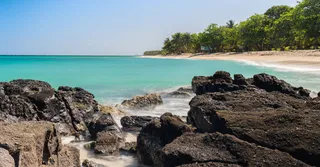
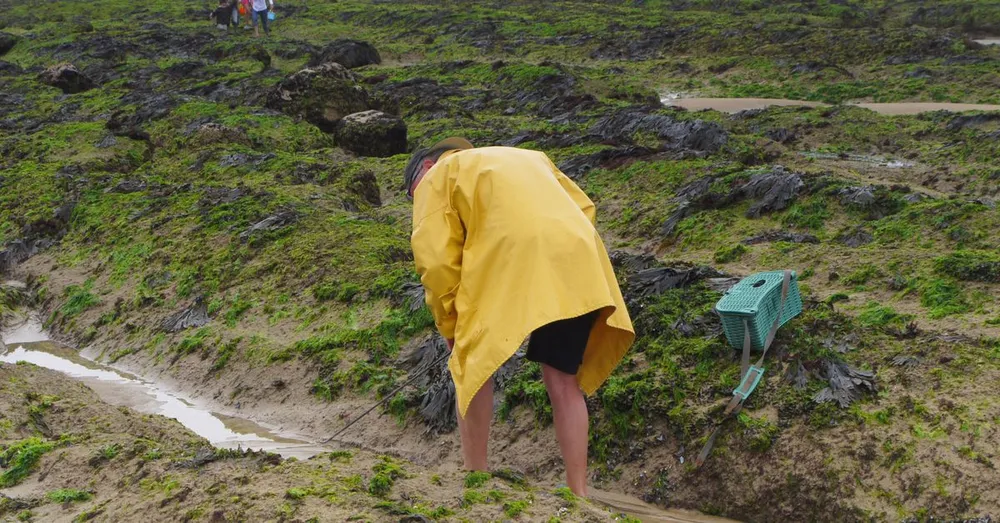
At low tide, the rocky reef flat of the Atlantic coast is exposed and the temptation is strong: a bucket, water shoes, and off you go to “forage on foot” as in Brittany. Except that here, in the tropics, the matter is far more regulated than you might imagine. The conch (lambi) is strictly regulated, the white sea urchin can only be gathered a few weeks a year, and certain stretches of coastline are off-limits to harvesting. As a concierge service based on the island, every season we see travellers risk a fine for failing to check the rules. Here, jargon-free, is what the regulations on shore foraging in Martinique really say: protected species, legal sizes, closed seasons and DOM prefectural orders.
Shore foraging in Martinique: a tolerated but tightly controlled pastime
Let’s clear up a misconception first. Recreational shore foraging (by hand, without a boat, at low tide) is permitted in Martinique, but it follows a dense framework specific to the DOM. As Martinique is a French overseas department and region, it is prefectural orders (the prefecture and the Direction de la mer) that set the rules locally, on top of national and European law. These texts change from one year to the next. The basic principles:
- It is reserved for your family consumption; resale is prohibited (that falls under licensed professional fishing).
- Each species has its own rule: minimum size, open season, sometimes a daily quota.
- Some fully protected species cannot be gathered at all.
- Scuba tanks are banned: you forage on foot or while free-diving, not in scuba gear.
The savvy local’s reflex: check the order in force with the Direction de la mer before the season.
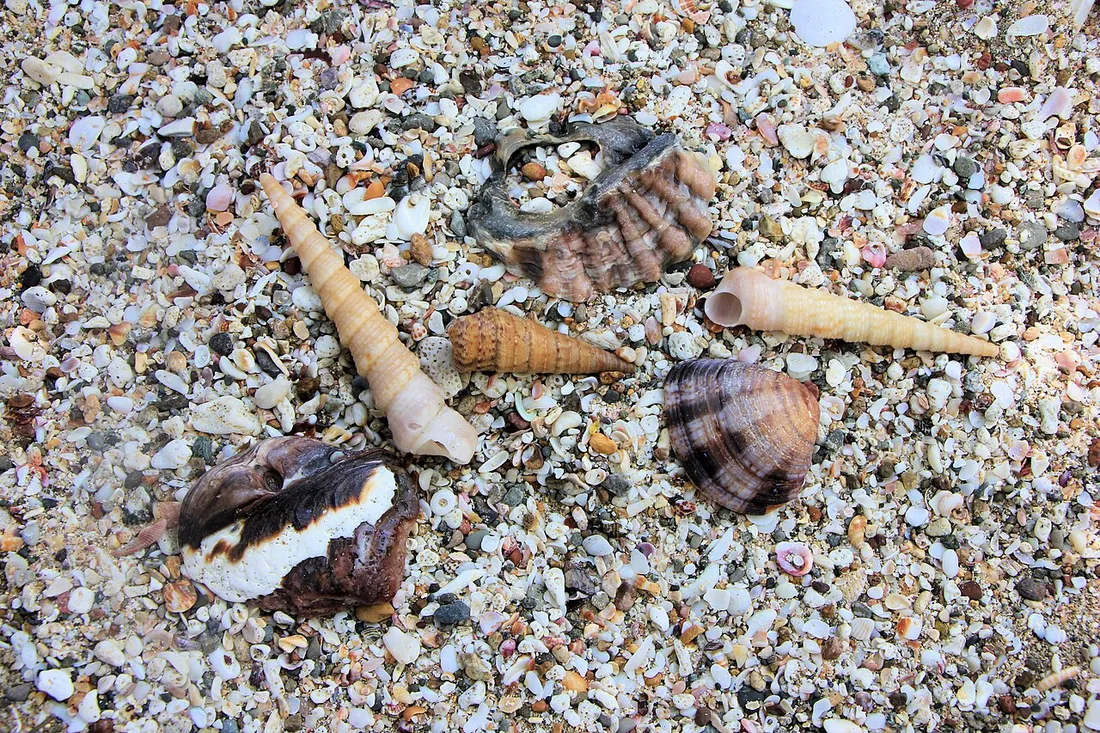
The conch (lambi): the flagship species, the most closely watched
The lambi (Lobatus gigas, the queen conch) is that large pink mother-of-pearl shell whose flesh stars in West Indian fricassees and court-bouillons. It is also a species overexploited throughout the Caribbean, listed under CITES (regulated international trade). For the recreational forager:
- Its harvest is heavily restricted, or even closed depending on the orders; it has been suspended for long stretches in Martinique to let stocks recover.
- When it is permitted, only an adult conch (a shell with a well-flared, thickened “lip”) may be gathered; young ones with a thin, pointed shell are off-limits.
- The recreational quota is strictly capped (a few individuals per outing depending on the texts), and scuba diving is prohibited.
Common-sense advice: an empty shell found on the beach can make a souvenir, but never take a live conch. The criminal risk is real and the species is fragile.
White sea urchin: an ultra-short season to respect
The second star of West Indian shore foraging: the white sea urchin in Martinique (the “chadron”), whose orange roe is a prized delicacy. The strict rule baffles visitors.
- It can only be harvested during a very short open season, set each year by order, traditionally at year’s end (December–January), sometimes for only a few days.
- Outside that window, all gathering is forbidden, even a single urchin.
- A minimum size (test diameter, excluding spines) and a daily quota apply; some years the season is fully closed.
In other words: barring a lucky stroke of the calendar, a passing traveller almost never has the right to gather sea urchins. To taste them, you’re better off buying from a professional fisher or enjoying them at a restaurant during the open season.
Minimum sizes and common species: the field memo
The coastline offers other catches. The sizes below are indicative and should be verified before each season; the spirit doesn’t change: release anything too small.
- Burgos (“burgaud”): a large periwinkle of the Atlantic rocks, minimum size of a few centimetres.
- Bivalves (local clams and venus clams): harvested in sandy beds, with a minimum size to respect; mind the sanitary quality of the water.
- Land crabs: these fall under mangrove hunting around Easter (the matoutou), with their own rules.
- Spiny lobster: specific season and size; a “berried” lobster (carrying eggs) is never to be taken.
A few cross-cutting bans to remember:
- No taking of coral or live fixed species (giant clams, sea fans): strictly protected.
- No harvesting in reserves and protected areas (Caravelle, classified islets, the Conservatoire du littoral).
- No night fishing with a lamp when the order forbids it.
Chlordecone and banned zones: the health constraint not to overlook
A constraint unique to Martinique eludes mainland foragers: chlordecone. This pesticide, once used in banana plantations, has lastingly contaminated certain soils and coastal areas. Prefectural orders therefore ban fishing (shore foraging included) in several coastal sectors, especially near the mouths of some rivers in the North and along the Atlantic coast.
What to keep in mind, without panic:
- These banned zones are mapped: gathering shellfish and bivalves there is forbidden and inadvisable for your health.
- Filter-feeding bivalves (clams) concentrate contaminants more heavily: avoid them as a priority.
- Swimming is not affected: it is the consumption of seafood that poses the problem.
Before foraging to eat, check the map of banned zones and ask for advice locally.
Foraging responsibly: a local’s good habits
Beyond the law, there is a coastal ethic. Done badly, shore foraging damages an already fragile environment. The habits that make a difference:
- Put every overturned stone back in its original position: the micro-fauna living underneath dies upside down.
- Take only what you’ll eat the same day, without exceeding the quotas.
- Respect the sizes and release individuals that are too small where you found them.
- Walk in the sandy channels rather than on seagrass beds and coral patches.
- Equip yourself: closed water shoes, gloves, a hat, water, and a bag for your rubbish.
- Beware of the manchineel, a toxic tree whose sap severely irritates the skin.
To set this activity within a broader discovery of the island, browse our complete guide to Martinique.
Preparing your shore-foraging outing well with Hostel Toucan
The rules on coastal fishing in the DOM vary by species, season and town: hard to keep track of in two weeks. That’s where a local anchor makes the difference. At Hostel Toucan, a concierge and holiday-rental service in Martinique, we help our travellers enjoy the coast entirely within the law.
Booking directly with us means:
- No platform fees: you pay the fair price, with no added commission.
- Free cancellation up to 7 days before arrival, handy when your plans depend on the tides.
- WhatsApp support 7 days a week to know, in real time, which species are open, which zones to avoid (chlordecone, reserves) and where to buy conch or sea urchins legally (dialling code +596; -5h in winter and -6h in summer relative to Paris).
To build your stay, discover our rentals in Martinique well located along the coast, ideal for setting out early at low tide. And if you own a seafront property, see how we support owners.
The best period remains the dry season (Carême), from December to April, which often coincides with the sea-urchin opening. With the right “order + size + zone” reflex, you’ll come home with a fully legal basket and a clear conscience.
FAQ
Is shore foraging allowed in Martinique?
Yes, but it is strictly regulated by prefectural orders specific to the DOM. It is reserved for your family consumption, resale is prohibited, and each species has its minimum size, open season and sometimes a quota. Certain protected species are completely off-limits. Always check the order in force with the Direction de la mer before foraging.
Can you gather conch (lambi) in Martinique?
The lambi is the most closely watched species on the island. Its recreational harvest is heavily restricted, even suspended for long periods to rebuild stocks. When it is permitted, only adult conchs (a well-flared, thickened lip) may be gathered, within a strict quota and without a tank. Never take a live conch if in doubt; an empty shell found on the beach, however, can make a souvenir.
When can you harvest the white sea urchin in Martinique?
The white sea urchin (the chadron) can only be harvested during a very short open season set each year by order, traditionally around December–January, sometimes for only a few days. Outside that window, all gathering is forbidden. A minimum size and a quota apply, and some years the season is fully closed. Outside the opening, you’re better off buying your sea urchins from a professional fisher.
Are there zones where shore foraging is banned in Martinique?
Yes. Fishing is banned in reserves and protected areas (Caravelle, certain islets, the Conservatoire du littoral), as well as in coastal sectors contaminated by chlordecone, where prefectural orders prohibit it, especially near the mouths of some rivers in the North. Filter-feeding bivalves are particularly inadvisable there. Check the official map before any harvest intended for consumption.