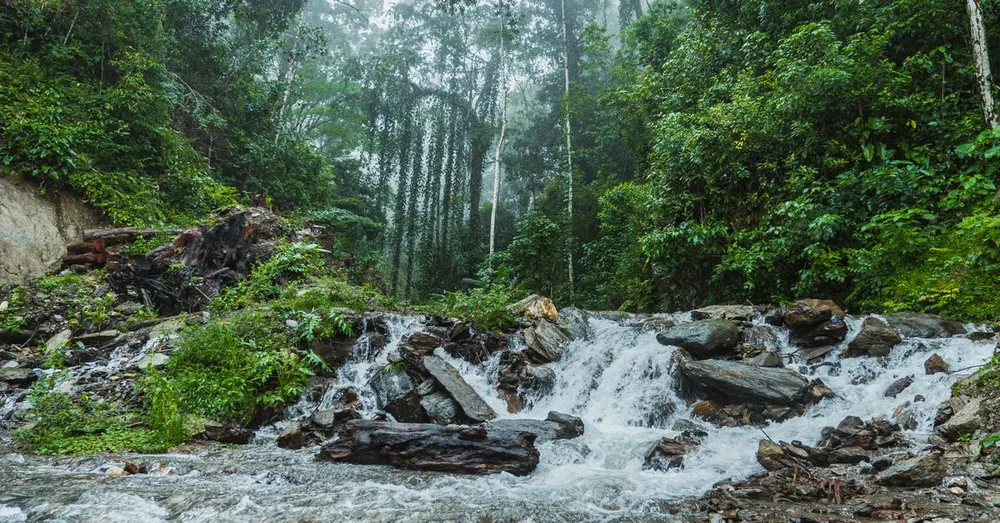
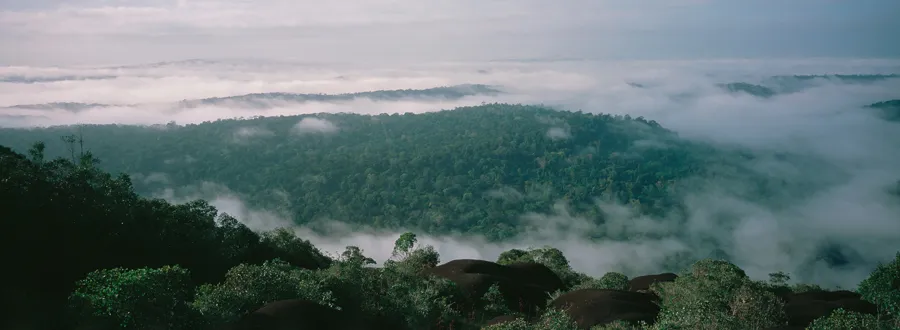
Picture yourself emerging from the canopy after hours of walking through the green half-light, only to suddenly break out onto a vast slab of sun-warmed granite, set like a mineral island in the middle of an ocean of trees stretching to the horizon. That is exactly what awaits you when you climb an inselberg in French Guiana. These spectacular rock domes rank among the most memorable trekking experiences in all of French Amazonia. But they aren’t something you can improvise: such an expedition demands preparation, solid fitness and serious guidance.
In this guide, we explain everything you need to know before setting off: what an inselberg really is, the fitness level required, how to choose a licensed guide, and what it’s like to spend a night in a hammock bivouac beneath the canopy. Enough to turn a craving for adventure into a concrete, well-planned project.
What is an inselberg, and why climb one in French Guiana?
The word “inselberg” comes from German and literally means “island mountain.” It refers to a landform of hard rock, usually granite, that resisted erosion while the surrounding forest and soils were worn down around it over millions of years. The result: a bare rock dome rising out of the primary rainforest like a giant boulder emerging from a green sea.
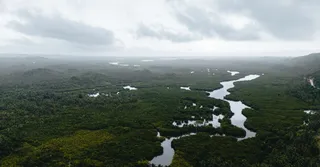
In French Guiana, several inselbergs punctuate the interior of the territory, often at the heart of protected areas such as the Nouragues Nature Reserve. The best known among enthusiasts remain hard to reach, which is precisely what makes them valuable: you’ll cross paths with almost no one. The summit offers a 360-degree panorama over tens of kilometres of unbroken canopy, a view few places on Earth can match.
A few features worth knowing:
- The rocky surface is home to a unique flora adapted to drought and full sun: bromeliads, carnivorous plants, colourful lichens.
- Wildlife is discreet but present: you’ll often hear howler monkeys at daybreak, and you may come across tapir or jaguar tracks on the approach trail.
- The rock can be slippery in wet weather: grip depends heavily on the weather, which is why the season matters so much.

What fitness level do you need for this trek?
Let’s be clear: a trek to an inselberg is no simple stroll. It isn’t technical mountaineering either, but the physical effort and the environment call for genuine fitness.
Distance, duration and elevation
Access is generally split into several stages: part of it by dugout canoe along a river or a creek, then an approach hike through the forest. On average, expect:
- 2 to 4 days of expedition depending on the inselberg you’re aiming for.
- 10 to 20 km of walking per day over rough terrain, roots, mud and creek crossings.
- A slow pace: in primary rainforest, you rarely move faster than 1.5 to 2 km/h.
The final climb to reach the dome stays moderate, but the heat (often 30 to 33 °C) and humidity close to 90% make the effort far more intense than back home.
The required level, honestly
You need to be a strong walker, able to string together several days of effort with an 8 to 12 kg pack on your back. Previous experience of multi-day hiking is strongly recommended. No climbing skills are needed: the ascent up the slab is done on foot, sometimes using your hands on the steepest sections. On the other hand, you do need to be comfortable with:
- tropical heat and exertion in a humid environment;
- nights in a basic bivouac;
- walking on slippery, unstable ground.
If you’re a beginner, it’s better to start with more accessible trails around Roura, Cacao or the paths of Rémire-Montjoly before setting your sights on an inselberg.
Licensed guides and regulations: why you never go alone
This is the most important point in this article. You do not head out to an inselberg in French Guiana alone. Most of these sites lie within nature reserves or restricted-access zones, and being self-reliant in the Amazon rainforest without supervision represents a real risk.
Why a guide is essential
- Safety: orientation in dense forest with no landmarks, water management, dealing with snakes and rescue in areas with no phone coverage.
- Logistics: arranging the canoe, the access permits for the reserves, the shared equipment.
- Knowledge of the terrain: a good local guide reads the forest, anticipates the weather and knows the water points.
- Respect for the environment: fragile sites impose strict rules on visitation.
How to choose a reliable provider
Favour a guide or company that is:
- professional and registered, with civil liability insurance;
- with first-hand experience of inselbergs (ask them to tell you about their most recent expeditions);
- transparent about the group (ideally 4 to 8 people maximum);
- who provides the equipment list and the necessary permits.
On the budget side, expect on average €350 to €700 per person for a 3- to 4-day expedition, with canoe transport, guiding and meals included. The yellow fever vaccine is mandatory to stay in French Guiana, so plan for it well in advance.
To plan your whole stay around this adventure, our complete guide to French Guiana helps you combine trekking, the Guiana Space Centre and the Salvation Islands over two weeks.
The hammock bivouac under the canopy
This is one of the most memorable experiences of the trek: sleeping suspended between two trees, lulled by the sounds of the forest. The jungle hammock is the norm in French Guiana, far better suited than a tent on the drenched ground.
Sleeping gear
A complete Amazonian bivouac setup includes:
- a sturdy hammock strung between two trunks;
- a mosquito net, built-in or separate, indispensable;
- a tarp stretched overhead for the rain, frequent even in the dry season;
- a thin sheet or lightweight sleeping bag liner: it isn’t cold at night, but the humidity gets to you.
Living well through the night in the forest
A few tips from the field:
- Set up your shelter or hammock before nightfall, which comes quickly and abruptly around 6:30 p.m.
- Keep your headlamp and some water within reach.
- Hang up your belongings and your food to avoid nocturnal visits.
- Enjoy the forest’s concert: frogs, insects and howler monkeys in the early morning make for an unforgettable wake-up call.
When to go and what to pack
The best time for a trek to an inselberg is the dry season, from mid-July to mid-November. The trails are more passable, the creeks lower and the rock less slippery.
Essential gear list:
- high-cut hiking boots + a light pair for the bivouac;
- 2 to 3 litres of water capacity and a filtration system;
- quick-drying clothing, rain poncho;
- powerful mosquito repellent, sunscreen and a cap;
- first-aid kit, headlamp, power bank.
Plan your stay with Hostel Toucan
A successful expedition begins with good logistics before and after. Before and after your trek, you’ll need a comfortable base to recover, dry your gear and enjoy the other must-sees of the territory: the Guiana Space Centre in Kourou, the Kaw marshes, or the Cayenne market.
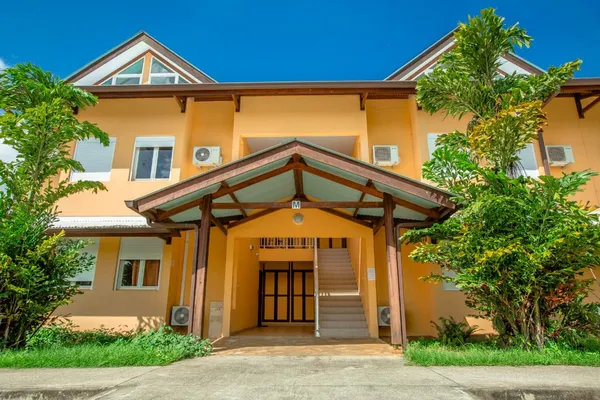
At Hostel Toucan, we offer holiday rentals ideally located between Cayenne, Matoury and Rémire-Montjoly. Book direct, with no platform fees, enjoy free cancellation up to 7 days before arrival, and WhatsApp assistance 7 days a week to arrange your transfers to the trek’s starting point. Discover our accommodations in French Guiana and prepare for your adventure with peace of mind.
Do you own a property and want to showcase it to adventure travellers? Our concierge service is made for you: entrust us with your property.
An inselberg isn’t a destination you tick off a list: it’s a raw encounter with Amazonian nature. Prepare for it carefully, surround yourself with a competent guide, and the summit will reward you with a panorama you’ll never forget.
FAQ
Do you need to be in good physical shape to climb an inselberg in French Guiana?
Yes. Without being technical mountaineering, this trek requires you to be a strong walker, able to string together several days of effort (10 to 20 km/day) with an 8 to 12 kg pack, in intense heat and humidity. No climbing skills are required for the ascent up the slab, but previous experience of multi-day hiking is highly recommended.
Can you head out to an inselberg alone, or do you need a guide?
A licensed guide is essential. Most inselbergs are located in restricted-access nature reserves, such as the Nouragues. The guide handles orientation, safety, the canoe, the permits and knowledge of the terrain. Going alone into the Amazon’s primary rainforest, with no phone coverage, represents a real risk.
When is the best time for this trek in French Guiana?
The dry season, from mid-July to mid-November, is ideal. The trails are more passable, the creeks lower to cross and the rock less slippery. Remember the yellow fever vaccine, mandatory to stay in French Guiana.
What is the bivouac like during an inselberg expedition?
You sleep in a jungle hammock suspended between two trees, with a mosquito net and a rain tarp. It’s the most suitable solution for the forest’s wet ground. Plan for one or two nights of bivouac depending on the inselberg, with a wake-up to the sound of howler monkeys in the early morning.