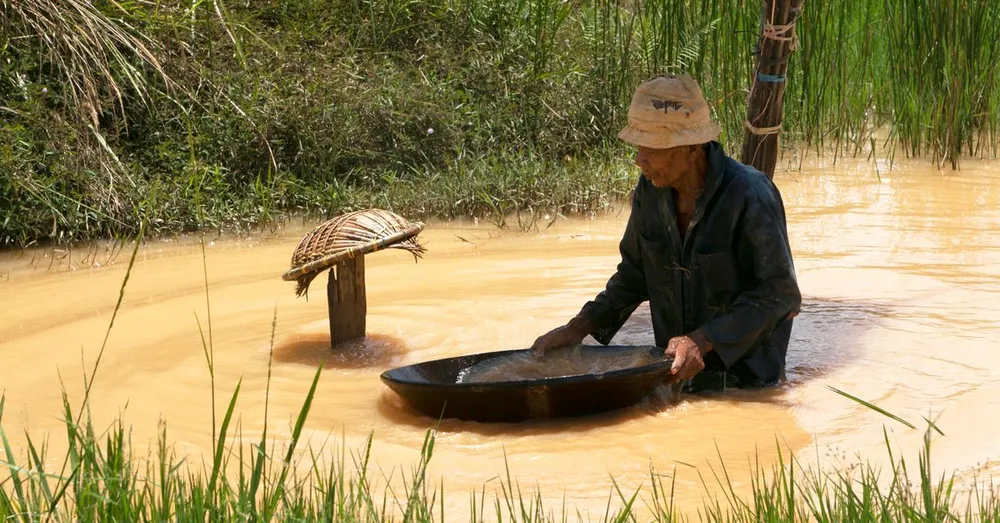
There is something unsettling about driving along a red dirt track, deep in the forest of French Guiana, knowing that beneath your wheels sleeps one of the wildest gold rushes in French history. Here in Saint-Élie, you don’t come only to admire the scenery: you come to listen to the silence of a village that once teemed with thousands of gold seekers, then almost fell asleep. To understand today’s French Guiana, this French overseas department of nearly 290,000 inhabitants focused on the Space Centre and biodiversity, you have to be willing to travel back in time to that metal-yellow fever that shaped entire towns.
At Hostel Toucan, we love taking our travellers beyond the postcards. Gold panning and the history of French Guiana form a little-known story, sometimes harsh, always fascinating. Here is our invitation to discover it.
The Guianese gold rush: a forgotten fever
It all truly began in 1855, when nuggets were brought up from the Arataye creek. The news spread like wildfire. Within a few years, French Guiana shifted: this land of penal colonisation, marked by the Saint-Laurent-du-Maroni penal colony, also became a land of gold seekers from the Caribbean, Brazil, Saint Lucia and Africa.
A few landmarks to place this saga:
- Gold was for a long time the territory’s leading economic resource, well before space.
- Tens of thousands of people worked the placers (the alluvial deposits) at the end of the 19th century.
- Entire villages, like Saint-Élie, were born and sometimes perished to the rhythm of new discoveries.
- The place names still bear the mark of it: creeks, mountains and “dégrads” (landing points on the rivers) carry the names of that era.
This memory is neither smooth nor romantic. It speaks of extreme working conditions, malaria, total isolation in a forest that still covers more than 90% of French Guiana. That is precisely what makes the visit so striking.
Saint-Élie, the village that lived off gold
Founded around its placers, Saint-Élie was one of the high places of Guianese gold panning. At its peak, the town had shops, an intense social life, and even a small Decauville railway to carry ore and equipment through the forest — a detail that always surprises our travellers.
Today, the municipality is one of the least populated and most isolated in French Guiana. There you’ll find nature that has reclaimed its rights, discreet remains, and that very particular atmosphere of places that have known crowds and then withdrawal. It is a true ghost village in the Guianese sense: not abandoned, but deeply slumbering.
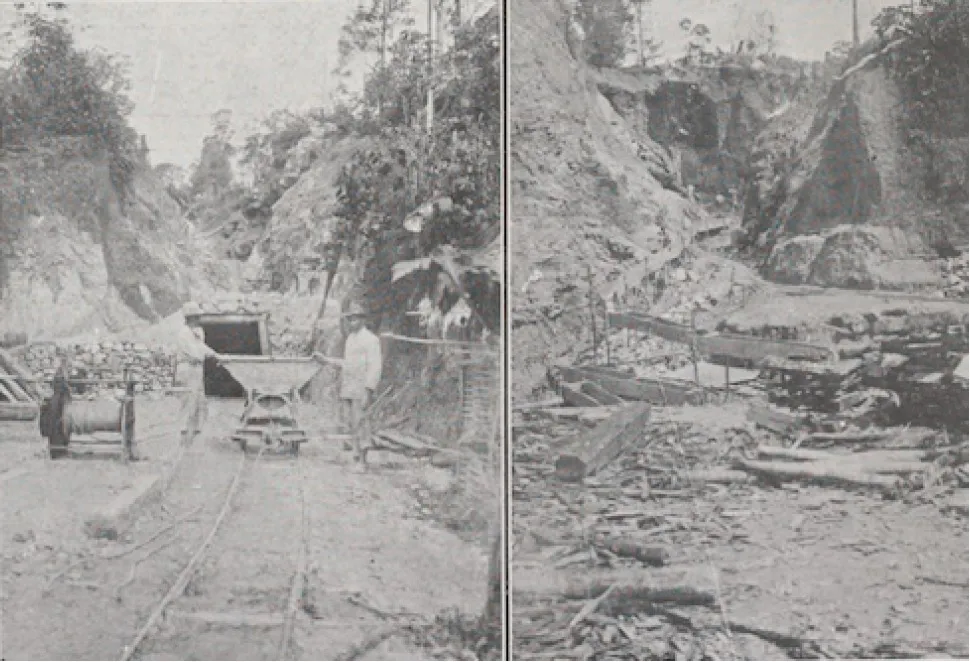
Planning your route of the old mines
Let’s be honest and down-to-earth, because being concierges is our job: the deep interior of French Guiana cannot be visited like a museum. Access to Saint-Élie is demanding and is mainly by forest track, then, depending on conditions, by river. A car is essential throughout the territory, and a high vehicle (4x4 type) is strongly recommended for the interior tracks.
When to go
- Best period: from mid-July to mid-November, during the dry season. The tracks are passable and the creeks less unpredictable.
- During the rainy season, many tracks become impassable or dangerous. We strongly advise against improvised adventure.
- Factor in the time difference for your calls and bookings: -5h in winter, -6h in summer compared with Paris.
Realistic budget and logistics
Here are the rough figures we give our guests:
- Paris–Cayenne flight (Félix-Éboué airport, Matoury): usually 600 to 1,100 € round trip depending on the season.
- Car rental: from around 40–60 €/day for a city car, more for a 4x4 suited to the tracks.
- Fuel: budget generously, petrol stations become scarce as soon as you leave the coast.
- Guided excursion into the interior: often 80 to 150 € per person per day, transport and dugout canoe included depending on the operator.
On the health side, the yellow fever vaccine is mandatory to enter French Guiana, and antimalarial protection should be discussed with your doctor for forest areas. The currency is the euro, the telephone code is +594, and the languages spoken are French, Guianese Creole, Bushinengue languages and Amerindian languages.
Our local tip: don’t go alone
For the gold panning sites of the interior, go through a local guide or operator. This is not a commercial pitch: it is a matter of safety (orientation, creeks, wildlife) and of respecting access rules. A good guide also transforms the visit: they tell you about life on the placers, show you where the water still carries flecks of gold, and explain the current issues of legal gold panning and the fight against illegal gold panning.
Beyond Saint-Élie: a memory loop
The story of gold can be read across the whole of French Guiana. To give meaning to your trip, we like to combine Saint-Élie with other stops accessible from the coast:
- Saint-Laurent-du-Maroni and its transportation camp (the penal colony): to understand the other great story of Guianese settlement. Count about 250 km from Cayenne, that is 3h to 3h30 of driving.
- The Maroni River by dugout canoe: the historic route to the interior, today a living window onto the river’s cultures.
- Cayenne: stroll through the market and around the Place des Palmistes, where the wealth of gold was once displayed in the Creole architecture.
- Kourou and the Guiana Space Centre: the visit is free and, with a bit of luck, you can witness an Ariane 6 or Vega launch. The vast gap between yesterday’s nuggets and today’s rockets sums up French Guiana well.
You can also enrich the loop with the Kaw marshes or the Salvation Islands, to alternate between industrial memory and wide-open spaces. Everything is detailed in our complete guide to French Guiana.
Travel responsibly and sleep well
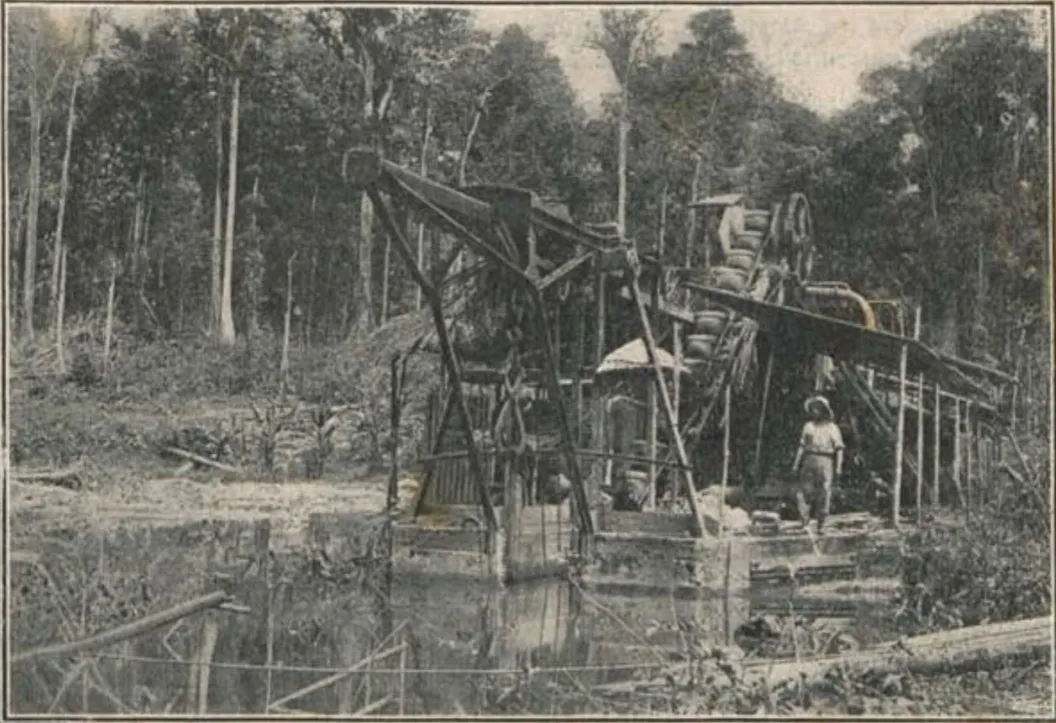
Gold panning remains a sensitive subject in French Guiana, between regulated legal activity and illegal panning that threatens forests and waterways. Visiting these places also means adopting the stance of a respectful traveller: you take nothing away, you don’t disturb the sites, you favour local stakeholders.
After a day on the red tracks, you have only one wish: a shower, a good hammock and a reliable roof over your head. That’s where we come in.
Book your stay with Hostel Toucan: direct booking with no platform fees, free cancellation up to 7 days before arrival, and WhatsApp support 7 days a week for your logistical questions (tracks, guides, weather). Discover our accommodation on rentals in French Guiana.
We know the terrain: we steer you towards the right dry-season window, put you in touch with trusted guides, and help you set a realistic itinerary between the coast and the interior. That’s the whole point of a local concierge service rather than a simple anonymous platform.
And if you own a property in French Guiana and want to showcase it to travellers seeking authenticity, let’s talk about it on our owners page.
Why this trip is worth the detour
Saint-Élie and the route of the old mines are not at the top of the brochures. That is precisely their strength. Here, you touch a raw, human French Guiana, where every creek has a story and where the forest keeps the memory of the men who dreamed of gold. By preparing your visit well — the right season, the right vehicle, the right guide — you turn a simple visit into a real plunge into the past.
The gold rush has died out, but its echo still resonates beneath the canopy. It’s up to you to come and listen to it.
FAQ
Can you visit Saint-Élie freely by car?
Access is by forest track, often supplemented by a stretch of river. A 4x4 is strongly recommended and the visit is only really possible during the dry season (mid-July to mid-November). For safety, we recommend going through a local guide or operator rather than setting off alone.
What is the best time to follow the route of the old mines?
From mid-July to mid-November, during the dry season. The interior tracks are then passable and the creeks less dangerous. During the rainy season, many access routes become impassable.
Are vaccines or health precautions needed?
The yellow fever vaccine is mandatory to enter French Guiana. For forest areas like Saint-Élie, discuss antimalarial protection with your doctor, and bring repellents, covering clothing and plenty of water.
Can you still see gold at Saint-Élie?
You don’t set out to look for gold yourself: gold panning is regulated and some practices are illegal. However, a guide can show you old placers, remnants of the village, and explain how the water still sometimes carries flecks of gold. The interest is historical and heritage-related.