Hostel Toucan — Apartments & Hotels
Menu

Settling in

Schooling your children in Martinique

Published on July 30, 2026 · by Ismael Samuel

Schooling your children in Martinique

A job transfer, a new chapter of life or a return to the family island: when a family moves to Martinique, the children’s schooling is always at the top of the list of worries. Good news: the island belongs to the académie de Martinique and follows the same curricula, the same qualifications and fundamentally the same school calendar as mainland France. A child arriving from Lyon, Nantes or Bordeaux does not lose a year and stays within the very same national education system. A few local specifics do remain — enrolment procedures, choice of town, transport, Creole language and culture — and they are best anticipated. This guide takes stock, in practical terms, so you can calmly prepare your children’s arrival on the island of flowers.

The school system in Martinique: what changes (and what doesn’t)

Martinique is a French overseas department and region (DROM) attached to the Education nationale through the rectorat de Martinique, based in Fort-de-France. In concrete terms, that means:

  • The curricula are strictly identical to those in mainland France (socle commun, brevet, baccalauréat).
  • The qualifications carry exactly the same national value.
  • Repeating a year, guidance and school placement follow the same rules.
  • A school record opened in mainland France continues seamlessly after the move.

What does differ comes down mostly to organisation and context:

  • The size of the territory: a few dozen minutes of driving can separate your home from the school, on a road network that is sometimes saturated at peak hours around Fort-de-France and Le Lamentin.
  • The holiday calendar, set for Martinique’s own zone (the dates do not always match those of your former académie).
  • The presence of Creole and of a regional history that is taught in schools, enriching your children’s cultural journey.
  • A tropical climate that shapes daily rhythms (heat, rainy season) and occasionally causes interruptions linked to weather alerts (cyclones, heavy rain).

In other words, your child stays within the same system, but in a new geographical and cultural setting to get used to.
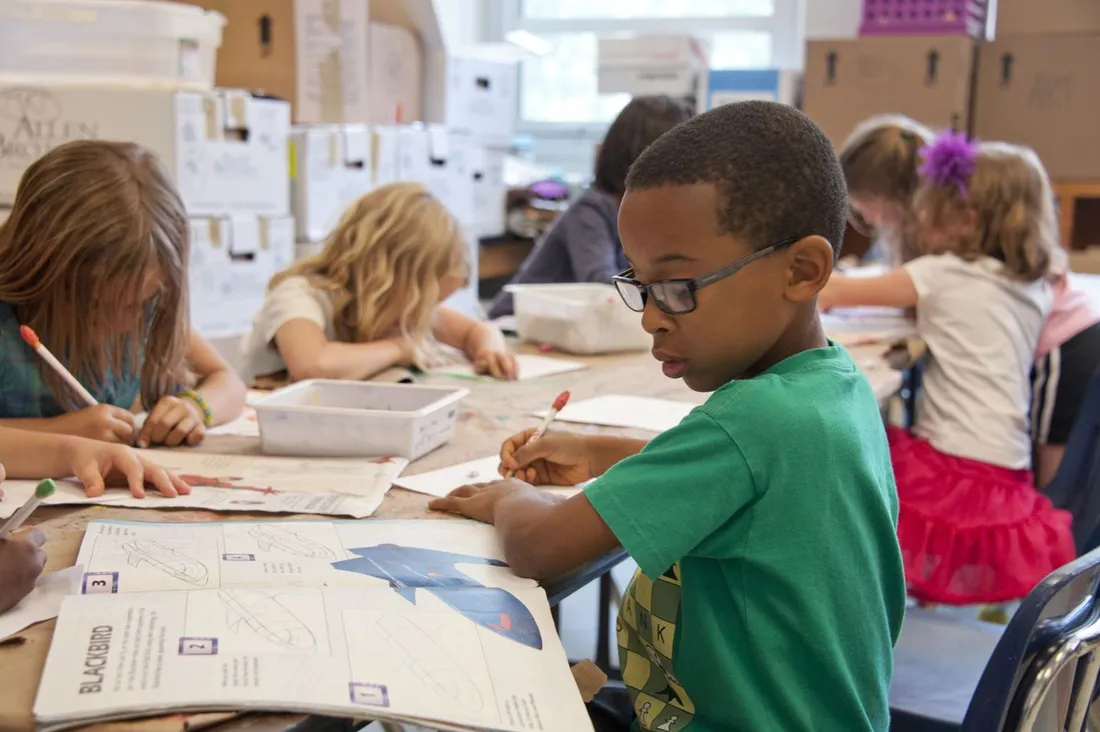
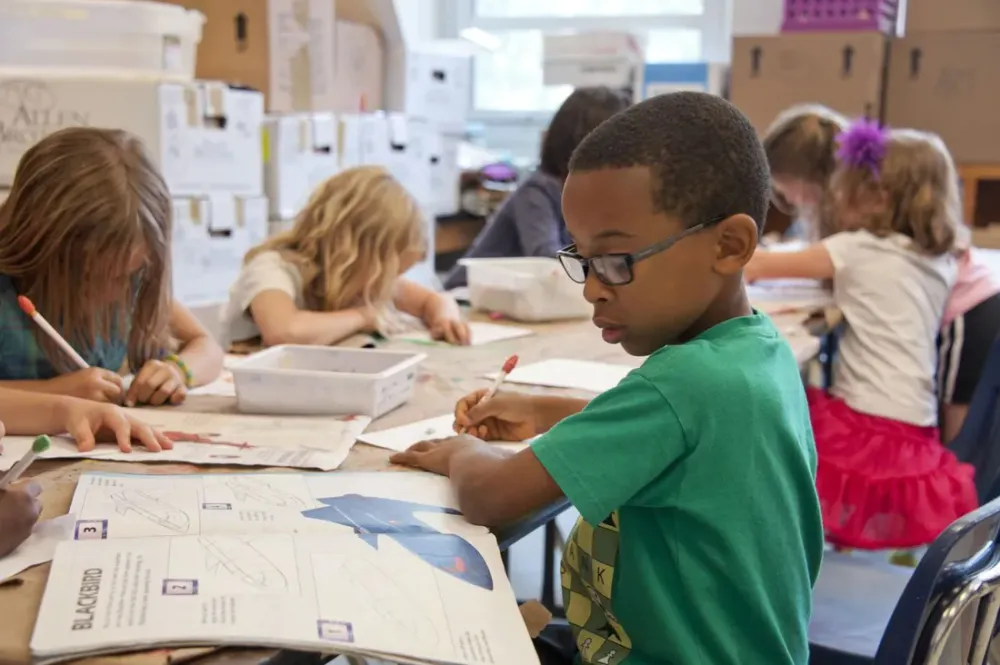
Écoliers concentrés autour d'une table dans une salle de classe, un garçon à lunettes dessinant pendant un atelier scolaire
En classe : scolariser ses enfants dans le système éducatif martiniquais. — © Photo CDC, via Pexels

Primary schools, collèges and lycées: mapping the island

Schools cover the whole island, with a higher density in the centre, around the urban area of Fort-de-France, Le Lamentin, Schoelcher and Ducos.

The centre: Fort-de-France, Schoelcher, Le Lamentin

This is the island’s administrative and educational heart. It holds the largest concentration of primary schools, collèges and lycées, along with general, technological and vocational upper secondary schools, and a higher education offer (the Université des Antilles has a campus in Schoelcher). For a family looking to limit travel times and keep options open, this area remains the most practical — at the cost of a tighter housing market.

The Caribbean north and the Atlantic north

Towns such as Saint-Pierre, Le Carbet, Le Morne-Rouge, La Trinité or Sainte-Marie offer a greener, quieter setting, well suited to families seeking peace. There are fewer schools, especially lycées: check the catchment map and plan ahead for transport to the designated schools.

The tourist south

Les Trois-Îlets, Sainte-Anne, Le Marin, Le Diamant or Rivière-Pilote appeal for their beaches and lifestyle. The south has primary schools and collèges, but lycées are concentrated in a few hubs; here too, the home-to-school commute is a central question, especially for teenagers.

State or private?

Martinique has state schools (the majority) and a network of private schools under contract with the state, often faith-based, found in particular in Fort-de-France and the centre. Fees at private schools under contract remain moderate compared with fully independent private schools, but vary from one school to another: ask each school directly, as an indication only, since rates and available places change every year.

Enrolment step by step

Enrolment depends on your child’s level. The general principle: the town hall handles registration in nursery and primary schools (state schools), while the rectorat / the schools themselves handle collège and lycée through placement.

Nursery and primary school (town hall)

  1. You go to the town hall of your municipality of residence with proof of address.
  2. The town hall issues a certificate of registration and tells you which school your address falls under.
  3. You complete admission with the school’s head teacher, who finalises the enrolment.

Collège (placement by the rectorat)

Your catchment collège is determined by your address. If you move mid-year, quickly contact the Division des élèves at the rectorat de Martinique or the catchment collège directly to arrange the transfer of the school record.

Lycée (placement)

Placement in a lycée depends on the student’s pathway and choices. For an arrival mid-schooling, the rectorat reviews each situation case by case, according to the places available in the chosen stream and specialism.

Documents to prepare (checklist)

  • ID for the child and the parents
  • Family record book or birth certificate
  • Proof of address in Martinique (lease, utility bill, accommodation certificate)
  • Certificate of deregistration from the previous school
  • Latest school reports and school record book
  • Up-to-date health record (compulsory vaccinations)
  • Proof of school insurance (extracurricular cover recommended too)
  • Census certificate / JDC for older teenagers, where applicable

The certificate of deregistration from the previous school is the document most often forgotten: request it before leaving mainland France, it will save you precious time.

The school calendar and local rhythms

Martinique has its own holiday calendar, distinct from zones A, B and C in mainland France. The school year starts, as everywhere in France, around late August / early September, but the dates of the intermediate breaks (Toussaint, Christmas, Carnival, Easter, summer holidays) can differ noticeably.

Two local periods stand out during the year:

  • Carnival, a high point of Martinican culture (generally in February-March), which brings specific holidays and an intense festive life.
  • The cyclone season (roughly June to November), during which school closures may be decided in the event of a weather alert. These are exceptional situations, but it is good to know they exist.

Always check the official calendar of the académie de Martinique for the current year, as the dates are set annually.
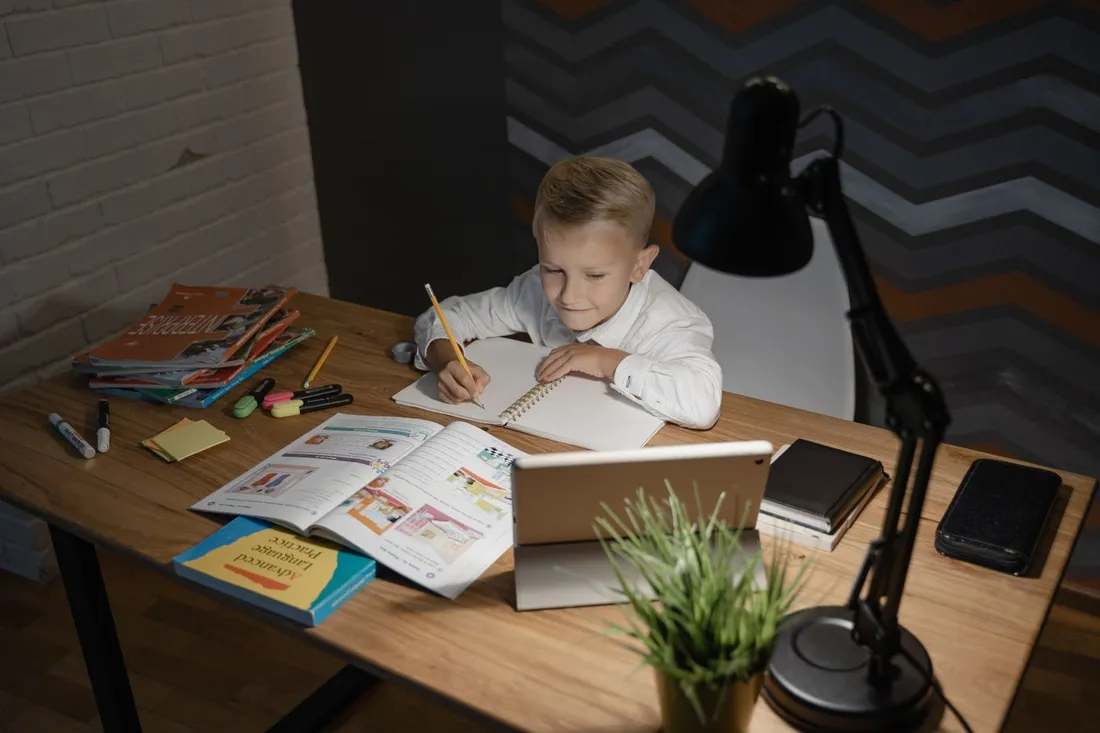
Jeune enfant faisant ses devoirs à un bureau avec cahiers, manuels et tablette sous une lampe
Devoirs à la maison : accompagner la scolarité au quotidien en Martinique. — © Photo Tima Miroshnichenko, via Pexels

Transport, school meals and daily life

Getting around

Travel time is a decisive question in Martinique. At peak hours, the main roads around Fort-de-France and Le Lamentin are busy. Depending on your municipality, your child may benefit from:

  • school transport organised by the local authority, often based on the distance between home and school;
  • public transport lines for older students;
  • car journeys, to be factored into your choice of housing.

As a rough guide, aiming for a school close to home or well served by transport avoids many complications, especially for collège and lycée students who finish late.

School meals

School catering is offered in most establishments. The cooking often features local produce and dishes. Prices, frequently scaled to income (quotient familial), vary from one municipality to another: check with the town hall or the school.

Supplies and budget

School supplies can cost a little more than in mainland France because of the distance and shipping costs. As an indication, allow some margin in your back-to-school budget and compare local retailers. National schemes (the back-to-school allowance, means-tested collège and lycée grants) apply exactly as they do elsewhere in France.

Language, culture and helping children fit in

French is the language of teaching and of all learning: your child will follow lessons exactly as in mainland France. Martinican Creole is part of everyday life and can be valued within the school pathway (regional language and culture). Far from being an obstacle, it is an asset: children quickly pick up the accent, the vocabulary and the local culture.

To make settling in easier:

  • Sign your children up for after-school or sports activities (football, swimming, dance, sailing, etc.): it is often the quickest way to make friends.
  • Take the time to explain the island’s historical and cultural context (history, heritage, traditions), which helps children understand their new environment.
  • Stay attentive during the first few weeks: an overseas move is a major change, even when everything goes smoothly on paper.

Most families find that children adapt quickly, helped by a pleasant living environment and a warm welcome.

Living in the right place: the key to stress-free schooling

Your choice of housing largely determines how well the move goes, because it sets the catchment school and the travel times. Yet finding permanent accommodation often takes several weeks, sometimes a few months, between viewings, putting the application together and property availability.

That is why many families on transfer first choose temporary furnished accommodation when they arrive. This solution lets you:

  • take your time to explore neighbourhoods and towns without rushing;
  • scout the schools and gauge the commute at real-life hours;
  • arrive with peace of mind even before signing a long-term lease;
  • handle the formalities (enrolment, setting up utilities, banking) from a comfortable base.

Our team supports exactly these families arriving from mainland France. Discover our properties for a turnkey temporary stay while you find your ideal home. And if you are an owner or considering investing here, our property management service can look after your property during your transition. For any personalised question, feel free to contact us.

Planning the timeline of your move (checklist)

  • Confirm the transfer date and the town you are posted to
  • Request the certificate of deregistration before departure
  • Book temporary accommodation for your arrival
  • Shortlist 2 to 3 target towns and schools
  • Gather all school and health documents
  • Contact the town hall (nursery/primary) or the rectorat (collège/lycée)
  • Organise home-to-school transport
  • Plan a back-to-school budget with an overseas margin

Frequently asked questions

Will my child lose a year by changing académie?

No. Martinique applies the same curricula and the same system as mainland France. The school record is transferred and schooling continues without interruption, whatever the time of arrival.

Should I enrol my child at the town hall or the rectorat?

For nursery and primary (state schools), enrolment goes through your municipality’s town hall. For collège and lycée, placement is handled by the rectorat and the schools, based on your address and the student’s pathway.

Is Creole a problem for a child from mainland France?

No. All lessons are taught in French. Creole is part of the everyday environment and can be valued as a regional language and culture: it is an asset for openness, not a barrier to learning.

Is it better to live in the centre or on the outskirts?

It depends on your priorities. The centre (Fort-de-France, Schoelcher, Le Lamentin) offers the widest choice of schools and short journeys, but housing is more sought after. The north and south offer a quieter setting, at the price of sometimes longer journeys, especially for lycée.

How long should I allow to find housing on the island?

As an indication, allow several weeks for a property that genuinely suits you, depending on the season and the town. Temporary accommodation on arrival saves you from choosing in a rush.

Ready to prepare your move?

Schooling your children in Martinique is far simpler than it seems: same system, same qualifications, and a lifestyle that quickly wins families over. The real challenge is organisation — and choosing the right base. To arrive with peace of mind, book temporary furnished accommodation through our properties while you find your permanent home and enrol your children in the best possible conditions. A question about your project? Get in touch: we know the ground and support families at every step. You will also find more practical advice on the blog.

🧭 Which stay suits you?

3 questions, 20 seconds.

Also read