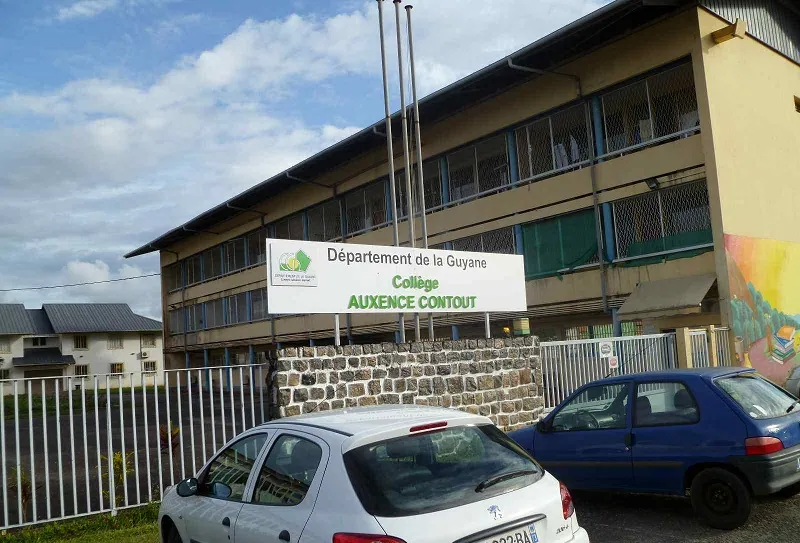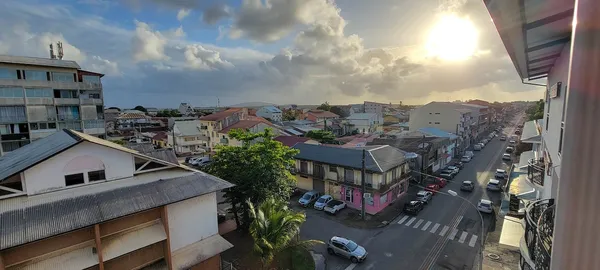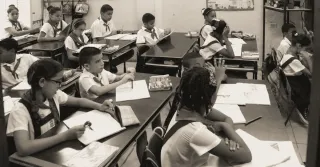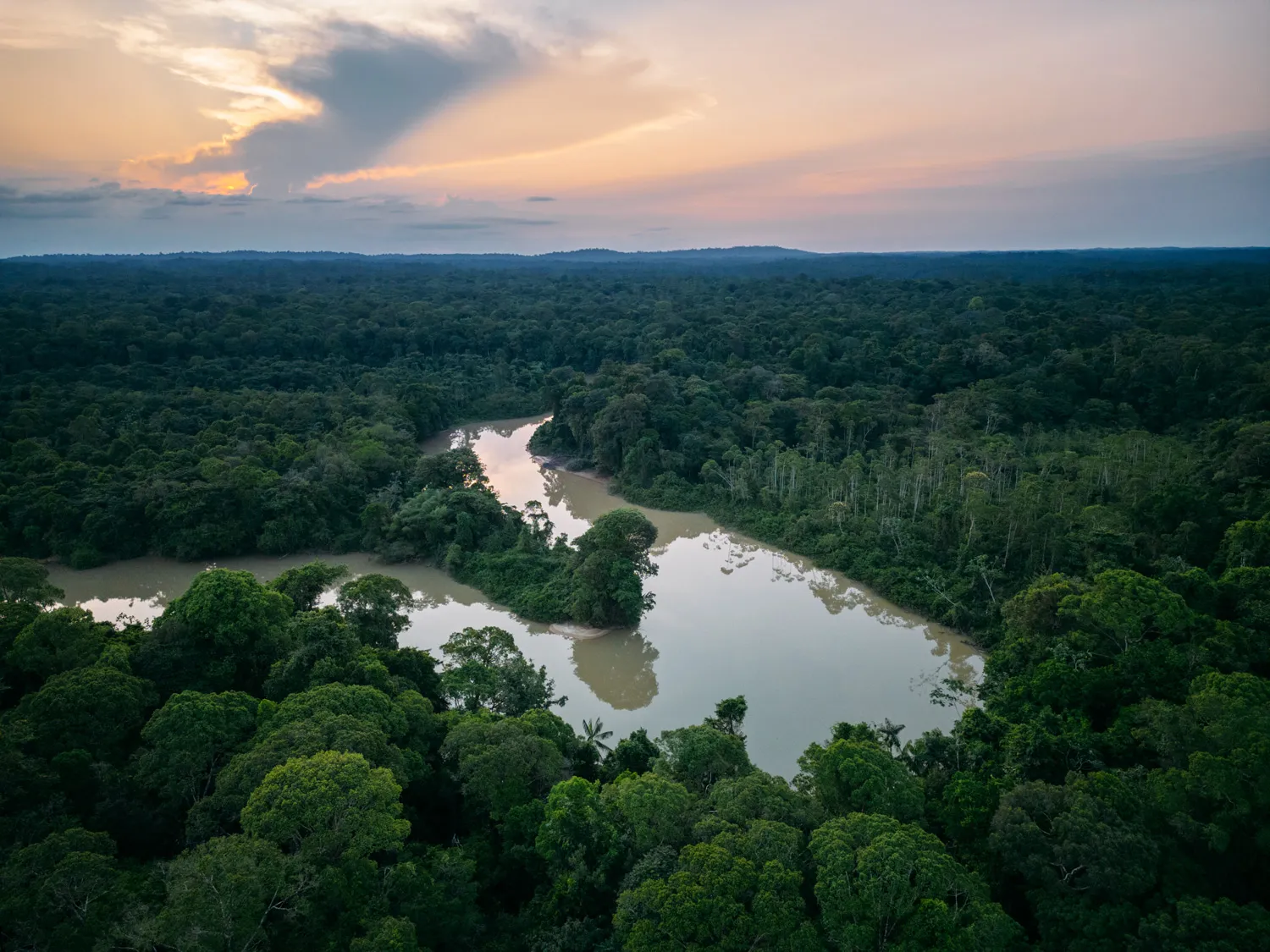

You are preparing a job transfer or a move to French Guiana with children, and the question of their schooling quickly rises to the top of the list. Good news: French Guiana is a French department, the national education system applies the same curricula, the same qualifications (brevet, baccalauréat) and the same registration calendar as mainland France. Your children therefore lose nothing of their academic path when they arrive. But the territory has its own particularities: long distances, a school map concentrated along the coast, a network of schools that varies widely from one town to another, and local realities (multilingualism, class sizes, transport) that are worth knowing before choosing your future neighbourhood.
This article gives you a clear overview of the school system in French Guiana, from nursery to high school, of the enrolment procedures and of the practical points to anticipate when arriving from mainland France. It does not replace the official information from the académie de Guyane and the town halls, but it helps you ask the right questions and organise your arrival calmly.
The school system in French Guiana: what changes (and what doesn’t)
French Guiana has its own education authority (académie de Guyane, separate since 2015 from those of Martinique and Guadeloupe). The rectorate is based in Cayenne. The way it works remains that of the French national education system: nursery and primary schools managed by the municipalities, middle and high schools under the Collectivité Territoriale de Guyane for the buildings, and teaching staff employed by the State.
What does not change:
- The curricula are national, identical to those of mainland France.
- The qualifications (diplôme national du brevet, general, technological or vocational baccalauréat) are the same.
- The registration calendar follows the national rhythm (most steps take place in spring for the September start of the school year).
- School attendance is compulsory from age 3 to 16, as everywhere in France.
What does change, in practice:
- A particular geography: the population and the schools are concentrated along the coast (Cayenne, Kourou, Saint-Laurent-du-Maroni and their surroundings). The interior is served very unevenly.
- A strong multilingual context: many pupils speak Guianese Creole, Portuguese, Sranan Tongo, Bushinenge or Amerindian languages at home. French remains the language of school, but linguistic diversity is a daily reality.
- Sometimes large class sizes and a dynamic demography, which put pressure on capacity in certain municipalities.
School calendar: a zone of its own
French Guiana has its own school calendar, distinct from mainland zones A, B and C. Holiday dates (in particular the shift of the start of the school year and of the breaks) differ, among other reasons to take the climate into account. Always check the official calendar of the académie de Guyane for the relevant year before booking tickets or planning a move, as a guide only.

Where children go to school: the school map by area
French Guiana is organised around a few main living areas, and it is often the choice of neighbourhood or municipality that will determine your children’s school (school map).
Cayenne and the greater urban area (CACL)
The Centre Littoral urban area (Cayenne, Rémire-Montjoly, Matoury and neighbouring towns) concentrates the densest offering: many schools, several public middle and high schools, as well as State-contracted private schools. Neighbourhoods such as Montabo, Montjoly, Baduel or Zéphir are sought after by families, particularly for their proximity to schools and services. This is also where you find the widest variety of high school pathways (options, technological streams, specialist subjects).
Kourou
Kourou, shaped by the presence of the Guiana Space Centre, has historically welcomed many families on assignment (from mainland France, but also international profiles). The town has nursery, primary, middle and high schools, with a school population used to arrivals and departures linked to professional postings. For a family on transfer, it is often a logical landing point.
Saint-Laurent-du-Maroni and the West
The territory’s second hub, Saint-Laurent-du-Maroni is experiencing strong demographic growth. The school offering is developing there, but pressure on places can be more noticeable than on the central coast. If your transfer takes you to the West, plan your enrolment steps further in advance.
Interior municipalities and river communities
In the interior municipalities (Maripasoula, Grand-Santi, Camopi, etc.) and along the rivers, schooling exists but with strong constraints: access sometimes only by pirogue or plane, limited provision beyond middle school, boarding schools to continue at high school level. For most families arriving from mainland France on a standard transfer, however, the posting will be on the coast.
From nursery to high school: the main stages
Nursery and primary school
Nursery school (petite, moyenne and grande section) and primary school (from CP to CM2) are managed by the municipalities. Registration is done at the town hall (school services department) and then with the school itself. It is the municipality that assigns the school according to your address. Remember to ask about timetables, the canteen (school meals) and any before- and after-school schemes, which vary from one municipality to another.
Middle school
Middle school (from 6e to 3e) falls under the Collectivité Territoriale de Guyane for buildings and transport, but pupil allocation is managed by the national education services according to the school map. At the end of 3e, pupils sit the diplôme national du brevet, identical to that of mainland France. It is also the moment of orientation towards the general and technological pathway or the vocational pathway.
High school
At high school level, there is a distinction between:
- The general and technological lycée, which prepares for the general baccalauréat (with specialist subjects) or the technological one.
- The vocational lycée, which prepares for the CAP or the vocational baccalauréat, with streams linked to local needs.
The range of specialist subjects and options is wider in the large coastal lycées. If your child is aiming for a specific specialism (for example a rare combination of specialist subjects), check that it is offered in the catchment lycée, or find out about the possibilities for an exemption.
Higher education: a word to plan ahead
Looking further ahead, French Guiana has a higher education offering (university, post-baccalauréat courses) concentrated mainly in Cayenne and Kourou. Many baccalauréat holders nevertheless continue their studies in mainland France or in the West Indies. This is not your immediate concern when arriving with young children, but it is something to keep in mind for families with teenagers.
Public, private and other options
The vast majority of pupils attend public schools. There are also State-contracted private schools (often faith-based), mainly in the Cayenne urban area, with variable tuition fees and limited places: if this option interests you, contact the schools very early.
Regarding home schooling (IEF), it is now subject to prior authorisation in France, including in French Guiana. It is not an easy way around an enrolment problem; check with the education authority services if you are seriously considering this route.
Children with special needs (disability, PAI, PAP, MDPH notification): flag the situation as soon as you register. The support schemes (ULIS, AESH) exist in French Guiana, but resources can be stretched depending on the municipality, hence the importance of preparing the file in advance.