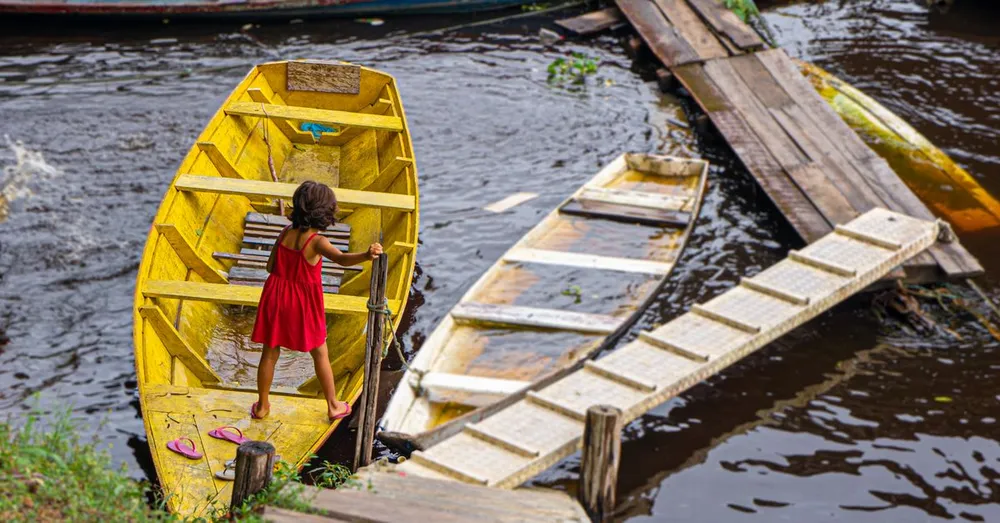
Safety in French Guiana is the topic that comes up most often when planning a trip to this French department in South America. Between sometimes anxiety-inducing official advisories and travelers’ enthusiastic accounts, it’s hard to form an accurate picture. At Hostel Toucan, we live and host year-round in Cayenne and along the coast: here is a nuanced, on-the-ground take to help you prepare your stay with peace of mind, without naivety but without excessive fear.
Understanding official advisories without being ruled by them
French Guiana is a French overseas department (DROM): you travel there with your national ID card, you pay in euros, you’re covered by French social security, and emergency calls go to 17 (police), 15 (medical emergencies) or 112. That changes a great deal compared with a “faraway” destination.
Official advisories classify much of the territory as a vigilance zone. That’s useful, but you need to read between the lines:
- Most alerts concern illegal gold mining deep in the Amazon rainforest, dozens of kilometers from tourist areas. You’ll never end up there by chance.
- The border zones with Suriname (the Maroni River) and Brazil (the Oyapock) call for heightened vigilance, especially at night, but remain visitable during the day and in a supervised way.
- The inhabited coast, where the must-see sights are concentrated, falls under ordinary urban vigilance, comparable to any medium-sized French city.
In other words: a “red” map on paper mostly covers a vast forest empty of inhabitants. More than 80% of the ~290,000 residents of French Guiana live on a thin coastal strip, and that’s where you’ll spend most of your time.
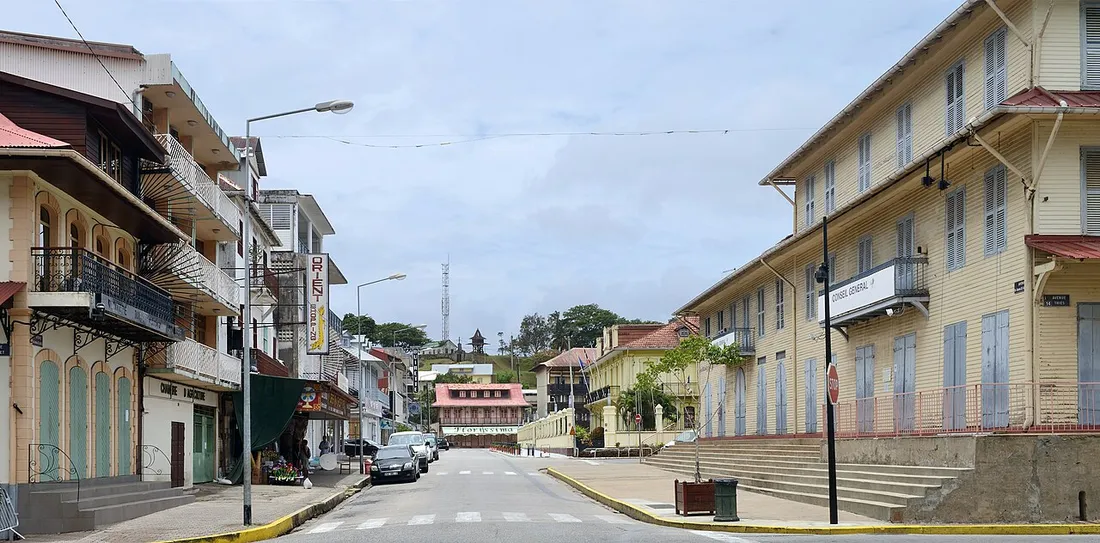
Cayenne and the coast: the reality of the neighborhoods
Cayenne, the main town, sees most arrivals via Félix-Éboué airport in Matoury, 15-20 minutes from the center. The city is very pleasant by day.
The tourist areas to know
- Place des Palmistes and the historic center: lively during the day, pleasant, but best avoided alone late at night like any city center.
- The Cayenne market (Wednesday, Friday, Saturday morning): a must-see, vibrant, safe during busy hours. Keep your bag closed and in front of you, as everywhere.
- Rémire-Montjoly, Cayenne’s residential neighbor: beaches, the Pointe Buzaré trails, a family atmosphere. It’s one of the quietest areas to stay.
- Matoury and Macouria: residential and practical areas, well located for getting around.
Common-sense reflexes
- Never leave any visible item in a car, even locked, even for five minutes.
- Travel by car rather than on foot at night.
- Some working-class neighborhoods of Cayenne (areas like la Crique, Mont-Lucas, the Village chinois in the evening) are fine to walk through by day but are not places for nighttime strolls. Your local host will guide you precisely.
Our team shares an annotated map at every arrival, showing the areas where it’s nice to wander and those to avoid after dark. No official advisory gives you that level of detail.
The roads: a car is essential
There is no extensive public transport network: a car is essential to explore French Guiana. The good news is that the main road is simple: the RN1 links Cayenne to Saint-Laurent-du-Maroni (about 250 km, 3h-3h30), and the RN2 heads toward Roura, Kaw and the east.
A few concrete benchmarks:
- Cayenne – Kourou (Guiana Space Center): ~60 km, 50 minutes.
- Cayenne – Saint-Laurent-du-Maroni: ~250 km, 3h on a decent paved road.
- Cayenne – Kaw marshes / Roura: ~1h to 1h30 depending on the pirogue departure point.
- Car rental: budget €40 to €70/day depending on the season and the model. Book early in high season.
Local driving tips:
- Fill up whenever you can: stations become scarce outside the larger towns.
- Drive by day for long distances. At night, the road isn’t lit, wildlife crosses, and some isolated stretches are less traveled.
- On the RN1 toward Saint-Laurent, you may come across gendarmerie checkpoints: keep your papers on you, it’s a simple formality.
- Avoid carrying strangers, especially as you approach the border zones.
Season, health and formalities: safety is also preparation
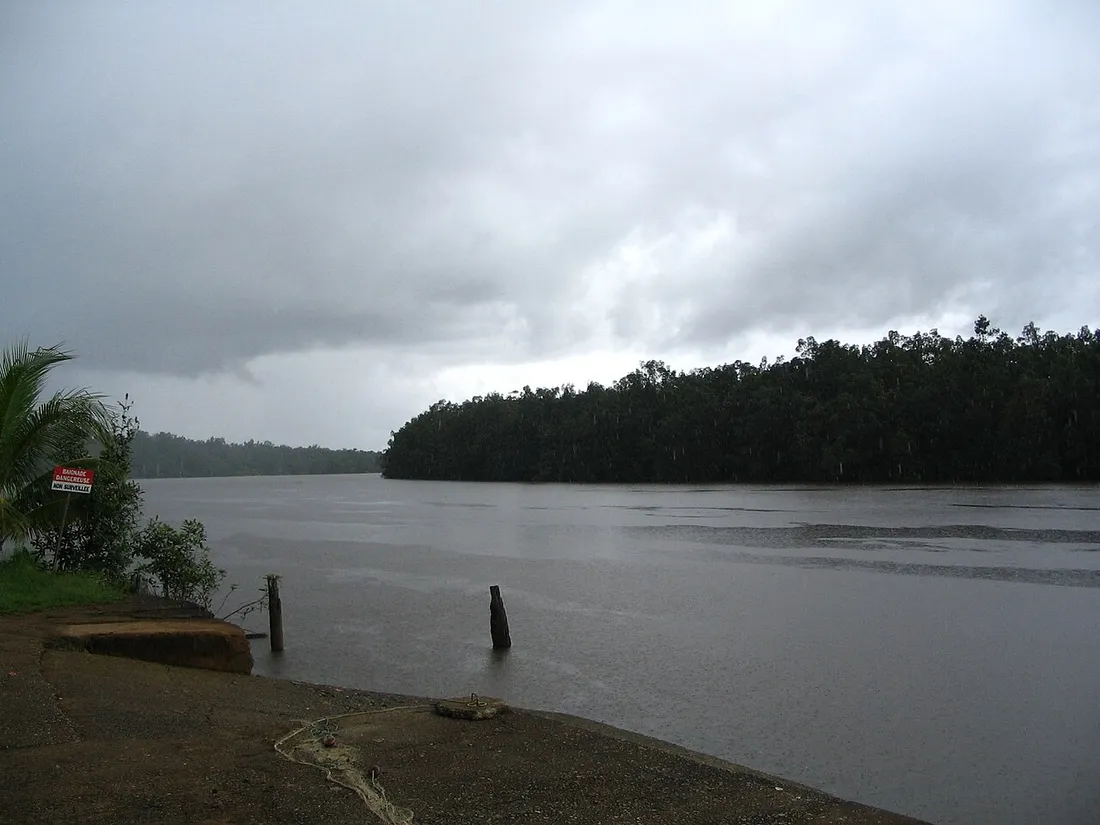
The best time to visit runs from mid-July to mid-November, in the dry season: passable roads, more comfortable pirogue rides, optimal wildlife viewing. The rainy season isn’t dangerous but makes some tracks trickier.
On the health side, plan ahead:
- The yellow fever vaccine is mandatory to enter French Guiana. Get it at least 10 days before departure at an approved center.
- Bring an effective mosquito repellent (dengue and other arboviruses circulate), covering clothing in the evening and, depending on your itinerary, medical advice on malaria for the deep forest zones.
- Pack a basic kit: the heat (up to 5h behind in winter, 6h behind in summer compared with Paris; dialing code +594) and humidity are tiring; stay hydrated.
To plan your itinerary in detail, see our complete guide to French Guiana, which cross-references seasons, distances and must-sees.
Visiting the iconic sites with complete peace of mind
Good news: the major must-sees can be visited in excellent conditions.
- Guiana Space Center in Kourou: free guided tour (by reservation), Ariane 6 or Vega launch days not to be missed. A secure, supervised site.
- Îles du Salut (Salvation Islands): catamaran crossing from Kourou (~1h), a serene atmosphere, ideal for a day or an overnight stay.
- Kaw marshes: a pirogue outing at sunset to spot caimans and birds, always with an approved local guide.
- Saint-Laurent-du-Maroni: visit the penal colony and the Camp de la Transportation, then go up the Maroni River by pirogue toward the Bushinengue villages. Stick to organized outings near the border areas.
- Awala-Yalimapo: leatherback turtle nesting (April to July), a protected and soothing site.
- Cacao (Hmong community) and the Nouragues reserve: nature and culture, in a supervised group for the latter.
Everywhere, the winning reflex is the same: go through local providers and accommodation that knows the area.
Why a local anchor changes everything
The real safety of a trip to French Guiana depends less on a list of don’ts than on a good network on site. A host who replies in real time means a dubious route avoided, a nighttime neighborhood advised against in time, a reliable guide recommended.
At Hostel Toucan, we offer rentals in French Guiana located in the quietest areas of the coast (Cayenne, Rémire-Montjoly, Matoury, Kourou), with:
- Direct booking with no platform fees: you pay the fair price.
- Free cancellation up to 7 days before arrival, so you can book with peace of mind.
- WhatsApp assistance 7 days a week: a question about an itinerary, a neighborhood, a car rental? We answer, in French as well as in Creole.
Are you a property owner in French Guiana looking to entrust your home to a local property management service that understands these challenges? Discover our dedicated offer for owners.
French Guiana richly rewards prepared travelers. With the right reflexes and the right local anchor, it’s a unique, accessible and deeply endearing Amazonian destination.
FAQ
Is French Guiana dangerous for tourists?
No, not under normal conditions. The coastal tourist areas (Cayenne, Rémire-Montjoly, Kourou, Saint-Laurent) are perfectly fine to visit. Heightened vigilance mainly concerns the deep forest linked to illegal gold mining and the border areas at night, far from the usual circuits. With common-sense urban reflexes, your stay will go smoothly.
Do you need a car to get around French Guiana?
Yes, a car is essential: there is no extensive public transport network. Budget €40 to €70/day for rental. Fill up whenever you can, drive by day for long distances, and keep your papers on you for gendarmerie checkpoints on the RN1.
Which vaccine is mandatory to enter French Guiana?
The yellow fever vaccine is mandatory. Get it at least 10 days before departure at an approved center. Also bring an effective mosquito repellent against dengue and, depending on your forest itinerary, medical advice on malaria.
What is the best time to visit French Guiana?
The dry season, from mid-July to mid-November, is ideal: passable roads, more comfortable pirogue rides and better wildlife viewing. The rainy season is still visitable but makes some interior tracks trickier.