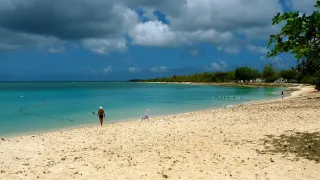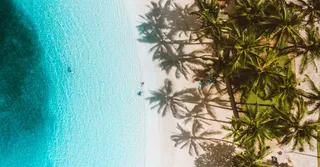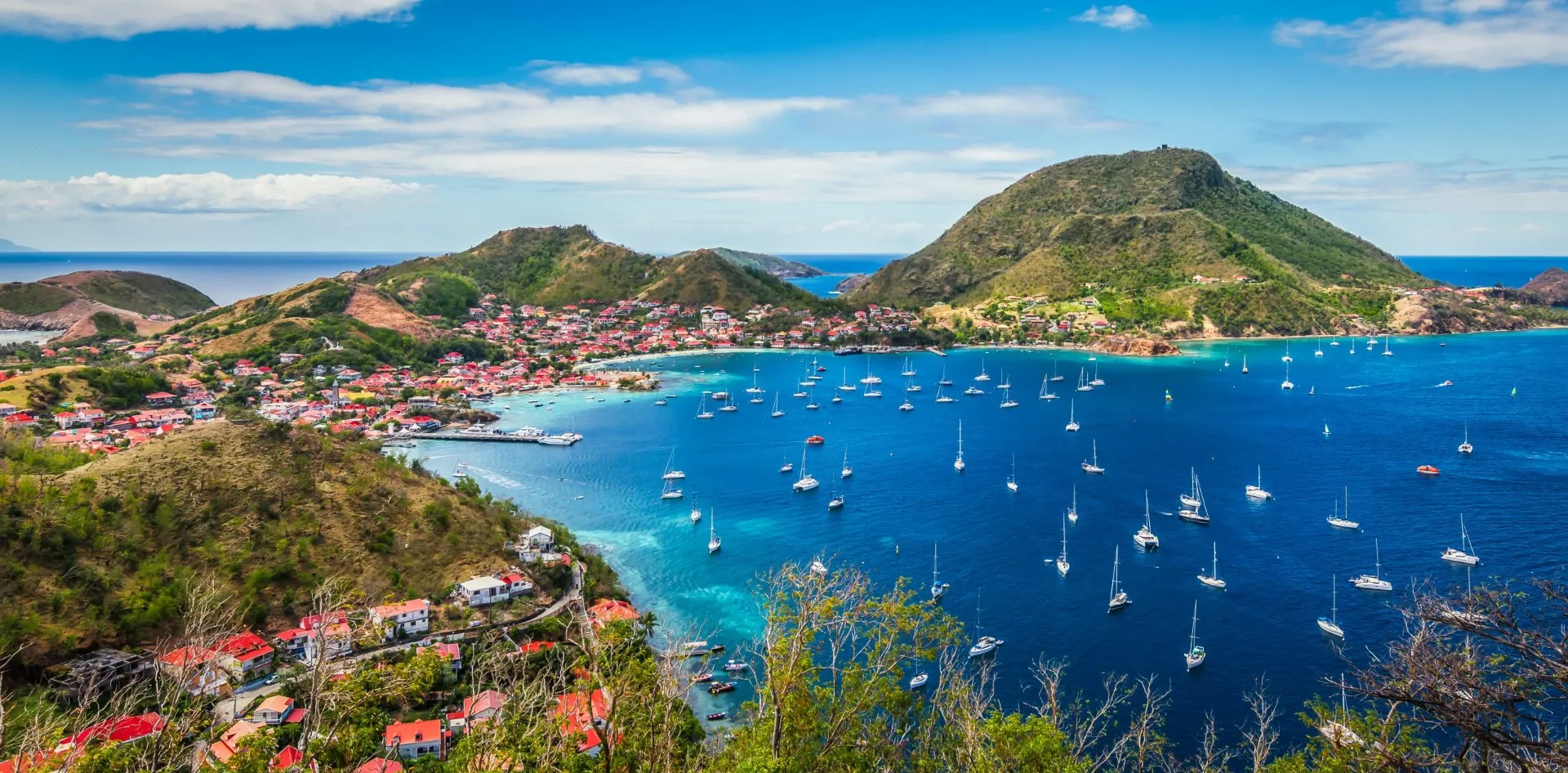
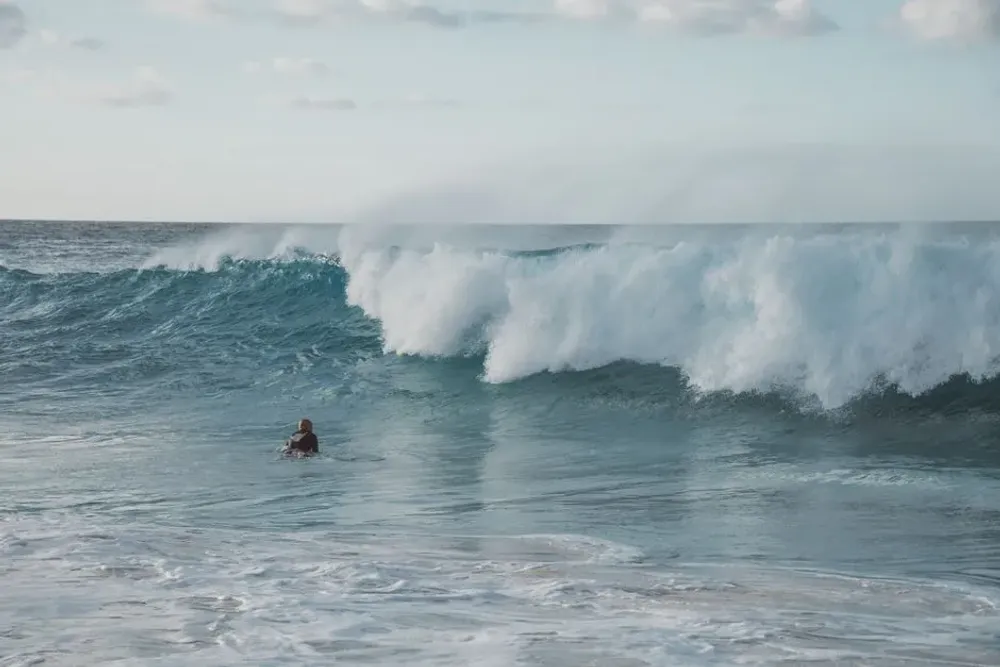
When people talk about surfing in Guadeloupe, they first picture the postcards: turquoise water, coconut palms, and long quiet beaches. The reality of the waves is more nuanced, and far more exciting. The butterfly-shaped archipelago, set between the Atlantic and the Caribbean Sea, catches the winter swells coming from the North Atlantic and offers, from December to April, sessions that have nothing to envy in the most renowned spots of the West Indies.
At Hostel Toucan, several of our guests are surfers and bodyboarders. Over the seasons, they have passed on their field observations: which break works with which swell direction, what level it suits, and above all where to park without a nasty surprise. Here is our home-grown mapping, from the wild coast of Le Moule all the way to Port-Louis, to line up your sessions in the right place, at the right time.
Understanding the swell seasons in Guadeloupe
Guadeloupe is a French overseas department made up of an archipelago, about 6,500 km from Paris (time difference of -5h in winter, -6h in summer). You land at Pôle Caraïbes airport, in Pointe-à-Pitre. What interests us here is the rhythm of the waves, which follows two very distinct logics.
The “surf” season: December to April
This is the prime period. The dry season (December to April) coincides with the winter depressions of the North Atlantic, which send north to north-east swells onto the Atlantic coast of Grande-Terre. The exposed spots from Le Moule to Port-Louis come alive, with regular waves of 1 to 2.5 metres, sometimes more during the big episodes. Bonus: the climate is dry, the trade winds generally manageable in the morning, and the water stays at 26-27 °C all year (a wetsuit is unnecessary, a rash guard is enough).
The “flat” season: May to November
The Caribbean summer is calmer on the Atlantic swell side, with waves often small and chopped up by the trade winds. On the other hand, it is the season for long, quiet sessions to get started, and the period when you keep an eye on tropical waves: a system passing offshore can generate an unexpected south-east swell. Note that this is also the cyclone season (June to November): always check the bulletins before planning.
Host tip: to aim for the best conditions, target January to March. It is the heart of the window, and it coincides with the high tourist season, so book your accommodation early.
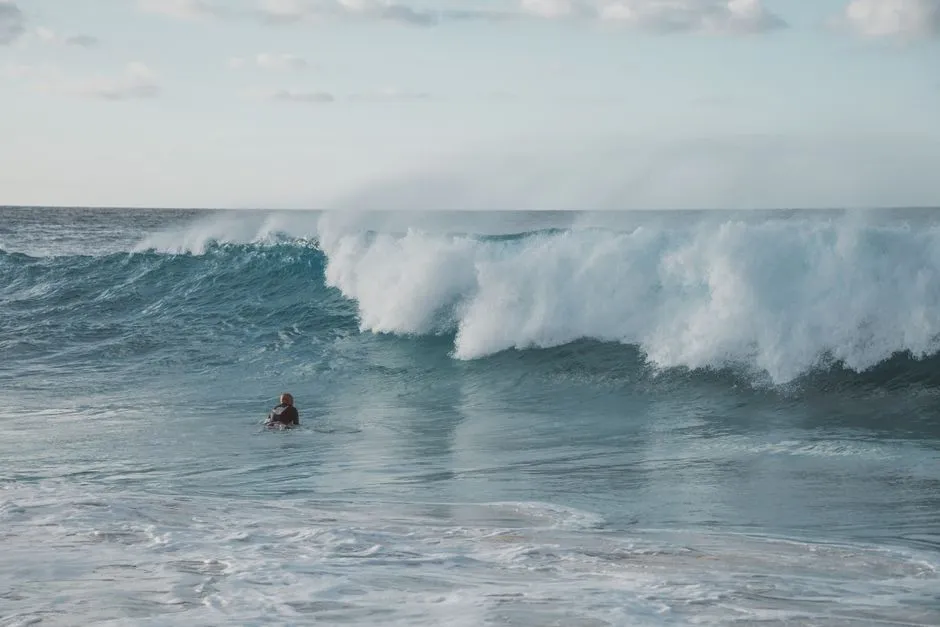
Mapping the breaks: from Le Moule to Port-Louis
Here are the spots our guests visit the most, from the south-east to the north-west of the Atlantic coast of Grande-Terre. Distances are given from Sainte-Anne, a practical base from which to fan out.
Le Moule: the historic, versatile spot
Le Moule is the cradle of Guadeloupean surfing, and remains the safe bet when the north-east swell comes in.
- L’Autre Bord: the reference beach break, rights and lefts depending on the sandbanks. Works from 1 m, ideal for progressing. Parking along the promenade is free but fills up quickly on weekends; arrive before 8 a.m.
- La Baie du Moule: more sheltered, perfect for beginners and longboarding on small-swell days.
- Distance: about 25 minutes (20 km) from Sainte-Anne.
- Level: beginner to advanced depending on the peak.
Anse Bertrand and Porte d’Enfer: the wild north
Heading up toward the northern tip of Grande-Terre, the landscape becomes spectacular and the waves more serious.
- Required level: intermediate to advanced. The seabeds can be less forgiving and currents present.
- Access: narrow roads, unsurfaced dirt parking. Plan on a vehicle and wear shoes for the walk to the water.
- Good to know: Porte d’Enfer is also a magnificent natural site; even without surfing, the walk is worth the detour.
Port-Louis: the end of the map
At the north-west extremity of our zone, Port-Louis offers spots that catch well-oriented north winter swells nicely.
- Level: intermediate primarily; some peaks suit advanced surfers on the big days.
- Parking: the Plage du Souffleur has a large, free and shaded car park, very convenient. It is also a superb spot for families, so respect the shared use of the water.
- Distance: about 50 minutes (45 km) from Sainte-Anne; a good hour from the airport.
And for bodyboarding?
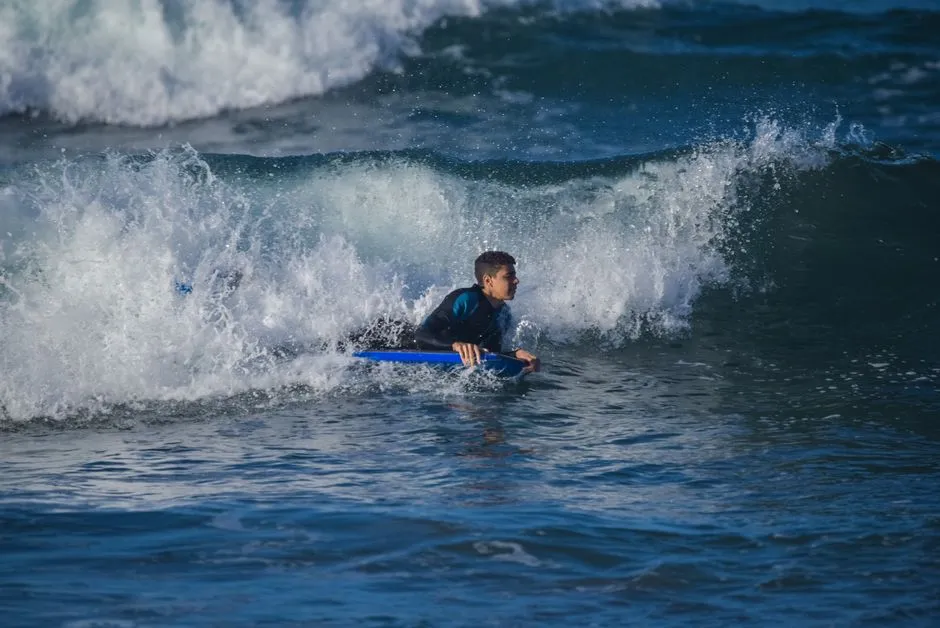
Bodyboarders find their happiness on the hollower, faster sections of the beach breaks at Le Moule, as well as on certain peaks at Anse Bertrand when the swell pumps. The rule stays the same: observe for 15 minutes from the beach before getting in the water, spot the currents and the exit.
Levels, safety and local common sense
Surfing in Guadeloupe rewards those who take the time to observe. A few principles our hosts apply systematically:
- Check the swell and the wind the day before: a north-east swell of 1.5 m with a long period, with a light offshore wind in the morning, is the winning combo.
- Surf in the morning: the trade winds often strengthen in the afternoon and chop up the surface.
- Respect the line-up: the local community is welcoming but attached to priorities. A smile and a little patience open every door.
- Never surf alone on the northern spots, which are more isolated.
- Protect the seabeds: no walking on the coral, and carry out your trash.
Rent or bring your own gear?
A few schools and shops around Saint-François and Le Moule offer board rentals (count on €15 to €25/day) and group lessons (from about €40 for a 1.5-hour session). If you travel with your board, most airlines charge a surf baggage supplement of between €50 and €80 per leg: weigh the pros and cons depending on the length of your stay.