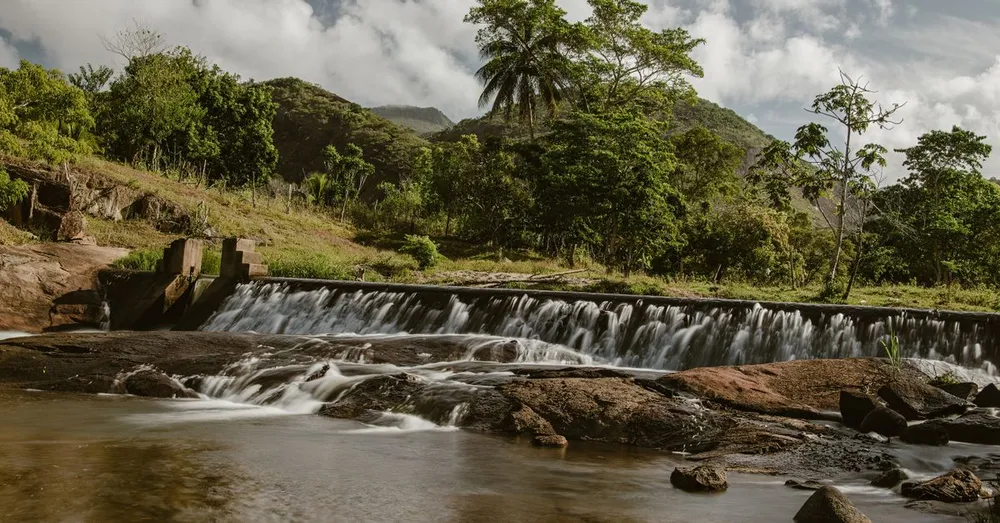
Visiting Cayenne in two days is entirely doable — as long as you don’t waste time. The capital of French Guiana isn’t a big city (around 65,000 inhabitants within the city limits, close to 150,000 including Rémire-Montjoly and Matoury), yet it packs in everything that gives the territory its character: one of the most strikingly exotic markets in France, streets lined with wooden Creole houses, and, a fifteen-minute drive away, wild beaches where leatherback turtles come to lay their eggs. After several years living here, here’s the itinerary I have all my visiting guests follow, with the opening hours, prices and pitfalls to avoid.
A logistical note before we begin: Félix-Éboué airport is in Matoury, about 15 km from downtown Cayenne (20 to 25 minutes by car). There is virtually no reliable public transport: rent a car as soon as you arrive (budget €40 to €55 per day in the dry season). For the rest of your planning, our complete guide to French Guiana covers formalities, climate and the yellow fever vaccine (mandatory, to be done at least 10 days before departure).
Day 1: the market and old Cayenne
Start early at the Cayenne market (on Saturday if possible)
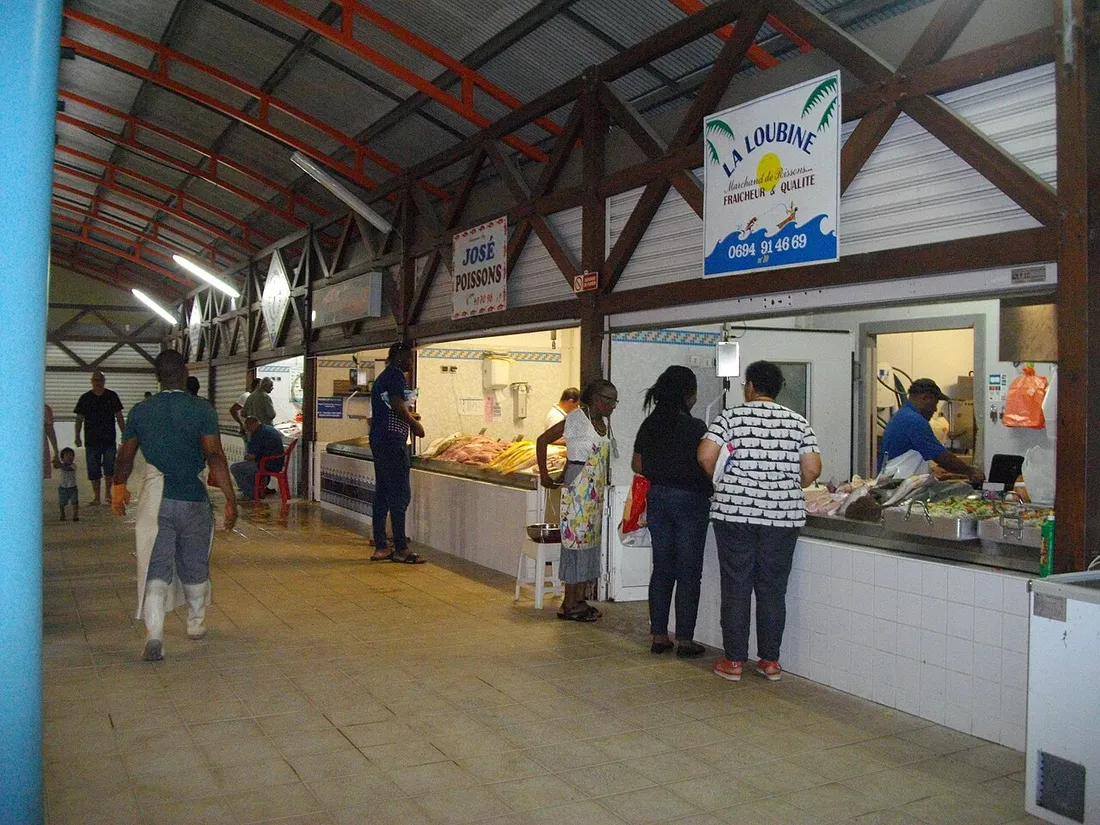
If you can pick your dates, line up your first day with a Saturday. The covered market of Cayenne, at the corner of Avenue du Général-de-Gaulle, is open Wednesdays, Fridays and Saturdays from around 6 a.m. to 1 p.m. — and it’s on Saturday morning that it truly comes into its own. Arrive before 9 a.m.: the heat rises fast and the best stalls empty out.
What not to miss:
- The pho soup from the Hmong stalls upstairs: a hearty bowl for €8 to €10, the best breakfast in town.
- Wassaï juice (the local açaí, pressed to order): €3 to €5 a cup, best drunk lightly sweetened.
- Spices and chilies: vegetarian chili paste, bois d’Inde, couac (cassava semolina) — count on €3 to €6 a jar, perfect as a souvenir.
- Fruit: rambutans, fresh coconut, maracudja, sometimes comou.
Right next door, the small fish market gives you a taste of what the Guiana Shield has to offer: acoupa, machoiran, shrimp.
Place des Palmistes and Creole architecture
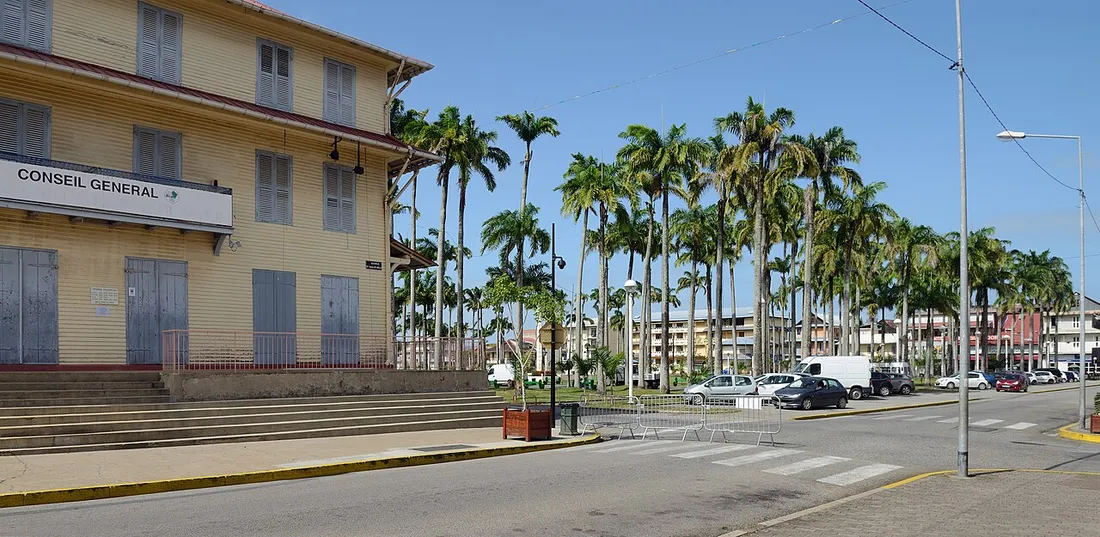
A five-minute walk away, Place des Palmistes is Cayenne’s living room: a rectangle planted with century-old royal palms, lined with cafés and watched over by the statue of Félix Éboué, a native son. It’s the ideal starting point for exploring old Cayenne on foot, on a loop of about 1.5 to 2 hours:
- Rue de Rémire and the adjacent streets: the finest traditional Creole houses, with painted wooden façades, shutters and intricate balconies, some superbly restored, others weathered by the equatorial humidity.
- The Town Hall and the prefecture (a former Jesuit convent), fine examples of colonial architecture.
- The Museum of Guianan Cultures, on Rue Madame-Payé: modest but well done, ideal for understanding the territory’s Amerindian, Creole, Bushinengé and Hmong settlement. Admission around €3, closed on Sundays.
A resident’s tip: take this walk between 9 a.m. and 11 a.m. or after 4 p.m. In the middle of the day, the equatorial sun makes walking unpleasant, even in the dry season.
Fort Cépérou and late afternoon by the Crique
Then climb the hill of Fort Cépérou, the historic birthplace of the city (free access). Few remains are left, but the view takes in the tin roofs, the estuary and the Amazon-colored ocean — because no, the sea is not turquoise here: the sediment from the great neighboring river tints the entire Guianan coastline a unique brownish-green.
For dinner, head to the restaurants in the center: a Creole dish (game fricassee, parépou, dachine) runs €15 to €22. If you’re in town in January or February, ask about Carnival nights: the Sunday parades and the masked balls are an experience in their own right.
Day 2: Rémire-Montjoly, between the Rorota trail and the beaches
The Rorota trail at daybreak
Second day, second face of the island of Cayenne. Take the car toward Rémire-Montjoly, the neighboring residential town (10 km, 15 to 20 minutes outside rush hour). Park at the start of the Rorota trail, on Route de Rémire: a shaded 4.5 km loop (about 2 hours, free, easy level) that winds between secondary forest and the city’s old water reservoirs.
Set off at 7:30 a.m.: that’s the time you’re most likely to spot three-toed sloths in the canopy, along with tamarins, agoutis and a dense bird life. Bring water, repellent and closed shoes: the ground stays slippery all year round.
The beaches of Montjoly: what to do in Cayenne on the ocean side
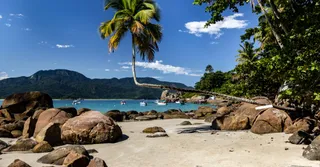
In the afternoon, it’s beach time. The beaches of Montjoly, Gosselin and des Salines stretch for several kilometers of sand fringed with coconut palms and tropical almond trees. Let’s be honest: you don’t come to French Guiana for postcard swimming — the water is laden with sediment and bathing should be done with care (currents). But for walking, running, watching fishermen haul in their nets and enjoying a sunset, it’s superb.
Two bonuses depending on the season:
- From April to July, the beaches of Rémire-Montjoly are among the few in the world where leatherback turtles come to lay their eggs at night, sometimes just a few meters from passers-by. Observation is possible on your own provided you follow the rules: no white light, no flash, a 10 m distance.
- The trip around the îlet la Mère (offshore, reachable on a day excursion, around €35 to €45) to meet the saïmiris, those fearless little squirrel monkeys.
Finish with the remains of the Vidal estate (a former sugar mill, free access), then a drink in a beachside hut facing the ocean (a planteur cocktail around €6 to €8).
Practical tips for visiting Cayenne with peace of mind
- Best time to go: the dry season, from mid-July to mid-November. The rest of the year, expect sudden but often short downpours.
- Time difference: -5 h from Paris in winter, -6 h in summer. The sun rises around 6:30 a.m. and sets around 6:45 p.m. all year round: plan your days early.
- Sample budget for 2 days and 2 people: car €90, meals €80 to €120, sightseeing almost free (Cayenne can be visited for next to nothing), accommodation €70 to €120 per night depending on the standard.
- Safety: as in any city, stick to the lively neighborhoods at night and don’t leave anything visible in the car.
- And then? Two days are enough for Cayenne, but not for French Guiana: Kourou and the Guiana Space Center (free visit by reservation), the Salvation Islands, the Kaw marshes or the Hmong market in Cacao on Sunday are 1 hour to 1.5 hours’ drive away.
Where to stay: Cayenne or Rémire-Montjoly?
For a 2-day trip, I recommend staying in Rémire-Montjoly: you’re 15 minutes from the historic center, but in a quiet spot, by the beaches and the Rorota trail. Downtown Cayenne still makes sense if you want to do everything on foot in the evening.
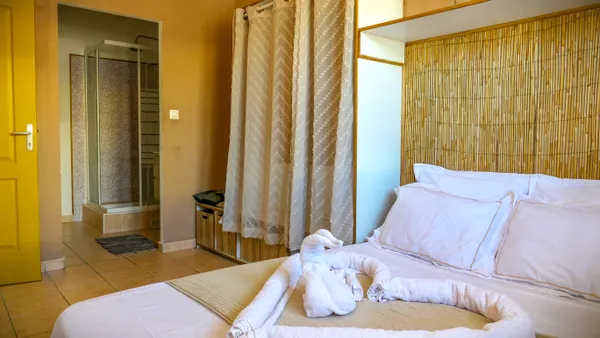
At Hostel Toucan, we directly manage fully equipped accommodation (air conditioning, mosquito nets, wifi) on the island of Cayenne and elsewhere in French Guiana. Booking through our accommodation in French Guiana page means direct booking with no platform fees, free cancellation up to 7 days before arrival and WhatsApp assistance 7 days a week provided by a team that lives on site. And if you own a property on the island of Cayenne, our concierge service for owners takes care of everything, from the listing to the cleaning.
FAQ
How many days do you need to visit Cayenne?
Two full days are enough for the market, the Creole old town, Fort Cépérou, the Rorota trail and the beaches of Rémire-Montjoly. Add extra days if you want to range out toward Kourou, the Salvation Islands or the Kaw marshes.
Which day should you go to the Cayenne market?
The covered market is open Wednesdays, Fridays and Saturdays, from around 6 a.m. to 1 p.m. Saturday morning is the liveliest: arrive before 9 a.m. to enjoy the Hmong soup stalls and the fruit stalls before the heat.
Can you swim at the beaches of Montjoly?
Swimming is possible but calls for caution: the water is laden with Amazonian sediment (a normal brownish-green color) and currents can be strong. The beaches are best suited to walking, sunsets and, from April to July, nighttime observation of leatherback turtles.
Do you need a car for a weekend in Cayenne?
Yes. Public transport is virtually nonexistent and the Day 2 sites (Rorota, the Rémire-Montjoly beaches) can’t be reached any other way. Budget €40 to €55 per day for rental, to book early in the dry season and during rocket launches.