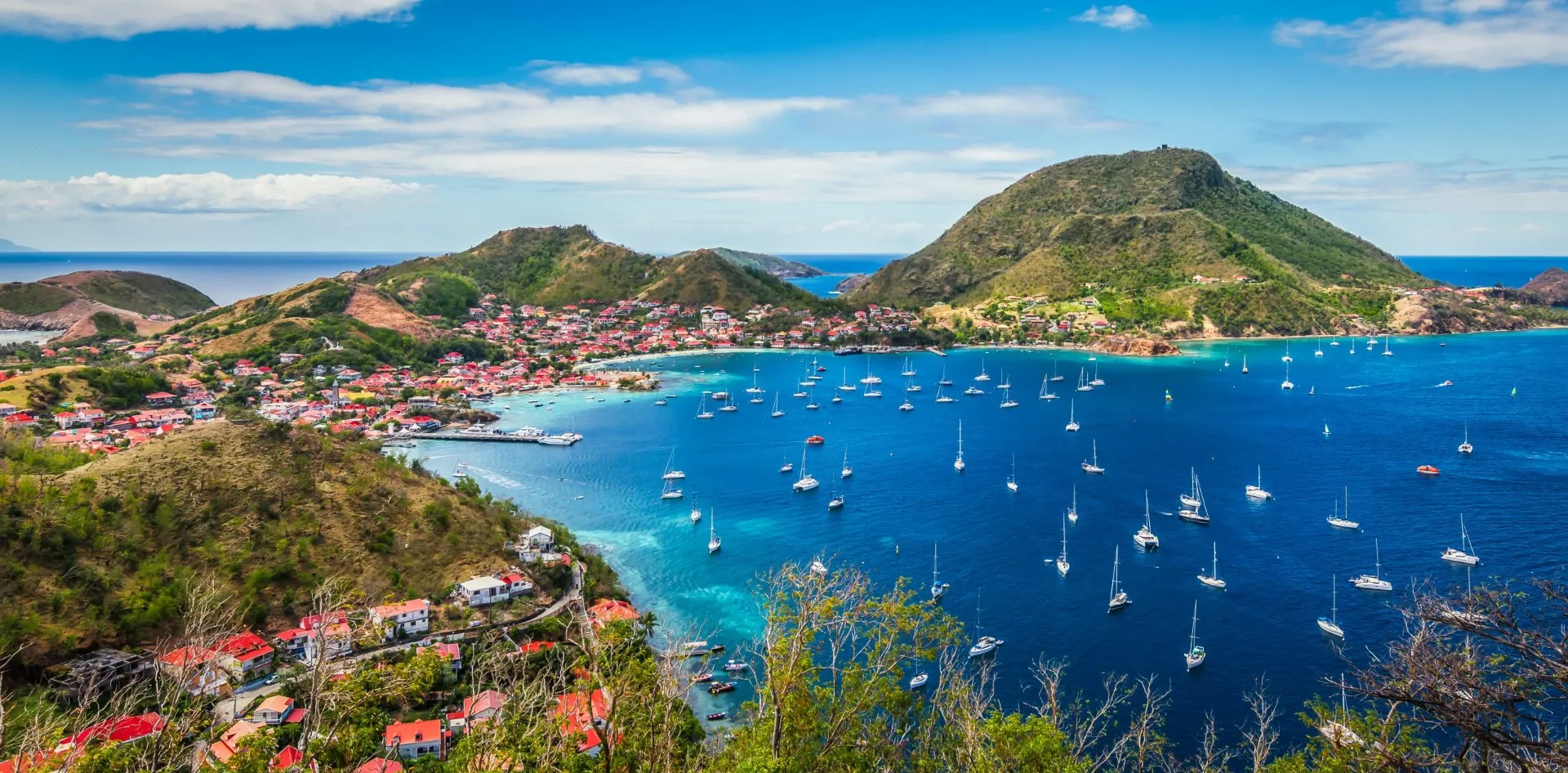

You are preparing a move or a job transfer to Guadeloupe and one question keeps coming back: should you settle on Basse-Terre or on Grande-Terre? The two halves of the Guadeloupean “butterfly”, separated by a narrow sea channel called the Riviere Salee, offer very different living environments. Grande-Terre concentrates the economy, seaside tourism and the airport; Basse-Terre wins people over with its lush nature, its volcano and its slower pace. There is no objectively “right” or “wrong” answer: everything depends on your job, your budget, your family and the life you are looking for. This factual article helps you compare the two territories objectively so you can arrive from mainland France knowing exactly what to expect.
Understanding the geography: two islands, one department
Continental Guadeloupe is made up of two landmasses linked by bridges (the pont de la Gabarre and the pont de l’Alliance) across the Riviere Salee. Despite their names, the geography does not match the elevation you might imagine.
- Grande-Terre (to the east) is a limestone plain, relatively flat and dry, edged with white sand beaches. It is home to Pointe-a-Pitre, Les Abymes, Le Gosier, Sainte-Anne, Saint-Francois and Le Moule.
- Basse-Terre (to the west) is a mountainous volcanic island covered in tropical rainforest and dominated by the Soufriere volcano (the highest point in the Lesser Antilles). It is home to the town of Basse-Terre (prefecture), Petit-Bourg, Baie-Mahault, Lamentin, Bouillante, Deshaies and Trois-Rivieres.
One detail that matters for newcomers: Baie-Mahault, with its vast Jarry business zone (the leading economic hub of the French Antilles), is administratively located on Basse-Terre while sitting right next to the Pointe-a-Pitre urban area. Many people effectively “live” across both territories on a daily basis.

Climate and quality of life
The Guadeloupean climate is tropical, with a dry season (the “careme”, from December to April) and a wet season (the “hivernage”, from June to November, the hurricane period). But the contrast between the two territories is very real.
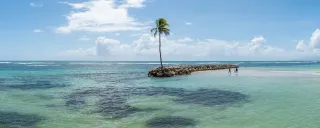
- Grande-Terre is generally drier and sunnier, with savannah vegetation and low hills. This is the land of the big tourist beaches.
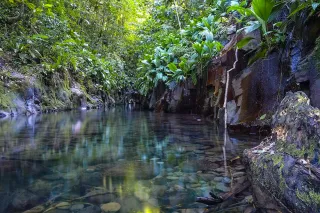
- Basse-Terre receives significantly more rain, especially in the highlands and on the windward coast (east coast), which explains its rainforest, its waterfalls and its rivers. The leeward coast (Bouillante, Deshaies) remains drier and more sheltered.
As a rough guide, the annual rainfall gap between the Grande-Terre coastline and the heights of Basse-Terre can be very substantial. If you dream of a lush tropical garden and cooler air, Basse-Terre wins; if you want sunshine and direct access to postcard beaches, Grande-Terre ticks the box.
Nature versus seaside
Basse-Terre means the Guadeloupe National Park, the Carbet Falls, the Soufriere, the Cousteau reserve at Bouillante for diving, and beaches that are sometimes black or golden sand. Grande-Terre means the Sainte-Anne lagoon, the Pointe des Chateaux, white sand beaches and a lively tourist scene. Your choice largely depends on the kind of weekends you picture.
Jobs and economic activity
This is often the deciding factor for a relocation. Most salaried employment is concentrated in the central urban area: Pointe-a-Pitre, Les Abymes, Le Gosier (Grande-Terre) and Baie-Mahault / Jarry (administratively Basse-Terre). The Jarry zone gathers thousands of companies (logistics, retail, industry, services), and the commercial port sits right alongside it.
- If you work in the private sector, retail, logistics or services, you will most likely gravitate around Jarry and the urban area: living on Grande-Terre (Gosier, Les Abymes) or in Baie-Mahault makes sense.
- If you are a transferred civil servant (prefecture, government administration, justice), be aware that the prefecture and many state services are in the town of Basse-Terre, at the far south of the volcanic island, a good distance from Pointe-a-Pitre.
- In healthcare, the Guadeloupe teaching hospital (CHU) is located in Les Abymes (Grande-Terre).
So think first about the exact location of your future workplace before choosing where to live. A classic mistake is settling on the beach side without measuring the daily commute.
Transport and commuting times
Guadeloupe is heavily car-dependent. Public transport exists (the Karu’lis bus network) but remains limited for flexible home-to-work travel, especially outside the urban area. Plan on at least one vehicle per household.
The well-known pain point for residents is the traffic congestion around Pointe-a-Pitre and on the roads leading to Jarry, particularly at rush hour. A smooth trip can take twice as long during peak times. This factor weighs heavily on the decision:
- Living in Sainte-Anne or Saint-Francois (eastern Grande-Terre) offers a magnificent setting, but noticeably lengthens trips to the urban area and the airport.
- Living in Le Gosier, Les Abymes, Baie-Mahault or Petit-Bourg puts you closest to the central employment hub.
- Living in southern Basse-Terre (Basse-Terre town, Trois-Rivieres, Capesterre) makes sense if your job is on the prefecture side, but is very remote if you work in Jarry.
Pole Caraibes airport is located in Les Abymes (Grande-Terre), a criterion worth considering if you travel often to mainland France or to neighbouring islands.
Finding housing: market, neighbourhoods and budgets
The Guadeloupean housing market is tight in sought-after areas close to employment. Prices vary widely depending on the town, proximity to the sea and the quality of the property. Here are some benchmarks, to be treated as indicative and variable depending on the season, the condition of the property and negotiation:
- The coastal tourist towns of Grande-Terre (Gosier, Sainte-Anne, Saint-Francois) generally show the highest rents and purchase prices.
- Baie-Mahault and Petit-Bourg (Basse-Terre) are sought after for their central position and can be more affordable than the Gosier seafront.
- Southern Basse-Terre (Basse-Terre town, Trois-Rivieres, Gourbeyre) is often more accessible financially, with green surroundings, but further from the economic hub.
Points to watch for overseas housing
- Check that the property meets hurricane-resistant building standards (roof, anchoring, shutters/closures).
- Look into the seismic risk (Guadeloupe is in a high-hazard zone) and flood exposure during the wet season.
- Look at the quality of the water supply: some towns experience cutoffs or rotating water restrictions (“tours d’eau”). This is a genuine day-to-day issue that should not be overlooked.
- Plan ahead for air conditioning or good natural ventilation, especially on the hotter, drier Grande-Terre side.
Our advice: do not sign a long-term lease remotely, without having visited. Spend a few weeks on site first to experience the commutes, the local microclimate and the feel of the neighbourhoods. That is precisely the role of temporary furnished accommodation, letting you find your bearings before committing.