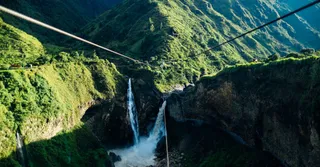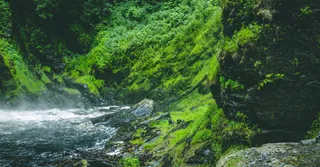
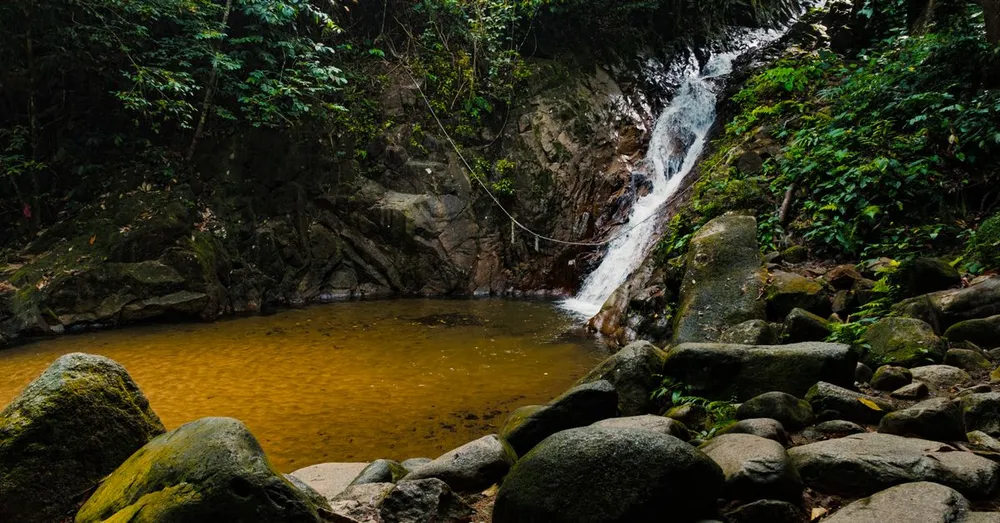
When the sea turns too warm by late morning or the beaches of Grande-Terre are packed, Guadeloupeans do what they’ve always done: they head up to the river. The Bassin Paradise in Guadeloupe you see all over Instagram really does exist, in Capesterre-Belle-Eau, and it lives up to its reputation. But it’s only the gateway to a whole network of freshwater pools that makes Basse-Terre, the volcanic wing of the archipelago, a one-of-a-kind playground in the Caribbean. After years of bringing travellers, friends passing through and family here, this is our complete on-the-ground guide: real access routes, depths, crowds and, above all, the golden rule about flash floods — the one that’s never up for debate.
Why Basse-Terre is the island of freshwater pools
Unlike Grande-Terre, which is flat and limestone, Basse-Terre is dominated by La Soufrière (1,467 m) and watered year-round by the trade winds that unload over the tropical rainforest of the National Park. The result: more than 50 permanent rivers tumbling down to the sea, carving waterfalls and natural basins into the volcanic rock.
The water here is cooler than the sea (22 to 25 °C versus 28 °C in the lagoon), which makes it the perfect refreshment after a hike to the Carbet Falls or a dive at the Cousteau Reserve. And it’s free: not a single pool in this selection charges an entry fee.
Bassin Paradise in Capesterre-Belle-Eau: the turquoise jewel
Access and route
Bassin Paradise hides in the heights of Capesterre-Belle-Eau, on the windward coast, in the Routhiers district. From the N1, allow roughly 15 minutes on a narrow uphill road (follow signs for Routhiers), then a trail through the undergrowth.
- Approach walk: 20 to 30 minutes each way, a trail that’s sometimes slippery with root crossings and a steep descent toward the end
- Parking: roadside verge at the end of the road, barely fifteen spots; arrive before 9 a.m. in the dry season
- Gear: water shoes or sneakers you don’t mind ruining, a waterproof bag, no flip-flops
- Budget: €0 — this is nature, not a theme park
What awaits you on site
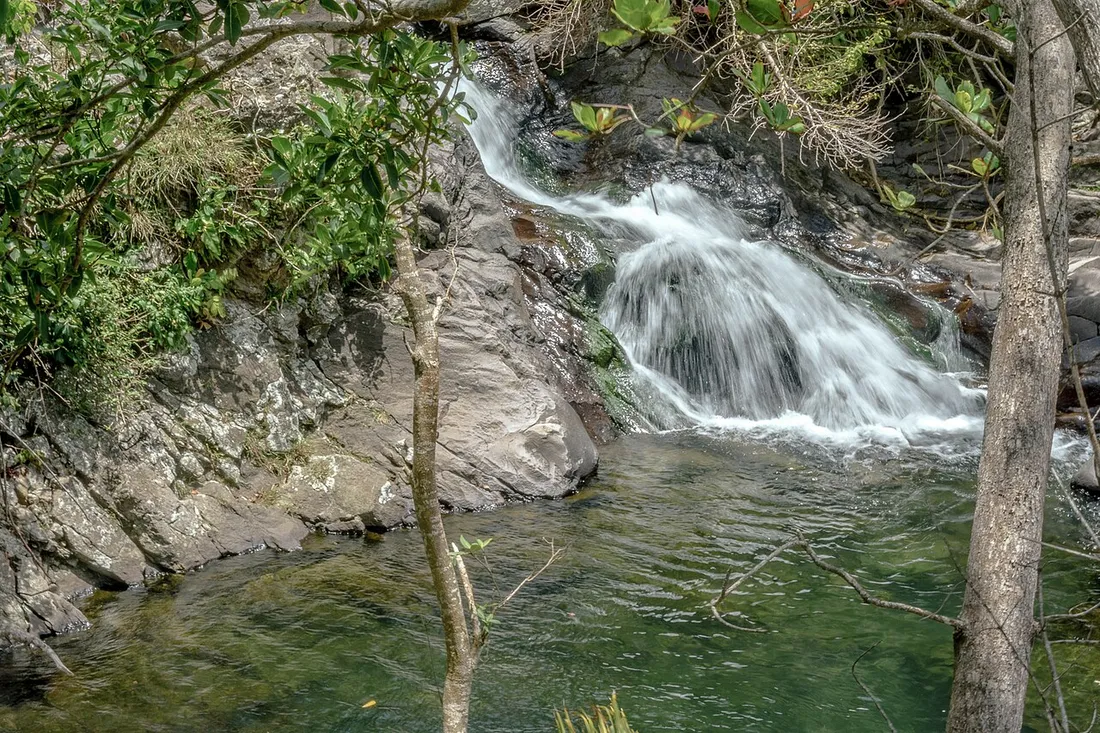
A basin about 10 metres across, a milky turquoise from the volcanic minerals, fed by a small 4-to-5-metre waterfall. The depth reaches 2.5 to 3 metres in the centre: you never touch the bottom in the middle, so you need to be able to swim. The boldest jump from the side rock, but always check the area first — the level can vary by several dozen centimetres depending on the week’s rainfall.
Our resident tip: aim for a weekday between December and April, early in the morning. On Sunday afternoons the pool becomes the local families’ meeting spot — guaranteed atmosphere, but serenity optional.
Bassin Bleu in Gourbeyre: the most accessible in the south
A 10-minute drive from the town of Basse-Terre, in the commune of Gourbeyre, the Bassin Bleu in Guadeloupe is the ideal option when you’re staying in the south of the island or coming back down from La Soufrière.
- Access: a 15-to-20-minute forest trail from the Blanchet neighbourhood, waymarked and fairly easy going
- Depth: about 2 metres at the foot of its waterfall, with areas where you can touch bottom along the edges — a good compromise for swimming children from age 8, under supervision
- Crowds: moderate on weekdays, heavy on weekends
- Smart combo: La Soufrière in the morning (start from Bains Jaunes in Saint-Claude), Bassin Bleu at 2 p.m. to ease the calves, then sunset on the leeward coast at Malendure
The water here is noticeably cooler than at Paradise, around 22 °C: the “cold-shower” effect after exertion is devastatingly effective.
Saut de la Lézarde in Petit-Bourg: the spectacular waterfall
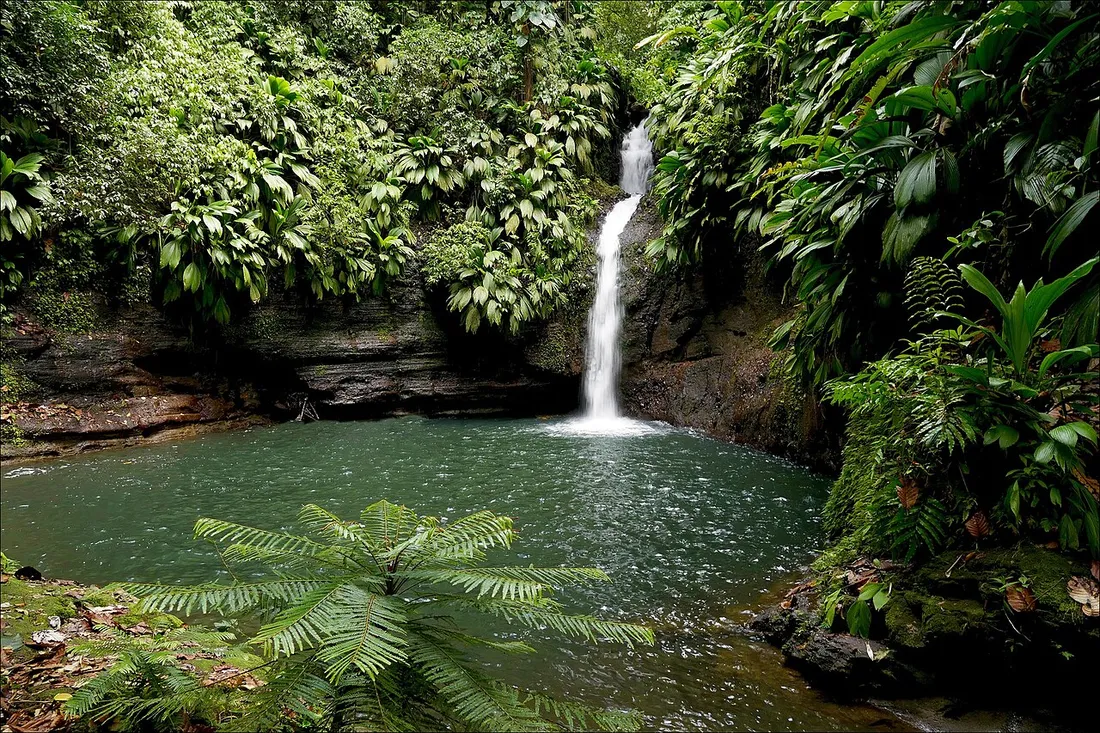
The Saut de la Lézarde is arguably the island’s finest “swimmable” falls: a curtain of water about ten metres high plunging into a wide emerald-green basin, ringed by tree ferns.
What to know before you go
- Location: the heights of Petit-Bourg, Vernou district, 25 minutes from Pointe-à-Pitre
- Trail: 20 to 25 minutes of steep descent, muddy after rain; the climb back up really stings in 30 °C heat
- Access status: the site has been closed at times by municipal order following landslides. Check whether it’s open with the Petit-Bourg town hall or your host before setting out — this is exactly the kind of up-to-date information our local team passes on at every arrival
- Depth: more than 3 metres beneath the falls; keep your distance from the curtain of water, whose current pushes you toward the bottom
The golden flood rule: what’s not up for discussion
This is the point we drum into all our travellers, because it saves lives every year in the Caribbean. Basse-Terre’s rivers react within minutes to rain that has fallen upstream, on slopes you can’t see. A peaceful basin can turn into a brown torrent in less than fifteen minutes.
The reflexes to adopt:
- Watch the water, not the sky: if it clouds, turns brown or carries leaves and twigs, get out immediately and climb to higher ground
- Listen: a dull roar upstream = evacuate, no debate
- Check the Météo-France Guadeloupe alert the same morning; a yellow “heavy rain and storms” alert = choose the beach, not the river
- Rainy season (June to November): favour morning swims, since stormy downpours mostly break in the afternoon
- Never alone: tell someone your route — there’s no mobile signal in most of the valleys
The best window remains the dry season, December to April: steady flows, clear water, dry trails.
Bonus pools to round out your tour
- Cascade aux Écrevisses (Route de la Traversée, Petit-Bourg): a 10-minute walk on a developed trail, the most family-friendly of all, perfect with little ones — but very busy between 10 a.m. and 3 p.m.
- Bains Jaunes (Saint-Claude, 950 m altitude): a stone-built pool of lukewarm volcanic water at 28 °C, at the start of the Soufrière trail
- Grande Anse river basin (Trois-Rivières): discreet pools known to locals, ask your host for advice
To place these spots within a full itinerary of the archipelago, from Les Saintes to Marie-Galante, see our Guadeloupe guide.
Where to stay for easy access to the pools
The logic is simple: the pools are best earned in the morning, so sleep on the right side. A rental in Capesterre-Belle-Eau, Trois-Rivières or Petit-Bourg puts you less than 30 minutes from every spot in this article, and 45 minutes from the Carbet Falls. If you’d rather combine the beaches of Grande-Terre with river getaways, Le Gosier or Sainte-Anne are still workable, at 50 minutes to 1 hr 15 by road depending on morning traffic on the N1.
Our Guadeloupe rentals handpicked by Hostel Toucan are booked directly, with no platform fees, free cancellation up to 7 days before arrival and 7-day WhatsApp support — handy for checking in real time whether the Saut de la Lézarde is open or whether the weather alert allows swimming. And if you own a villa on the Basse-Terre side that you’d like to showcase to nature lovers, our owners’ service handles everything on site.
FAQ
Is Bassin Paradise suitable for children?
Not really for non-swimmers: the basin is 2.5 to 3 metres deep in the centre and you can only touch bottom on the slippery rocky edges. With children, prefer the Cascade aux Écrevisses or the edges of Bassin Bleu in Gourbeyre, and keep the armbands in the bag.
How long does it take to get to Bassin Paradise?
From Pointe-à-Pitre, allow about 45 minutes by road to Routhiers (Capesterre-Belle-Eau), then 20 to 30 minutes on foot along a sometimes slippery trail. Plan for half a day with the swim, and leave early to find a parking spot.
Can you swim in Basse-Terre’s rivers during the rainy season?
Yes, but with maximum vigilance: from June to November, flash floods are common in the afternoon. Swim in the morning, check the Météo-France alert on the day itself, and get out of the water as soon as it clouds over or a roar rises from upstream.
Do the pools of Basse-Terre charge admission?
No, every pool mentioned (Paradise, Bassin Bleu, Saut de la Lézarde, Cascade aux Écrevisses, Bains Jaunes) is free and open access. The only worthwhile investment: a good pair of water shoes (€15 to €25 at a local sports shop) and a waterproof bag for your phone.