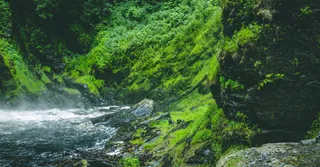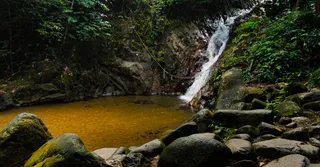
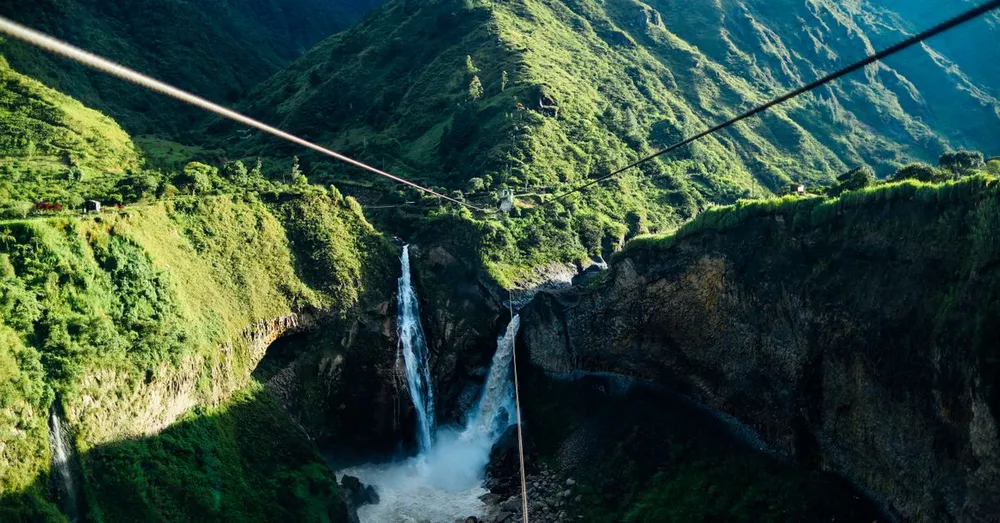
Canyoning in Guadeloupe at Basse-Terre reveals the other face of the butterfly-shaped island. While Grande-Terre lines up its beaches and lagoons, the western wing hides a vertical playground: dozens of rivers tumble down the slopes of La Soufriere (1,467 m) through the forest of the National Park. Abseils alongside waterfalls, natural water slides, jumps into emerald pools… I’ve descended most of the canyons open to the public since I moved here, and I’m sharing the routes by level, the real prices, the best season and the safety rules you should never compromise on.
Why Basse-Terre is the canyoning hotspot of the Caribbean
Geography is everything here. Basse-Terre is a young volcanic island: steep slopes, basaltic rock carved into potholes and chutes, and generous rainfall on the heights (more than 8 metres of water a year at the summit of La Soufriere). The result: short but intense canyons, with water all year round, just 20 minutes from the coast.
Three concrete advantages over mainland France:
- Water at 22-25 °C: a 3 mm shorty wetsuit is enough, and you can stay in the water for hours without shivering.
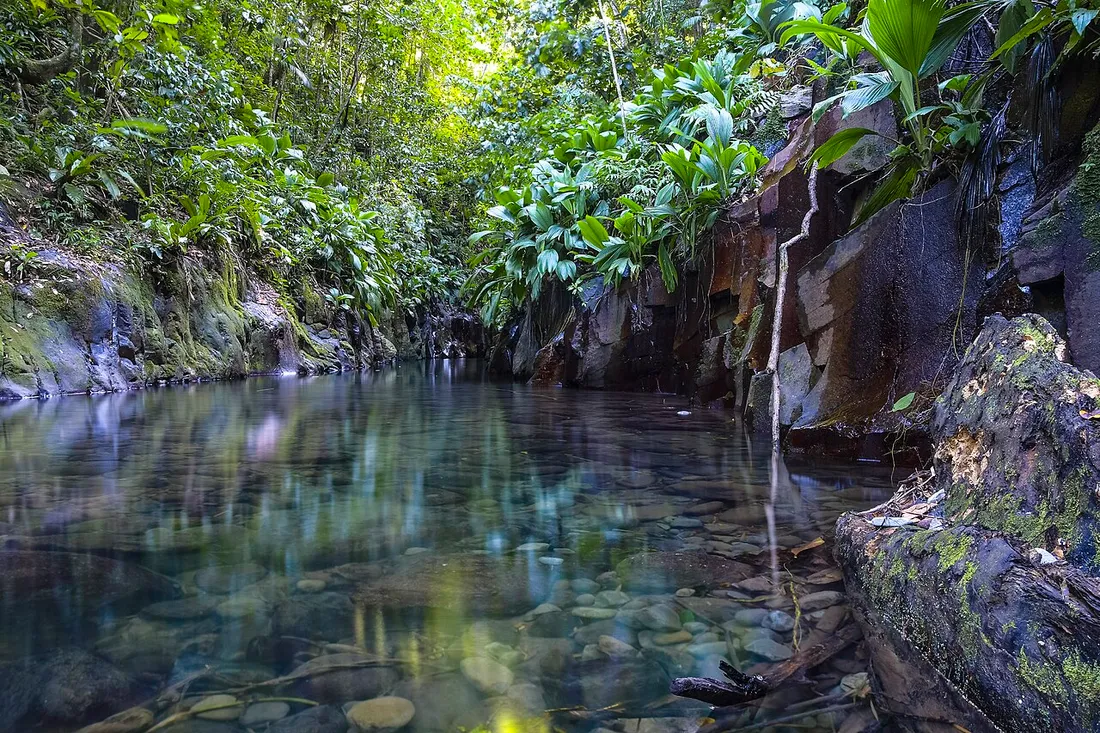
- Jungle scenery: tree ferns, lobster-claw heliconias, hummingbirds… you descend right in the heart of the Guadeloupe National Park.
- Density of routes: from family-friendly introductions to committing 6-hour descents, everything sits within a 40 km radius of the Route de la Traversee.
One word of caution, though: no canyon in Basse-Terre should be attempted alone if you don’t know the terrain. Floods are sudden (a one-metre rise in just a few minutes after a storm on the summits) and several serious accidents have occurred without a guide.
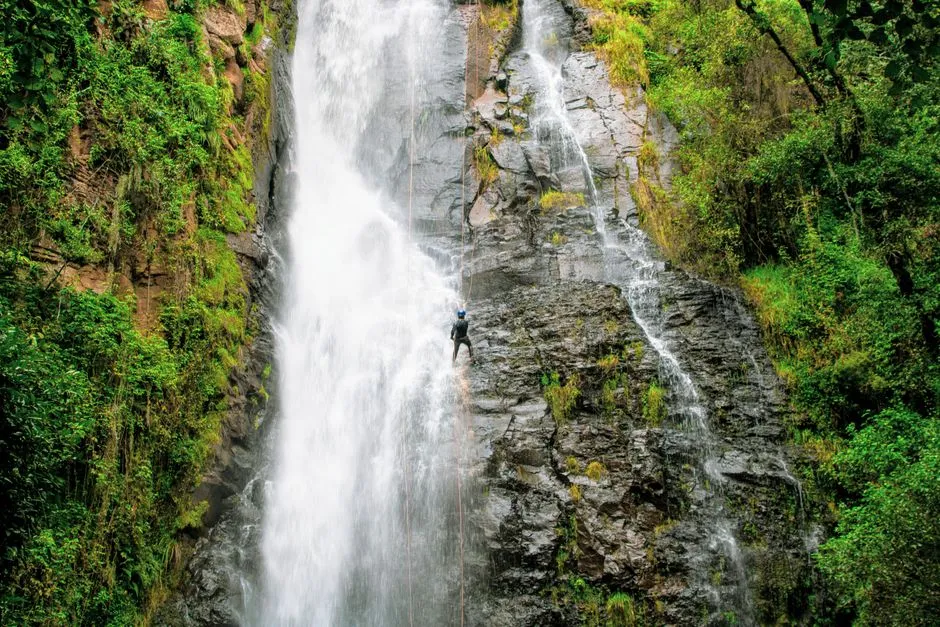
The canyons of Basse-Terre by level
Vauchelet: the ideal canyon for beginners
On the heights above Saint-Claude, 15 minutes from the town of Basse-Terre, the Vauchelet canyon is the perfect gateway, the one where guides bring families and complete beginners.
- Level: introductory, accessible from ages 8-10 depending on the operator
- Duration: half a day, around 3 hrs including 2 hrs in the water
- Programme: small jumps of 1 to 5 m (always avoidable), natural slides, two short abseils of 5 to 10 m to get a taste of descending on a rope
- Typical price: 55 to 65 € per person, full gear provided (wetsuit, helmet, harness)
- Approach walk: 20 minutes through the forest, easy
The scenery is stunning: dense canopy, the silhouette of La Soufriere as a backdrop. This is the canyon I recommend to travellers in our villas who want to try the activity without any major physical commitment.
Saut d’Acomat: jumps and an aquatic vibe at Pointe-Noire
On the Caribbean side, at Pointe-Noire (20 minutes south of Deshaies), the Saut d’Acomat is the star of social media: a waterfall of about ten metres plunging into a nearly circular turquoise pool. The site can be visited freely via a short but slippery path; yet it’s on a guided descent that the Acomat river reveals its full potential.
- Level: sporty, you need to be able to swim and be willing to jump
- Duration: 3.5 to 4 hrs on the water
- Programme: a string of jumps from 3 to 10 m (the final jump into the main pool is optional), swimming through fast water, small downclimbs
- Typical price: 60 to 70 € per person
- Bonus: you finish with a swim in the large pool, often before the visitors arrive
Local tip: aim for the 8 a.m. slot. The morning light falls directly onto the pool and you’ll have the site almost to yourself; in the afternoon, the car park overflows and the rock turns into an ice rink.
Riviere du Trou a Diable and intermediate canyons
Between the introductory routes and the big descents, several rivers offer intermediate runs. The Riviere du Trou a Diable, on the leeward coast, offers a wild canyon with abseils of 15 to 25 m, deep pools to swim through and a genuine sense of exploration: you’ll hardly cross paths with anyone.
- Level: intermediate, a first abseiling experience recommended
- Duration: 5 to 6 hrs in total
- Typical price: 75 to 90 € per person
- Commitment: once you’re in, you only come out at the bottom, which is why a locked-in weather forecast matters
In the same category, the Bras de Fort canyon on the Goyave side is scheduled by the guiding offices according to the day’s water flow.
Committing routes for experienced canyoneers
For seasoned practitioners, Basse-Terre keeps a few gems: the gorges of the Quelbec river, the verticals of the Mamelles massif or the upper routes of the Carbet Falls (the third fall is descended on an abseil of more than 20 m). Expect 6 to 8 hrs of effort, abseils up to 40 m and a price of 90 to 120 € for the day. These outings often set off at 7 a.m. to be out of the canyon before the afternoon storms.
A guide is mandatory: how to choose yours
A non-negotiable point: in Guadeloupe, canyoning is practised with a professional. What to check before booking:
- State qualification: the DE canyonisme (or BE climbing with a canyon qualification). Ask for it; a real pro will show it without taking offence.
- Group size: 8 people maximum per guide, the serious standard on the island.
- Gear provided: neoprene wetsuit, helmet, harness with a double cow’s tail, dry bag.
- Weather policy: a good operator cancels or switches canyons free of charge if Meteo-France places the rivers under a warning. If the answer is “we’ll see when we get there”, run away.
- Professional liability insurance and a safety briefing before getting in the water.
Half a dozen guiding offices operate in Basse-Terre, based in Saint-Claude, Bouillante and Pointe-Noire. Book 3 to 5 days ahead in the dry season: the morning slots fill up fast between Christmas and Easter.
When to go: the dry season above all
The ideal window runs from December to April, during the careme (Lenten dry season): stabilised flows, minimal flood risk, clear water in the pools. It’s also the high season, which is why it pays to book early. In the wet season, a single storm on La Soufriere and the outing is off. A few markers:
- December - April: optimal conditions, all canyons open
- May and June: a good fallback period, fewer people, flows still reasonable
- July - November: case-by-case outings, favour short canyons with escape routes like Vauchelet
- After heavy rain: a 24 to 48 hr wait before the rivers become passable again
On the logistics side: rent a car (essential in Basse-Terre), bring closed shoes that can handle water, a swimsuit to wear under the wetsuit, mosquito repellent and a water bottle. The guides provide the rest.
Where to stay to reach the canyons
The Deshaies - Pointe-Noire - Bouillante triangle, on the leeward coast, is the best base: 20-30 minutes from the Saut d’Acomat, 45 minutes from Vauchelet, and the Cousteau Reserve at Malendure right on your doorstep for a day of snorkelling between two descents. Saint-Claude suits purists who want to sleep at the foot of La Soufriere.
This is the area where Hostel Toucan manages its rentals on the Basse-Terre side: hand-picked accommodation, direct booking with no platform fees, free cancellation up to 7 days before arrival (handy when you’re planning around the weather) and WhatsApp support 7 days a week — we’re happy to point you towards the canyon guides we recommend. Browse our rentals in Guadeloupe or pick up more ideas in our complete guide to Guadeloupe. Own a property on the island? Our concierge service for owners takes care of everything.
After the effort comes the reward: sunset at Grande Anse in Deshaies, accras and grilled fish at a lolo in Bouillante. Canyoning in Basse-Terre has to be earned; the after-canyon is to be savoured.
FAQ
Do you need to know how to swim to go canyoning in Basse-Terre?
Yes, knowing how to swim is essential on all routes, including Vauchelet: every canyon has deep pools to cross. The neoprene wetsuit helps you float, but guides require genuine comfort in the water.
What budget should you plan for a canyoning outing in Guadeloupe?
Expect 55 to 65 € per person for a half-day introduction (Vauchelet), 60 to 70 € for the Saut d’Acomat, and 75 to 120 € for the intermediate-to-committing canyons over a full day, technical gear always included.
Can you do the Saut d’Acomat without a guide?
The Saut d’Acomat pool can be visited freely via a 10-minute path from Pointe-Noire, and swimming is possible in good weather. Descending the river by canyoning (linked jumps, downclimbs), however, requires a qualified guide: the terrain is slippery, floods are fast, and jumping without knowing the day’s depth is the leading cause of accidents on the island.
What is the best time for canyoning in Basse-Terre?
The dry season, from December to April, offers the most reliable conditions: steady flows, clear water, very few cancellations. May-June remains a good alternative with fewer people. During the wet season (July to November), outings depend on the day’s weather and guides favour short canyons with escape routes.