Some dishes tell the story of a place better than any guidebook. In French Guiana, that dish has a name: awara broth. Simmered for three days and shared around a big table on Easter weekend, it gathers in a single pot the entire mixed history of this French department of South America. Tasting awara broth in French Guiana isn’t just eating: it’s stepping into a Creole family, grasping a symbolism centuries old and, so they say, binding yourself to this land forever. Let us take you to the heart of this sacred recipe.
Awara broth, the totem dish of Creole French Guiana
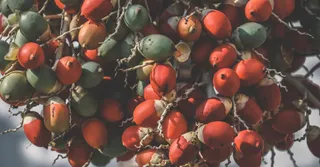
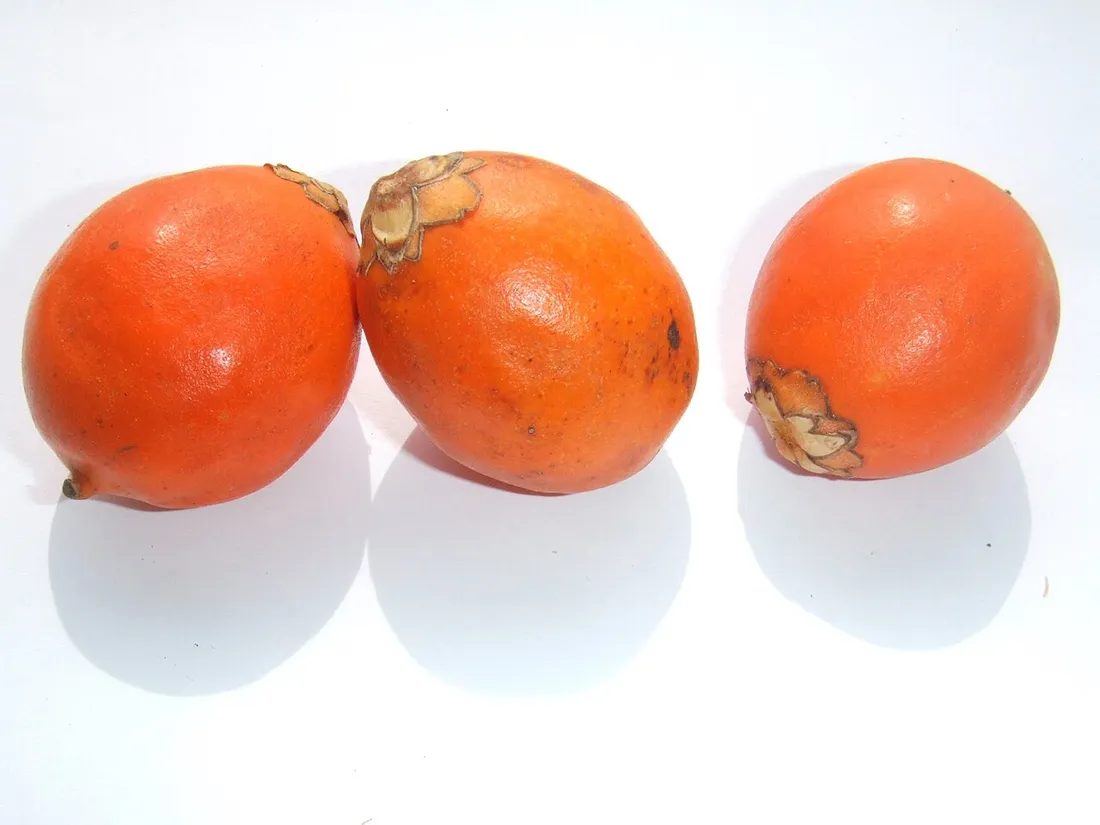
Awara is the fruit of a thorny palm (Astrocaryum vulgare) that grows abundantly along the Guianese coast, from Cayenne to Saint-Laurent-du-Maroni. Its bright orange pulp, rich and oily, is boiled and then reduced at length to obtain a thick paste, the dish’s one true base. It is this awara paste, and not a mere spice, that gives the broth its deep amber colour and its inimitable flavour, at once fruity, smoky and powerful.
Awara broth is a direct legacy of the era of slavery. Creole communities shaped it by adding everything land and sea had to offer: there is no single recipe, but as many versions as there are families. That is precisely what makes it a totem dish. Traditionally served on Easter Sunday and Monday, it punctuates the Guianese calendar just as carnival does, the year’s other great moment of communion.
A saying that seals your fate
In French Guiana, a belief goes with this dish: “Whoever eats awara will never leave French Guiana,” or will inevitably return. Beyond folklore, the saying captures something true. Awara broth demands so much patience, so many hands and so much sharing that it is never eaten alone. To taste it is necessarily to have been invited somewhere, to have woven a bond. And that bond, indeed, is one you never forget.
Three days in the pot: why such a ritual
If awara broth fascinates, it is because of its extraordinary preparation time. People routinely speak of three days of cooking, and that is no marketing exaggeration.
Here, in broad strokes, is how a family preparation unfolds:
- Day 1 — the paste and the meats. You prepare or rehydrate the awara paste, then soak the salted and smoked meats at length to remove the salt: pork tail, fatback, snout, smoked chicken, sometimes salt beef.
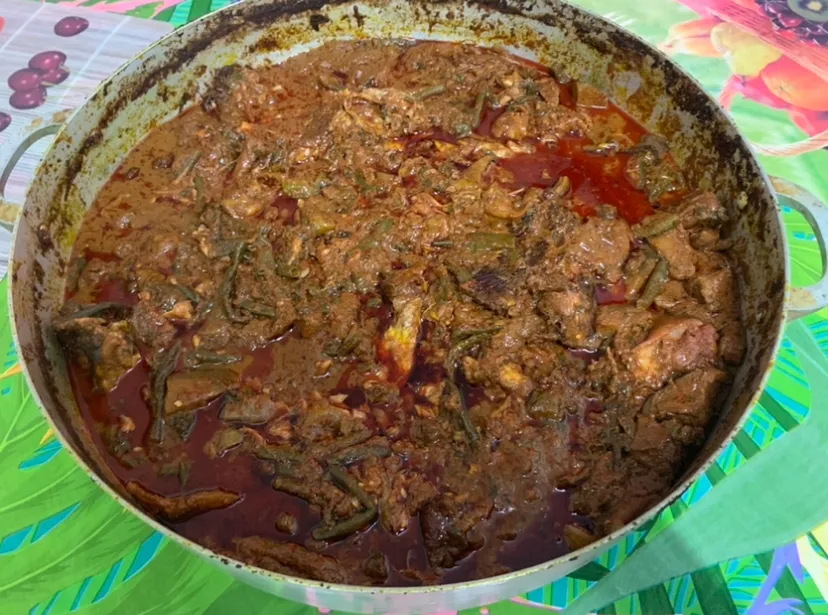
- Day 2 — the assembly. The paste simmers gently. You add, in layers, the meats, the smoked fish, the shrimp and the vegetables (cabbage, green beans, eggplant, local spinach), all seasoned with chilli, garlic and herbs from the garden.
- Day 3 — the maturing. The broth rests and reduces further. Like a good cassoulet, it is better reheated: the flavours fuse and the sauce thickens until it coats the spoon.
A real awara broth can bring together more than twenty different ingredients. This accumulation is no accident: every community in French Guiana has left its contribution here.
A pot that tells the whole story of Guianese settlement
The genius of awara broth is to be a mosaic dish. In it you symbolically find the contributions of each population:
- The smoked meats and the smoking technique recall the Amerindian and Bushinengue know-how of the Maroni River.
- The fish and shrimp celebrate the bounty of the coast and the marshes, such as those of Kaw.
- The salted meats and certain preparations evoke the legacy of the plantations and Creole mixing.
To eat awara broth is therefore to read, in a single plate, the history of a land where Creoles, Bushinengues, Amerindians, Hmong from Cacao, mainland French and many others live side by side. No other dish so clearly captures what French Guiana is.
Where to taste authentic awara broth in French Guiana
Good news for travellers: you don’t need to be invited into a family to taste it, even if that remains the ultimate experience. Here are our resident’s tips.
Cayenne market, the starting point
The covered market of Cayenne (place du Coq, open Wednesday, Friday and Saturday mornings) is the ideal place for a first encounter. At the Creole cooking stalls, awara broth is ladled out, usually between €8 and €14 for a hearty plate. It’s also where you’ll find awara paste by the jar (around €5 to €8) for the more adventurous who want to attempt the recipe at home.
A stone’s throw away, the place des Palmistes and its surroundings gather several Creole eateries where the dish appears on the menu, especially around Easter.
Around the Easter season
Awara broth is above all a seasonal dish. If you travel between March and April, your chances of finding it in every town — Cayenne, Rémire-Montjoly, Matoury, Kourou, Macouria — are at their highest. Many associations and parishes then organise shared meals. Ask around locally: a message in a neighbourhood group or a question to your host is often enough to land an invitation.
Off season, some Creole restaurants offer it occasionally at weekends, but you sometimes need to book ahead, as the preparation is too long to be improvised.
Our tasting tips
- Serve it with plain white rice, which balances the richness of the dish.
- Ask for the chilli on the side: the broth is already spicy, so adjust to your tolerance.
- Come with an appetite and time to spare: awara broth is savoured slowly, while chatting. It’s a dish of conviviality, not fast food.
Planning your foodie trip to French Guiana
Discovering awara broth fits naturally into a wider journey. French Guiana, whose capital is Cayenne, has around 290,000 inhabitants, uses the euro and is visited in French (Creole, Bushinenge and Amerindian languages also resound there). You land at Félix-Éboué airport in Matoury, with a time difference of 5 hours in winter and 6 hours in summer relative to Paris.
A few practical points to anticipate:
- Yellow fever vaccination required to enter the territory.
- A car is essential: the sites are far apart and public transport is limited.
- Best time to go: the dry season, from mid-July to mid-November, for the climate — but Easter (March-April) remains the unmissable culinary moment for awara.
Between two plates, French Guiana unfolds its highlights: the free visit to the Guiana Space Centre in Kourou (with a bit of luck, an Ariane 6 or Vega launch), the Salvation Islands, the Kaw marshes, a trip up the Maroni River by dugout canoe, the penal colony of Saint-Laurent-du-Maroni, the leatherback turtles of Awala-Yalimapo or the Hmong village of Cacao and its Sunday market.
To make the most of this cuisine and these adventures, the choice of accommodation makes all the difference. Our concierge service Hostel Toucan offers seasonal rentals in French Guiana ideally located to roam between Cayenne, Kourou and the coast. Direct booking comes with no platform fees, with free cancellation up to 7 days before arrival and WhatsApp support 7 days a week to point you towards the best tables — including, in season, where to find the famous broth. To plan your whole trip, also see our complete guide to French Guiana.
Do you own a property here and want to make the most of it for travellers in search of authenticity? Discover our dedicated support for owners.
Awara broth is not just a dish to tick off a list. It is a gateway to the Guianese soul, an experience that is shared and earned. And if the saying is true, a single spoonful could well give you the irresistible urge to come back.
FAQ
What exactly is awara broth?
It’s the emblematic dish of French Guiana, based on awara paste (the fruit of a local palm), simmered for about three days with around twenty ingredients: salted and smoked meats, smoked fish, shrimp and vegetables. It is traditionally eaten on Easter weekend.
Why does awara broth take three days to prepare?
The long cooking time is essential: you have to desalt the meats, reduce the awara paste, then let everything simmer and mature. Like a cassoulet, the broth is better reheated, once the flavours have fused and the sauce has thickened.
Where can you taste authentic awara broth in French Guiana?
The covered market of Cayenne is the best starting point, with plates between €8 and €14. Around Easter (March-April), many Creole eateries, associations and parishes in Cayenne, Kourou or Matoury offer it. Off season, it’s best to book ahead.
What does the saying about awara broth mean?
In French Guiana they say that “whoever eats awara will never leave French Guiana” or will return. Beyond folklore, the saying underlines that this dish is always shared as a community: tasting it creates a strong bond with the land and its people.