People come to Guadeloupe for rum, rarely for coffee. Yet long before sugarcane took over, the archipelago was a renowned coffee land prized all the way to the courts of Europe. Today, on the heights of Vieux-Habitants, a handful of growers are reviving an industry that lay dormant for nearly a century. Guadeloupe coffee is being reborn, carried by a historic variety, the Bonifieur, and by enthusiasts who open their plantations to the curious. After several seasons guiding my travellers along these mountain trails, here is what you need to know to experience this revival from the inside.
A forgotten coffee that has come a long way
Guadeloupe is a French Caribbean archipelago (an overseas region) shaped like a butterfly, home to around 380,000 inhabitants. Its western wing, Basse-Terre, is volcanic: La Soufrière rises to 1,467 m, the national park protects a dense rainforest, and the Carbet Falls tumble down its slopes. It is on these humid flanks, between 300 and 600 m in altitude, that the coffee tree (Coffea arabica) finds its ideal playground.
Introduced in the 18th century, Guadeloupe coffee was for a time a local source of pride, exported and appreciated for its finesse. Then came the hurricanes, competition from sugar and the rural exodus: the coffee groves were abandoned, swallowed up by the forest. The current revival draws on these old trees rediscovered beneath the canopy and on a handful of die-hards who decided to replant, harvest and roast on site.
Why Basse-Terre offers an exceptional terroir
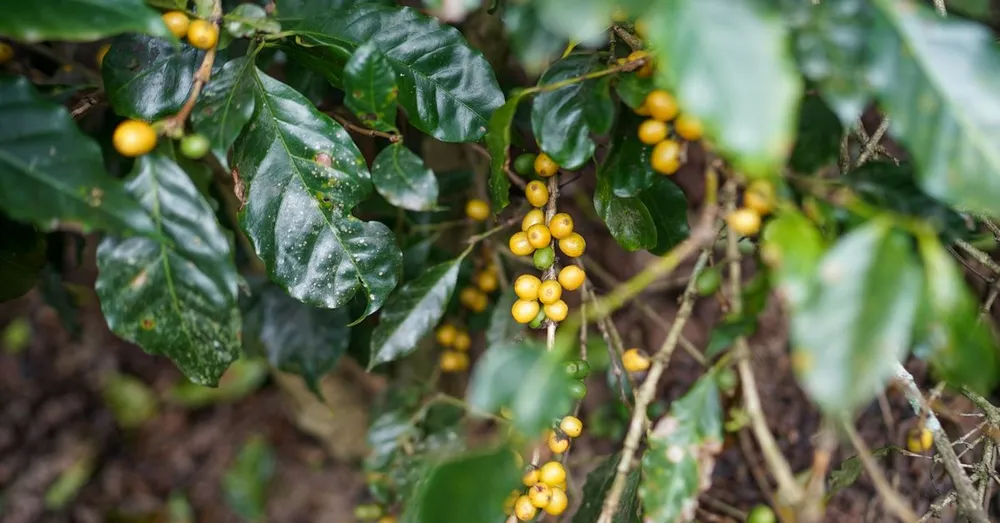
The high-altitude coffee tree loves exactly what the leeward coast gives it: constant warmth, heavy rains, well-draining volcanic soils and, above all, shade. Grown in agroforestry, sheltered by banana trees, fruit trees and tall hardwoods, the arabica ripens slowly. This slowness concentrates the aromas and yields a smooth, low-bitterness cup with notes of cocoa and dried fruit. It is the complete opposite of industrial coffees gorged on sun and harvested by machine.
The Bonifieur, the archipelago’s emblematic variety
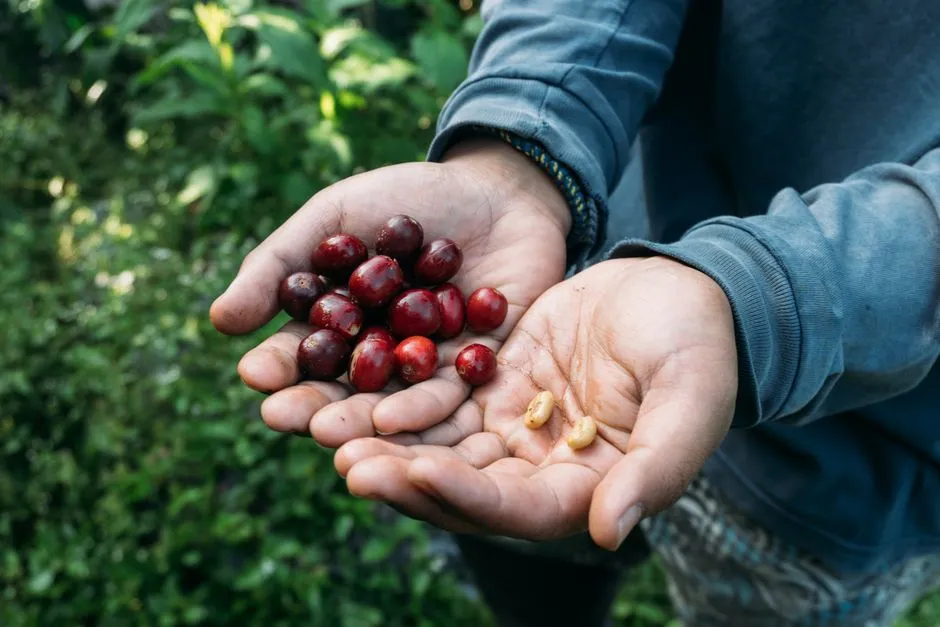
It is impossible to talk about Guadeloupe coffee without mentioning the Bonifieur. This name refers to a selection of arabica acclimatised locally over generations. Renowned for its roundness and low acidity, it “improves” (in French, bonifie) blends, hence its nickname. Hand-picked, cherry by cherry, it is now the focus of a genuine quality-driven revival.
A few markers to understand what is at stake in the cup:
- Variety: Bonifieur-type arabica, sometimes paired with the historic Typica.
- Growing altitude: 300 to 600 m on the hills of Vieux-Habitants and the surrounding area.
- Harvest: by hand, in the dry season, from January to April depending on ripeness.
- Aromatic profile: round body, gentle bitterness, notes of chocolate, hazelnut and spices.
- Volumes: small-scale, in limited batches from passionate Vieux-Habitants coffee growers.
To taste a freshly roasted Bonifieur is to grasp why this Creole coffee once charmed connoisseurs. Rarity does the rest: this is artisanal production, a world away from the great global origins.
Vieux-Habitants, cradle of the coffee revival
Vieux-Habitants is one of the oldest towns in the archipelago, perched on the leeward coast between the Caribbean Sea and the mountains. This is where the heart of the renewal beats. As you climb the narrow roads towards the interior, you pass from beaches of volcanic pebbles to coffee groves perched high up, in a forest mugginess that smells of humus and coffee blossom.
The coffee museum and the plantations to visit
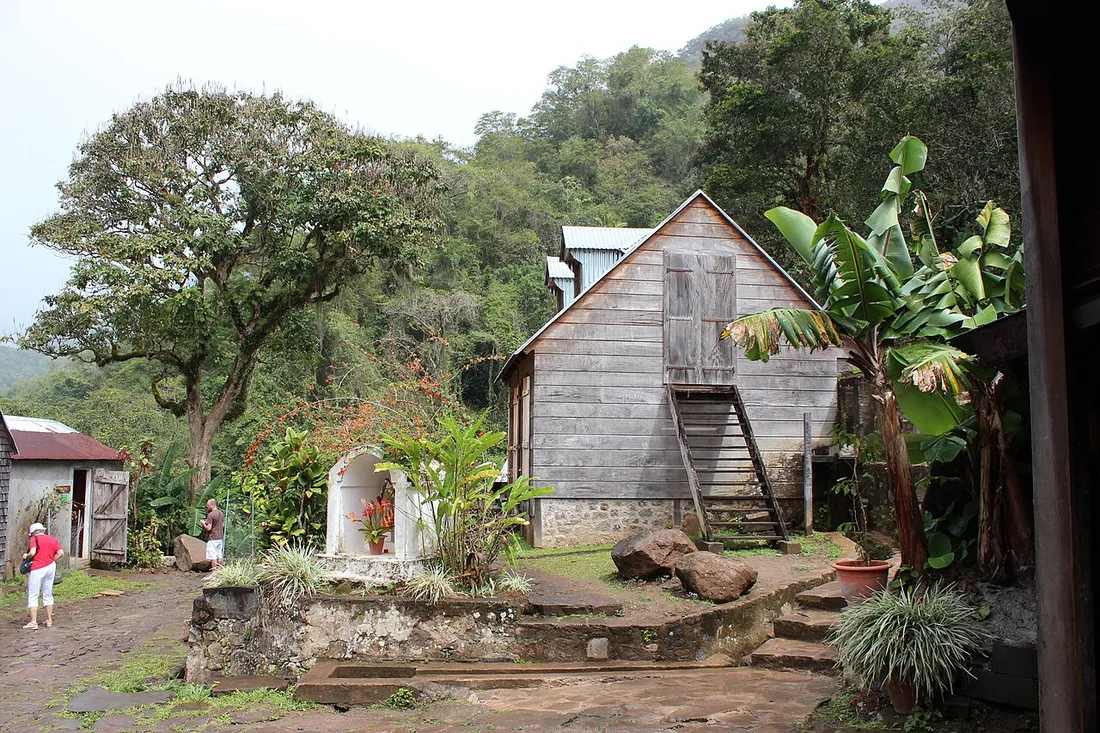
The best-known landmark is a museum-estate devoted to coffee, set on a restored former coffee grove. Here you follow the entire journey, from plant to cup, in grounds planted with coffee trees, cacao trees and spices. It is the perfect educational stop to understand the industry before going to meet the small growers.
What to expect on a typical visit:
- Duration: 1 hour to 1 hour 30 between the outdoor walk and the tasting.
- Indicative price: around €8 to €12 per adult, half-price for children.
- Content: explanation of cultivation, harvesting, drying and roasting.
- Tasting: local coffee served strong, Creole style, sometimes accompanied by a punch or a local fruit juice.
- Shop: packets of ground or whole-bean coffee, in limited quantities.
My tip: call the day before (dialling code +590) to confirm the opening hours, which vary with the season and the influx of cruise passengers. Arrive in the morning, when soft light and cool air are guaranteed.
Meeting the small growers
Beyond the museum, the real magic lies with the Vieux-Habitants coffee growers settled in the backcountry. Often family-run, these holdings cultivate a few hundred trees in agroforestry and process on site. Some open their doors by appointment and offer:
- a walk through the coffee grove with an explanation of how the cherries are picked;
- a look at the drying of the beans in the sun, on open-air patios;
- a comparative tasting of the home-roasted Bonifieur;
- direct sales, the best way to support this revival.
These visits unfold at the gentle pace of the Guadeloupean countryside. French and Creole coexist; a simple “bonjou” and a touch of patience open many doors.
A coffee day on the leeward coast
The beauty of this itinerary is that it combines coffee, volcanic beaches and diving. Here is how I structure a successful day from Pôle Caraïbes airport, in Pointe-à-Pitre (allow about 1 hour’s drive to reach the west coast).
Morning — coffee grove and tasting
Head for Vieux-Habitants as soon as it opens. Visit the museum or a plantation, walk through the coffee grove, then enjoy a tasting. Leave with a packet of Bonifieur: ground very fine, it works as well in a moka pot as in a filter.
Midday — a Creole break
Have a local lunch at a lolo in the village: grilled fish, colombo or a bokit, washed down with a local fruit juice. Prices stay gentle, around €12 to €18 for a main dish.
Afternoon — diving and beaches
Head up towards Bouillante, 15–20 minutes to the north. Malendure beach and the Pigeon Islets are home to the Cousteau Reserve, the number-one snorkelling and diving spot in the archipelago. A fins-mask-snorkel boat outing (around €25 to €35) caps off the day beautifully, among turtles and coral gardens.
Practical tips from a local
To make sure your coffee getaway runs smoothly, keep in mind these few rules tried and tested in the field:
- Come in the dry season. From December to April (the local carême), the roads are passable, the plantations accessible, and it coincides with the harvest. Mind the time difference: -5h in winter and -6h in summer compared with Paris.
- Rent a car. The coffee groves nestle along winding mountain roads, poorly served by public transport. Drive carefully after tropical downpours.
- Book ahead. The small holdings welcome visitors by appointment, in small groups. A call the day before avoids a closed door.
- Buy direct. In euros, by card or cash: buying your coffee stash at the plantation is a tangible way to keep the industry alive.
- Combine both wings. Stay centrally to alternate between coffee and nature in Basse-Terre and the turquoise beaches of Grande-Terre (Caravelle in Sainte-Anne, Grande Anse in Deshaies, Pointe des Châteaux in Saint-François).
Extending the gourmet experience
The leeward coast lends itself to extensions: the cacao route around Pointe-Noire is the ideal complement to the coffee route, while Marie-Galante, the island of windmills, rolls out its rum distilleries (Bielle, Bellevue, Père Labat). On the nature side, the climb up La Soufrière, the Carbet Falls or a crossing to Les Saintes (Terre-de-Haut and its listed bay) extend the stay. For the historical context, the Mémorial ACTe in Pointe-à-Pitre sheds light on the history of the plantations that shaped these crops.
Where to stay to follow the coffee route
To roam without tiring yourself out, I recommend staying on the leeward coast (Vieux-Habitants, Bouillante, Deshaies, Pointe-Noire) or in a central spot between the two wings of the butterfly. A well-located holiday rental spares you long journeys and gives you a kitchen to brew, on waking, your Bonifieur coffee facing the Caribbean Sea.
At Hostel Toucan, a concierge and rental service in Guadeloupe, we select accommodation close to the finest itineraries. Booking is done directly, with no platform fees, with free cancellation up to 7 days before arrival and WhatsApp assistance 7 days a week for your questions on the ground: booking a plantation visit, finding the right grower or arranging a diving outing.
- Discover our accommodation in Guadeloupe, ideally located for the leeward coast.
- Plan your whole stay with our complete guide to Guadeloupe.
- Do you own a property on the archipelago? Entrust it to our concierge service for owners.
The revival of Guadeloupe coffee is the authentic Guadeloupe: the one that smells of ripe cherry and roasted bean, that tells its story and that is savoured slowly, one cup at a time. It is yours to taste.
FAQ
Where can you taste Guadeloupe coffee in Vieux-Habitants?
The ideal starting point is the museum-estate devoted to coffee, set on a restored former coffee grove in Vieux-Habitants, on the leeward coast of Basse-Terre. Here you follow the journey from plant to cup, with a tasting to finish. Nearby, several small growers open their plantation by appointment and sell their coffee direct.
What is Bonifieur coffee?
The Bonifieur is Guadeloupe’s emblematic arabica variety, acclimatised locally over generations. Renowned for its round body, low bitterness and notes of chocolate and hazelnut, it “improves” blends, hence its name. Hand-picked in the dry season, it is the focus of a quality-driven revival in limited batches.
What is the best time to visit a coffee plantation?
The dry season, from December to April (the local carême), is ideal. The mountain roads are passable, the plantations accessible, and the period coincides with the cherry harvest, from January to April. Avoid the rainy season (June to November), when some tracks become difficult to reach.
How much does a coffee plantation visit cost in Guadeloupe?
Expect around €8 to €12 per adult for a guided tour of one hour to one hour thirty, tasting included, and half-price for children. Small growers often welcome visitors free of charge or for a small contribution, with buying coffee direct being the best way to support the industry.