Every autumn, the same message lands in the inbox of the owners I work with in Sainte-Anne, Les Trois-Îlets or Le François: a business property tax assessment. And every autumn, the same surprise. “I rent out a studio a few weeks a year, why am I getting a business tax?” The CFE on furnished rentals in Martinique is nothing exotic: it’s a perfectly ordinary local tax, but it catches people off guard because they aren’t expecting it. As an island resident and tourist-rental manager, I see these assessments come in every year, and here I’ll lay it all out, updated for 2026: who owes the CFE, how it’s calculated, what exemptions exist and how it fits together with the tourist tax. This guide stays educational: only a chartered accountant can confirm your specific situation.
The CFE on furnished rentals in Martinique: what are we talking about?
The business property tax is the successor to the old “taxe professionnelle.” In the eyes of the tax authorities, renting out a furnished property is a commercial activity, even an occasional one and even for a private individual: you may not feel like a business owner, but the administration treats you as an operator running a business.
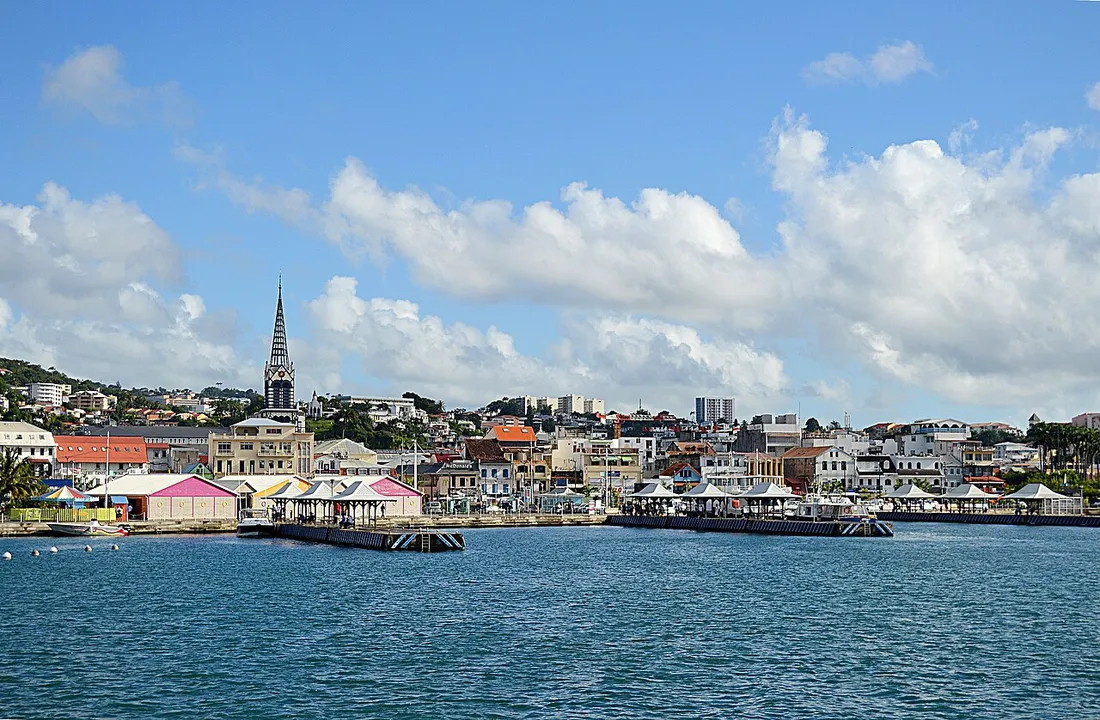
As Martinique is a French overseas department and region (DROM), the framework is exactly the same as in mainland France: it’s the municipalities and their inter-municipal bodies that collect the CFE and set its parameters. There is no special “tropical” regime. The moment you put a studio in Sainte-Luce or a villa facing Diamond Rock up for short-term rental, on a regular basis and above the small threshold detailed below, the CFE applies to you — whether you go through Airbnb, Booking or direct booking. Only a property rented out unfurnished escapes this regime.
Don’t confuse three separate levies: the property tax you pay as the owner of the walls, the CFE you pay as an operator running an activity (the subject of this article), and the tourist tax, which is not your tax but the traveller’s — you collect it and then pass it on to the town. In practice, the CFE is the one people discover latest, having failed to declare their activity on time.
Who has to pay the CFE, and who is exempt
You are liable as soon as you rent out a furnished property on a regular basis and your annual revenue exceeds €5,000. Below that, you’re exempt; above it, you’ll receive an assessment every autumn, payable in December. That threshold is quickly crossed: a well-located one-bedroom in Sainte-Anne, rented six weeks in high season at €110 a night, already brings in nearly €4,600 from those weeks alone. Most of the island’s tourist rentals therefore exceed it.
Several situations do, however, relieve you of the CFE, fully or temporarily:
- The year of creation: no CFE in the first calendar year of activity. If you start renting out your villa in Tartane in 2026, your first assessment won’t arrive until autumn 2027.
- The second year: the tax base is reduced by 50% in the first year the levy actually becomes due — an advantage that’s often overlooked.
- Revenue below €5,000: full exemption as long as you stay under this threshold.
Beware of one stubborn misconception: being on the micro-BIC scheme or LMNP status does not exempt you from the CFE. The way your income is taxed and the CFE are independent of one another; you can enjoy the micro-BIC allowance and still receive an assessment.
How the CFE on a Martinican furnished rental is calculated
The CFE is not calculated as a percentage of your rents. For a furnished rental, the administration almost always applies a minimum base set by the town, which depends on your turnover and a national scale — hence different levies for two operators with identical revenue depending on whether they’re in Fort-de-France or Le Marin.
Realistic ballpark figures for 2026
Here are credible ranges for the annual levy (minimum base × municipal rate), to be checked against your own assessment:
- Small operator (revenue €5,000 to €10,000, a seasonal studio): often €150 to €350 a year.
- Mid-range operator (revenue €10,000 to €32,600, a well-booked one- or two-bedroom): generally €300 to €700 a year.
- Established operator (higher revenue, several properties or a large villa): up to €900 to €1,500 or more.
For a one-bedroom in Sainte-Anne generating €16,000 in rents (a CFE of roughly €400 to €550), that comes to nearly 3% of turnover: a real but not prohibitive cost, one to factor into your profitability calculation from the very start.
The town’s role in your levy
Location weighs directly on the bill. An identical studio will be taxed differently depending on whether it’s in Fort-de-France (the island’s main town, around 360,000 inhabitants island-wide), in Les Trois-Îlets (Pointe du Bout, the village of Joséphine de Beauharnais), in Sainte-Anne (Les Salines beach), in Le Diamant (facing the famous rock) or in Saint-Pierre (Mount Pelée, ruins listed by UNESCO). The right reflex: read the breakdown of your assessment, or check the CFE resolution on the town’s website.
Your concrete steps as a furnished-rental operator
To avoid discovering the tax too late, the order of operations matters:
- Declare the start of activity on the single business-formalities portal to obtain a SIRET number: this is what triggers your identification for CFE purposes.
- Complete the initial CFE declaration in the year of creation: it registers the first-year exemption and the second-year reduction.
- Declare the furnished rental at the town hall, with, depending on the municipality, a registration number to display on your listings.
- Activate a professional account on the tax authority’s website to settle the assessment online, available in November for a mid-December payment.
Why delegate to a local property manager
Handling the CFE, the tourist tax, the town-hall declaration and the payment calendar quickly becomes time-consuming. At Hostel Toucan, a Martinican property management company, we take charge of these obligations while optimizing your property’s occupancy. For travellers, we focus on direct booking with no platform fees, free cancellation up to 7 days before arrival and WhatsApp support 7 days a week. Own a furnished rental on the island? Discover our approach on the owners page. Looking for a place to stay? Browse our rentals in Martinique, and plan your trip with our Martinique guide.
FAQ
Do I have to pay the CFE if I only rent out a few weeks a year in Martinique?
Yes, as soon as your annual revenue exceeds €5,000: it’s the regular nature of the activity that counts, not its duration. Below that, you’re exempt; and in the year of creation, no CFE is due whatever your turnover.
What is the average CFE amount for a tourist rental on the island?
It all depends on your town and your revenue, as the minimum base is set locally. For a single seasonal studio or one-bedroom, count on generally €300 to €700 a year at cruising speed; the smallest operators around €150–350, a large villa or several properties above €1,000. The details appear on your assessment.
Are the CFE and the tourist tax the same thing?
No. The CFE is a tax you pay as an operator, once a year. The tourist tax in Martinique is paid by the traveller per night; you merely collect it and pass it on to the town. An additional departmental tax of 10% is added on top, and the platforms (Airbnb, Booking) collect it automatically for the towns under agreement — in practice, €15 to €35 for a week for two. One weighs on your cash flow, the other simply passes through your accounts.
Does being on micro-BIC or LMNP exempt me from the CFE?
No. The way your income is taxed (micro-BIC, actual-expenses regime) and the LMNP status are independent of the CFE: you can benefit from the micro-BIC allowance and still receive an assessment every autumn. To get your entire tax structure right, the ideal step is a conversation with a chartered accountant — one our team can recommend on the island.