When people ask me which dish best tells the story of Martinique, I never name rum or boudin: I answer colombo. Behind this golden, fragrant stew lies a tale of migration, sugarcane fields and Creole kitchens that adopted a spice from the other side of the world. As a resident of the island and a lover of local cooking, here I share the real, hands-on recipe for Martinican colombo, its often-overlooked Indian origins, and my go-to spots for finding authentic powder.
Colombo, a legacy of Indian indentured labour
Why are there Tamils in Martinique?
After the abolition of slavery in 1848, the sugarcane plantations found themselves without a workforce. The colonial authorities then organised indentured labour: the recruitment of contract workers brought in from elsewhere. Between 1853 and 1883, several tens of thousands of Indians, mostly Tamils from the south (the Pondicherry region and the Coromandel Coast), disembarked in Martinique to work on the estates.
These indentured workers arrived with their beliefs, their temples and, of course, their cuisine. The word “colombo” itself is said to refer to the city of Colombo (in present-day Sri Lanka), a port of call for the indenture ships, or more broadly to the culinary world of the Indian subcontinent. Over the generations, the Indian community became Creolised and wove its heritage into Martinican culture.
From Indian curry to Creole colombo
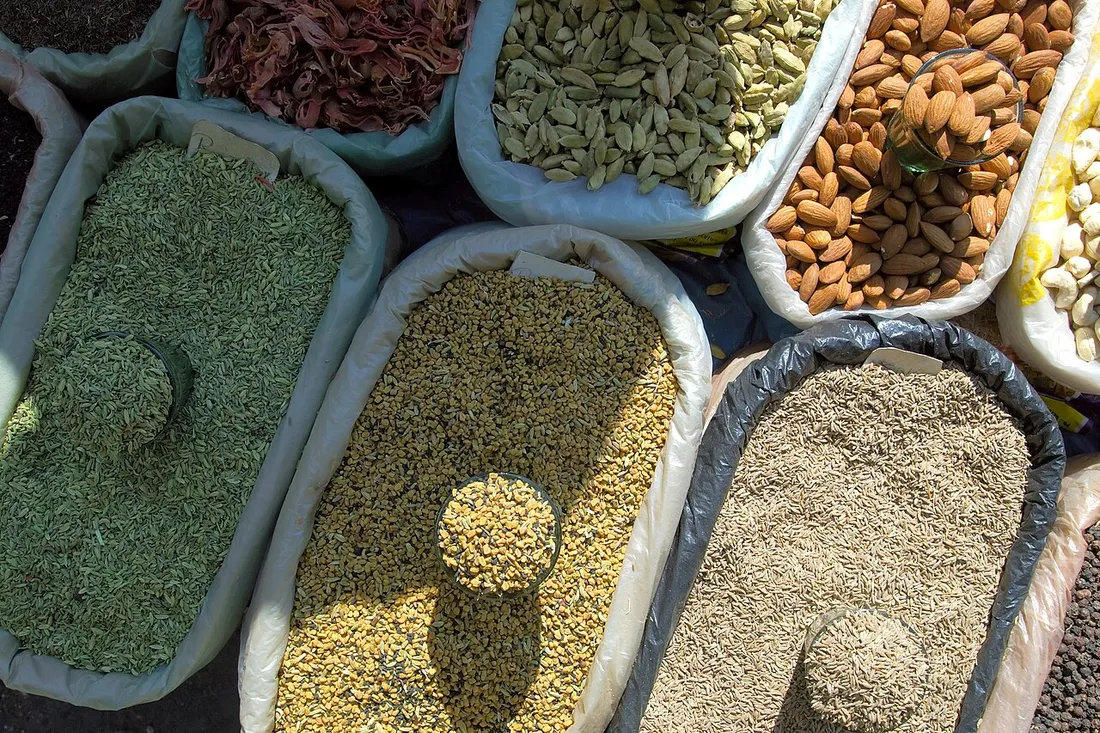
Colombo descends directly from Indian masala-style spice blends, but it transformed on the island. The Tamils ground their seeds (coriander, cumin, mustard, fenugreek, turmeric), traditionally crushed and roasted. Lacking certain ingredients, they adapted them with what the island offered. The result is a powder that is milder and far less fiery than many Indian curries, with a marked turmeric signature that gives it its golden colour and a recognisable note of fenugreek. Colombo thus became an emblematic dish, served on Sundays with family as much as at a seaside restaurant.
The hands-on chicken colombo recipe
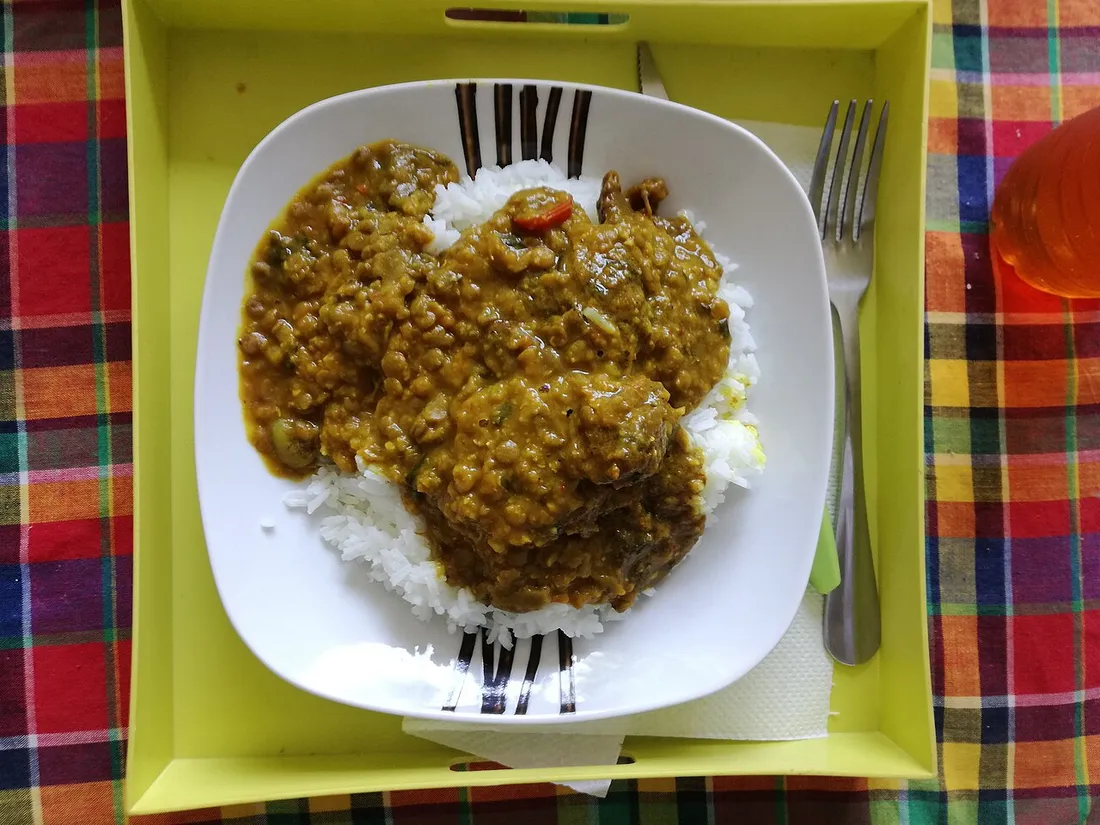
Here is the version I cook most often, passed down to me by a neighbour from Le François. It is a chicken colombo for 4 to 6 people, but the base works just as well with pork, goat (kid) or vegetables alone.
The ingredients
- 1 free-range chicken, cut into pieces (about 1.5 kg)
- 3 heaped tablespoons of colombo powder
- 4 cloves of garlic, 2 onions, 3 country onions (chives)
- 1 piece of fresh ginger
- 2 potatoes and 1 or 2 chayotes (christophine)
- 1 aubergine, the juice of 2 limes
- 1 mild pepper (or half a Caribbean chilli, depending on your tolerance)
- 2 tablespoons of oil, salt, thyme, parsley, a bay rum (bois d’Inde) leaf
The step-by-step preparation
- Marinate the chicken for 1 to 2 hours with the lime juice, the crushed garlic, salt, thyme and a tablespoon of colombo powder. This is the step beginners skip and it’s a mistake: the marinade gives the dish all its depth of flavour.
- Brown the drained pieces in hot oil until coloured, in a casserole. Set aside.
- Sweat the onions, country onions and ginger, then add the rest of the colombo powder. Toast it for 30 seconds to awaken the aromas, without burning it (it would turn bitter).
- Return the chicken, cover with hot water to the level of the meat, add the bay rum leaf and let it simmer for 25 minutes, covered.
- Add the vegetables (potatoes, chayote, aubergine) and the whole pepper, left unpierced, to perfume without setting things ablaze. Continue for 25 to 30 minutes.
- Finish with a dash of lime juice and the raw parsley. The sauce should coat the back of a spoon, never be runny.
Serve with white Creole rice, red beans and, for the local touch, a few slices of pressed yellow plantain. Allow 1.5 hours of total preparation, including 1 unavoidable hour of simmering.
My resident’s tips
- The secret isn’t the quantity of spices but the freshness of the powder: buy it in small amounts and keep it away from light.
- A colombo tastes better reheated the next day, once the aromas have melded.
- For a vegetarian colombo, replace the meat with pumpkin, pigeon peas and broad beans: a Lenten classic.
Where to find real colombo powder in Martinique
The difference between a bland colombo and a memorable one often comes down to the powder. Forget the industrial sachets overloaded with salt.
The right places
- The large covered market of Fort-de-France (the Spice Market): the vendors sell homemade blends there, sometimes prepared to order. Expect 3 to 6 EUR per 100 g depending on quality.
- The community markets of Le François, Sainte-Anne or Les Trois-Îlets, especially in the morning, where producers offer their own roasts.
- The neighbourhood grocers and Creole shops: ask for the “country” powder rather than the generic brand.
Recognising an authentic powder
- A clear yellow-ochre colour (the turmeric), not dull.
- A fragrance in which you can pick out fenugreek and roasted coriander.
- A short list, without additives or excess salt.
If you want to live the experience all the way, some people still toast and grind their own seeds: a practice you sometimes find at the Tamil temple festivals, a living testimony to this heritage.
When to taste colombo during your stay
The best time to visit Martinique remains the dry season (Carême), from December to April: it’s the sunny, dry season, ideal for combining Creole cooking with beaches. And during the religious Lenten period precisely, vegetarian and fish colombo is everywhere. Carnival (February-March) is also a moment when street food is in full swing.
To taste a real colombo, I’ll point you towards:
- the lolos (small eateries) of Sainte-Anne, a stone’s throw from Les Salines;
- the seaside tables of Tartane on the Caravelle Peninsula, after a morning of surfing;
- the family-run restaurants of Le François and Les Trois-Îlets, often the best authenticity-to-price ratio (12 to 18 EUR a dish).
A car is strongly recommended to reach these towns: from Aimé Césaire airport in Le Lamentin, allow 20 minutes to Fort-de-France and 40 to 50 minutes to the South. Bear in mind the time difference (-5h in winter, -6h in summer compared to Paris) for your restaurant bookings.
Extending the culinary experience
Colombo is just a gateway into Martinique’s richness. After the meal, carry on with a tour of the Rum Route (the Clément distillery at Les Trois-Îlets, Depaz at Saint-Pierre at the foot of Mount Pelée, Saint-James, La Mauny or Trois-Rivières). AOC agricultural rum pairs wonderfully, in fact, with a ti-punch as an aperitif before the colombo. To plan your whole gourmet and nature itinerary, our complete guide to Martinique details the must-sees, from the southern beaches to the Balata Garden.
At Hostel Toucan, a concierge and vacation rental service, we settle our travellers in the heart of these towns so they can experience Martinique like residents, morning market and Sunday colombo included. By booking directly through our accommodation in Martinique, you avoid platform fees, enjoy free cancellation within 7 days and WhatsApp support 7 days a week for our best local addresses. And if you own a property on the island, discover how we showcase it through our owners offer.
Colombo is more than a recipe: it’s the memory of Tamil indentured workers served on a Creole plate. Cook it, taste it on the spot, and you’ll hold a piece of Martinican history at the end of your fork.
FAQ
What is the origin of Martinican colombo?
Colombo descends from the cooking of Tamil indentured workers who came from southern India after the abolition of slavery in 1848 to work on the sugarcane plantations. This masala-inspired spice blend was Creolised on the island to become the emblematic dish of today.
Which meat should I use for a colombo?
Chicken colombo is the most common, but pork, goat (kid) and fish work very well too. There is also a vegetarian version (pumpkin, pigeon peas, chayote), traditional during Lent.
Where can I buy real colombo powder in Martinique?
Favour the large covered market of Fort-de-France and the community markets of Le François, Sainte-Anne or Les Trois-Îlets, where producers sell homemade blends for between 3 and 6 EUR per 100 g. Look for a yellow-ochre powder, fragrant with fenugreek, free of additives.
What is the best time to discover Martinican cuisine?
The dry season (Carême), from December to April, is the sunny dry season, ideal for combining Creole gastronomy with beaches. Carnival in February-March is also a high point for street food.