Some treats fit in the palm of your hand and yet tell the story of an entire island. In Les Saintes, this little sweet delight bears a name straight out of a novel: the tourment d’amour, the “torment of love.” This coconut tartlet, sold warm on the pier of Terre-de-Haut, has become the gourmet emblem of an entire archipelago. To bite into a tourment d’amour in Guadeloupe is to taste, all at once, a grandmother’s recipe, a sailors’ legend, and a craft passed down from mother to daughter since the 19th century. After years of wandering the village of Terre-de-Haut, here is everything I tell our travelers about this pastry, its history, its true recipe, and the best places to enjoy it.
The origins of the tourment d’amour: a story of waiting and the sea
The tourment d’amour is deeply tied to life in Les Saintes, the little archipelago south of Basse-Terre whose bay ranks among the most beautiful in the world. Terre-de-Haut, the main island, long lived from fishing. The men would head out to sea, sometimes for several days, while the women stayed ashore, watching for the return of the saintois.
The most widespread legend holds that these women invented this tartlet to pass the time of waiting and to wish their husbands a safe return. The “torment” here refers to the loving anxiety of the woman who waits; the “love” is what she slips into the pastry offered to the fisherman safely back in port. Others see it instead as a dessert prepared for young suitors, a sweet way of declaring one’s feelings. Whatever the version, the name says it all: it is a pastry born of a feeling.
A sweet inherited from Creole coconut
In culinary terms, the tourment d’amour belongs to the great family of Caribbean coconut desserts, alongside coconut sorbet and the tablette. In Les Saintes, coconut palms grow everywhere, and the historical filling is, unsurprisingly, coconut jam. This coconut tartlet later gained variations — banana, guava, pineapple, and more recently chocolate — but the coconut version remains the original, the one purists defend.
Anatomy of a true tourment d’amour
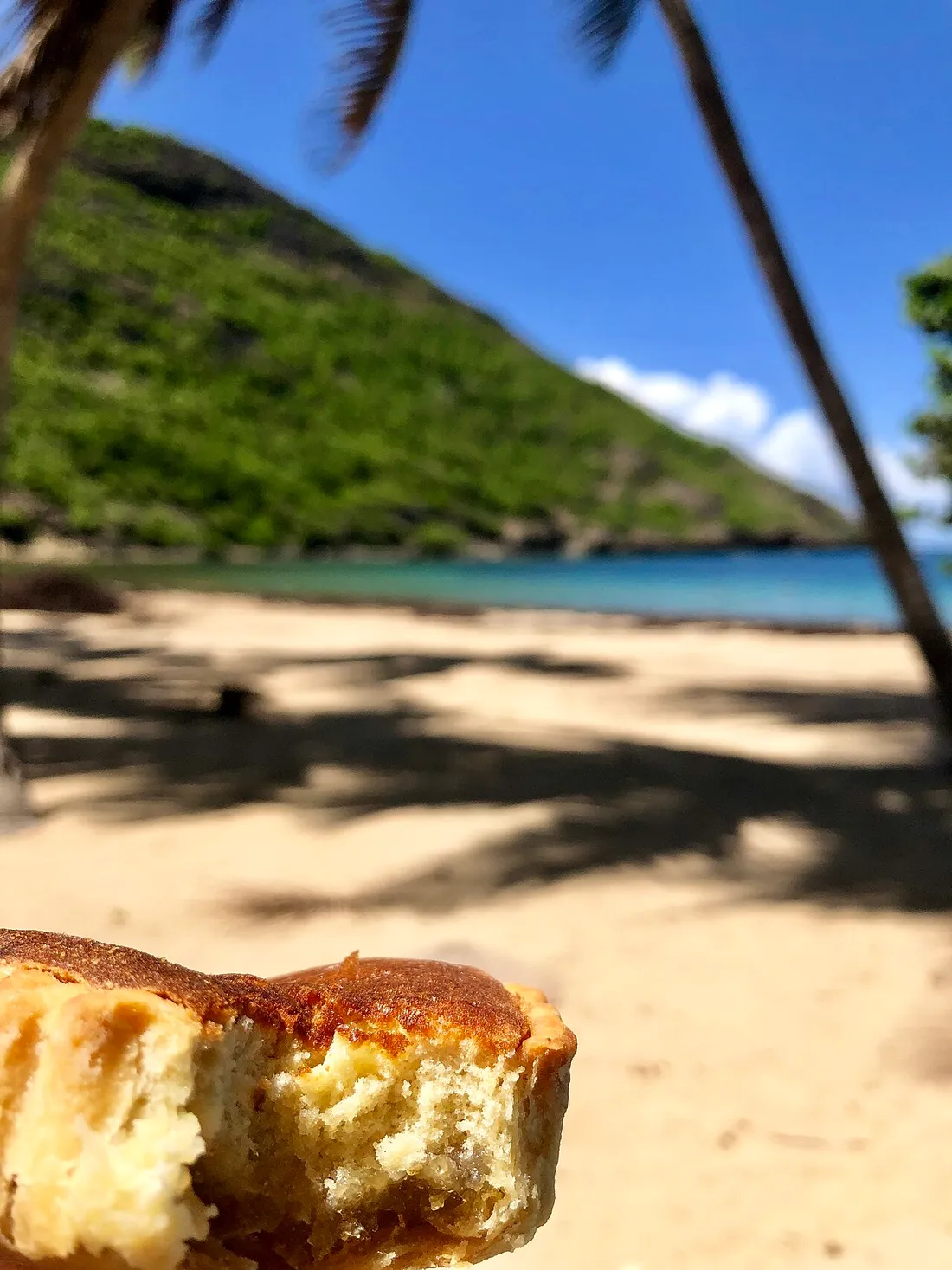
Before stepping into the kitchen, you need to understand what makes a successful tourment d’amour. This Les Saintes pastry is made up of three distinct layers, and it is their balance that makes all the difference:
- A shortcrust base lining the mold, thin and lightly crisp, holding everything together.
- A layer of jam, traditionally coconut, soft and fragrant.
- A moist sponge on top, genoise-style, which rises during baking and crowns the whole with a golden dome.
It is this contrast between the crunch of the base, the softness of the middle, and the fluffiness of the top that makes the tourment d’amour so recognizable. Served warm, fresh from the oven, it reaches its peak: the sponge is still airy and the jam runs slightly.
The traditional coconut tourment d’amour recipe
Here is the recipe I make at home, in the spirit of the saintoises, for about a dozen small tartlets (muffin tins or individual molds). Allow roughly 1 hour of preparation and 25 minutes of baking.
The ingredients
For the shortcrust pastry:
- 250 g flour
- 125 g soft butter
- 80 g sugar
- 1 egg
- 1 pinch of salt
For the coconut jam:
- 200 g grated coconut (ideally from fresh coconut)
- 150 g sugar
- 15 cl water (or coconut milk for extra indulgence)
- 1 Caribbean vanilla pod
- 1 lime zest
For the moist sponge:
- 2 eggs
- 100 g sugar
- 100 g flour
- 80 g melted butter
- 1/2 sachet of baking powder
- 1 tablespoon of agricultural rum (optional but very saintois)
The steps
- Prepare the coconut jam. Heat the water (or coconut milk) with the sugar, the split vanilla pod, and the lime zest. Add the grated coconut and let it simmer over low heat for 10 to 15 minutes, until you get a thick, soft paste. Let it cool slightly.
- Make the shortcrust pastry. Rub the flour and butter together with your fingertips, add the sugar, the salt, then the egg. Form a ball without overworking it, wrap it, and chill for 30 minutes. Roll it out and line the buttered molds.
- Add the jam. Place a good spoonful of coconut jam in the bottom of each tartlet, over the shortcrust.
- Make the sponge. Whisk the eggs with the sugar until the mixture pales, fold in the flour and baking powder, then the melted butter and the rum. Pour this batter over the jam, without filling to the rim (the sponge rises).
- Bake at 180 °C for 20 to 25 minutes, until the top is golden and domed. Unmold while still warm.
My resident’s tip: don’t skimp on the vanilla and lime, for they are what give the tourment d’amour its Caribbean aroma. And taste it warm on the same day: it’s a Creole dessert to be enjoyed fresh, not a cake to keep.

Where to buy the best tourment d’amour in Les Saintes
Nothing replaces the experience of buying one on the spot, still warm, facing the bay. Here are my field landmarks in Terre-de-Haut.
The pier sellers
This is the postcard image and a living tradition: when the ferries arrive, saintoise women wait for the boats with their baskets of carefully wrapped tourments d’amour. You’ll find them on the pier and along the village’s main street. Expect to pay €1.50 to €2.50 apiece depending on size and flavor. Remember to keep some cash on hand, as many don’t take cards.
The village bakeries and pastry shops
A few pastry shops in Terre-de-Haut offer a more regular production, sometimes in assorted versions (coconut, banana, guava, chocolate). It’s the perfect chance to compare and put together a little tasting box for the boat ride back.
My buying tips
- Go for the coconut version to taste the authentic one, then add a “fancy” flavor on the side if you like.
- Buy two or three for the road: the tourment d’amour keeps for a few hours and makes the perfect snack on the return ferry.
- Check that it’s fresh: a good tourment has a sponge that’s still moist, not dry.
- Be willing to wait for the batches: at peak hours, the best ones sell out within minutes.
Tasting the tourment d’amour during your stay in Guadeloupe
Guadeloupe, this French overseas department shaped like a butterfly and spread across an archipelago, lends itself wonderfully to this kind of gourmet getaway. You arrive at the Pôle Caraïbes airport in Pointe-à-Pitre, the island’s economic hub (the prefecture being Basse-Terre), for a stay in euros, in French and Creole, with a 5-hour time difference in winter and 6 hours in summer from Paris. The best period remains the dry season, from December to April.
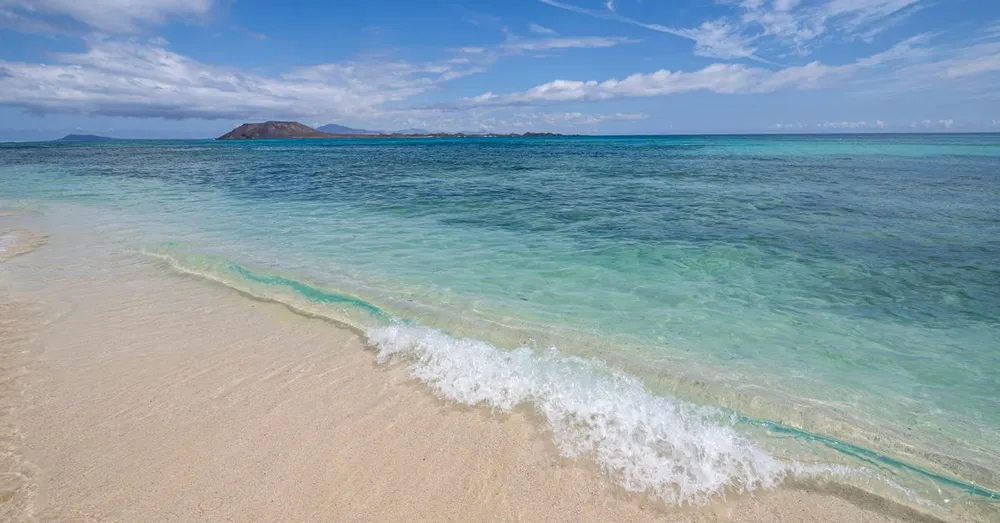
Les Saintes are reached by shuttle from Trois-Rivières (the fastest) or Pointe-à-Pitre. On Terre-de-Haut, a tourment d’amour is ideally enjoyed after a morning at Pompierre beach or a climb up to Fort Napoléon, before catching the boat again. And if the archipelago whets your appetite for discovery, the rest of Guadeloupe is full of treasures: the Cousteau reserve at Malendure for snorkeling, the Carbet falls and the Soufrière volcano on Basse-Terre, the turquoise beaches of Sainte-Anne and Deshaies, or the rum distilleries of Marie-Galante.
To move around with ease between Grande-Terre, Basse-Terre, and the southern islands, the choice of accommodation changes everything. Our concierge service Hostel Toucan offers well-located vacation rentals in Guadeloupe, with direct booking and no platform fees, free cancellation up to 7 days before arrival, and WhatsApp support 7 days a week to guide you to the right spots — including the best tourment d’amour seller of the moment. To build your complete itinerary, browse our Guadeloupe guide as well. And if you own a property in the archipelago that you’d like to showcase to travelers seeking authenticity, discover our dedicated support for owners.
The tourment d’amour is not just a treat to tick off a list. It’s a sweet declaration, a piece of saintoise history that fits in the palm of your hand. Make it at home to extend the journey, but treat yourself at least once to the pleasure of buying it warm on the pier, facing one of the most beautiful bays in the world.
FAQ
What exactly is a tourment d’amour?
It’s the emblematic pastry of Les Saintes, in Guadeloupe: a small tartlet made of a shortcrust base, a layer of jam (traditionally coconut), and a moist sponge that rises during baking. It’s best enjoyed warm, and you buy it hot on the pier of Terre-de-Haut for €1.50 to €2.50 apiece.
Where does the name “tourment d’amour” come from?
According to saintoise legend, fishermen’s wives prepared this sweet for their husbands gone out to sea and waited for them on the pier — the “torment” referring to the loving anxiety of the wait. Other versions see it as a dessert offered to declare one’s feelings to a suitor. In every case, it’s a pastry born of a feeling.
What flavors does the tourment d’amour come in?
The historical and most authentic version is coconut. Today you’ll find many variations: banana, guava, pineapple, and chocolate in the modern versions. For a first taste, it’s best to try the traditional coconut, then add a “fancy” flavor on the side.
Can you make a tourment d’amour at home?
Yes, and it’s simpler than it looks. You need to prepare a coconut jam flavored with vanilla and lime, line molds with shortcrust pastry, fill with jam, then cover with a moist sponge batter. A baking time of 20 to 25 minutes at 180 °C is enough. Serve warm on the same day to recapture the texture of the real tourment d’amour from Les Saintes.