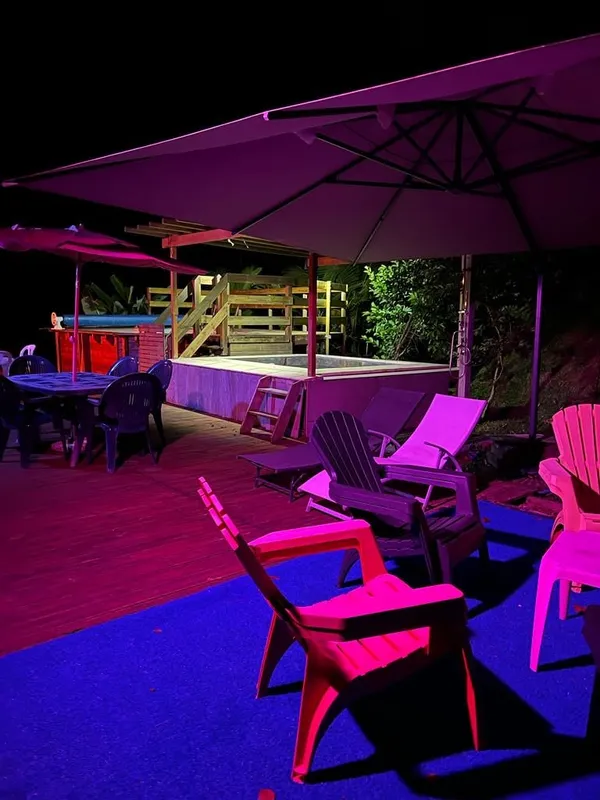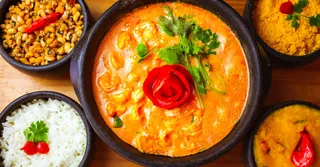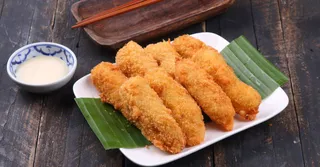
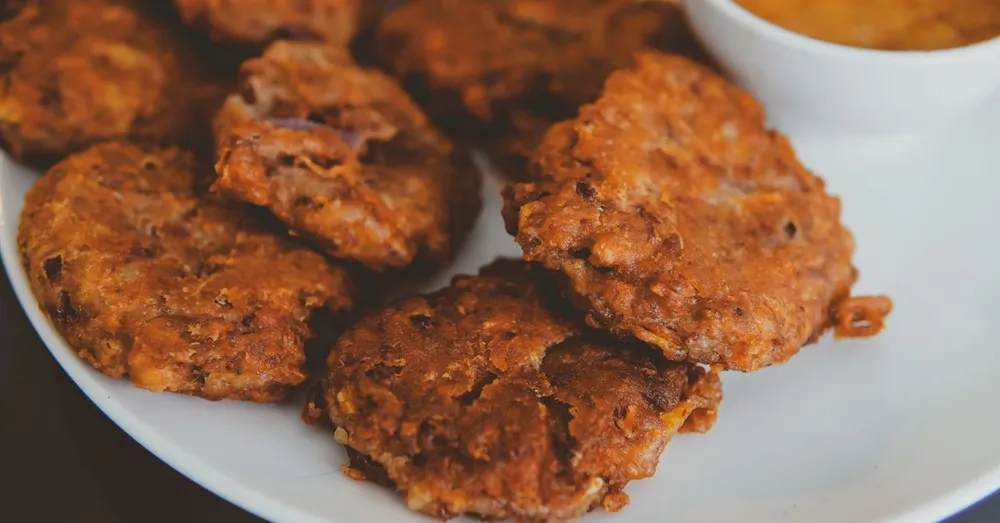
On a terrace in Fort-de-France, a ti-punch in one hand and a piping-hot accra in the other: this is the image that best captures the Martinique aperitif. Cod accras are far more than a simple fritter. They open almost every festive meal, from the beachfront at Les Salines to family tables in La Trinite. After years of tasting them (and ruining a few batches), here is my go-to recipe, the variations truly worth the detour, and the frying pitfalls that turn a beautiful accra into an oil sponge.
Cod accras, an emblematic dish of Martinique
The accra is a savory fried fritter, light and airy on the inside, crisp on the outside. In Martinique, it is traditionally made with salted cod, a dried fish inherited from the trade exchanges of the past. The word is said to come from Fon, a West African language, proof that this dish also tells the island’s mixed-heritage story.
It is served hot, in a pile, often paired with a chien sauce (onion, parsley, lime, chili, oil) or a simple wedge of lemon. During the Carnival in February and March, or the evenings of Careme (December to April, the dry season), there’s no escaping them.
Why you must taste it on the spot
A homemade accra, eaten within five minutes of frying, bears no resemblance to the vacuum-packed ones from supermarkets. The fluffy texture, the aroma of the piment vegetarien (that mild, non-hot West Indian chili) and the freshness of the desalted cod can only be felt while hot. It is also an excellent indicator of a restaurant’s cooking: a good accra often means a good table.
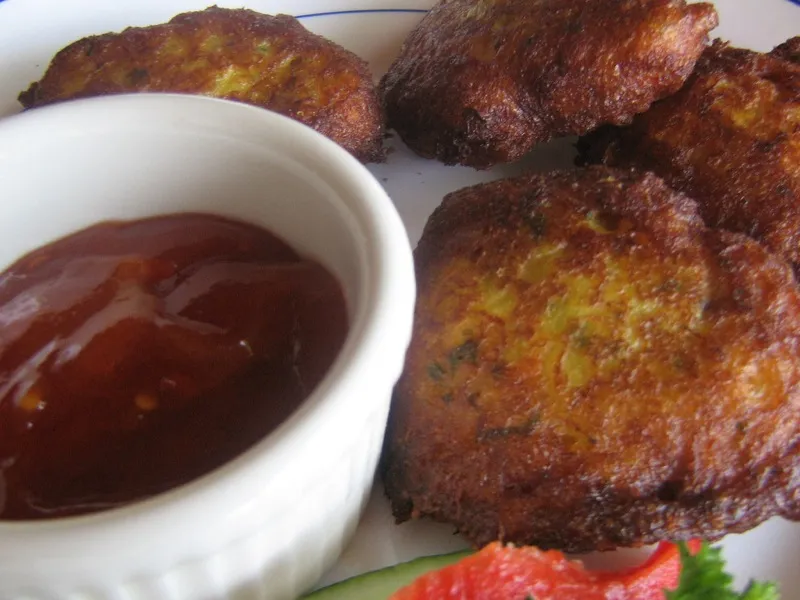
The traditional cod accras recipe
For about 30 accras (4 to 6 people as an aperitif), allow 45 minutes of preparation plus the desalting time.
Ingredients
- 250 g salted cod
- 250 g wheat flour
- 1 sachet of baking powder (11 g)
- 1 egg
- about 15 cl lukewarm water
- 3 oignons-pays (cives) or 1 bunch of spring onions
- 2 cloves of garlic
- 1 small piment vegetarien (mild), possibly a touch of hot chili
- 1 sprig of parsley, a few thyme leaves
- 1 lime
- Frying oil (sunflower or peanut)
- Salt, pepper
Step 1: desalt the cod
This is the step too often rushed. Soak the cod in a large volume of cold water for at least 12 hours, changing the water 3 to 4 times. To save time, you can poach the cod for 10 minutes in simmering water after a short soak, but the result is less refined. Taste a small raw piece: it should be flavorful, not aggressively salty.
Step 2: flake and season
Poach the desalted cod for 8 to 10 minutes, drain, remove skin and bones, then flake it finely by hand. Chop the cives, garlic, chili, parsley and thyme. Mix everything with a splash of lime.
Step 3: the batter
In a bowl, mix the flour and baking powder. Add the egg, then the lukewarm water little by little until you get a thick but flowing batter that forms a ribbon. Fold in the seasoned cod. Let it rest for 30 minutes: the leavening does its work and the accras will puff up more.
Step 4: the frying
Heat the oil to 170-175 C. Drop tablespoonfuls of batter, without overloading the fryer. Allow 3 to 4 minutes, turning halfway through, until a lovely golden color. Drain on paper towels and serve immediately.
The variations to know
Cod remains the benchmark, but Martinicans love to reinvent the accra. A few versions I recommend trying:
Vegetable accras
Milder, perfect for children or as a vegetarian option. The cod is replaced with finely grated or chopped vegetables:
- Giraumon accras (West Indian pumpkin), slightly sweet
- Chinese cabbage or epinards-pays (local spinach) accras
- Carrot and cive accras
- Banana flower accras, rarer and very fragrant
The batter base stays the same; you just boost the seasoning a little, since vegetables bring less flavor than cod.
Shrimp and seafood accras
On the coast, notably in Le Francois or Le Vauclin, you’ll find shrimp accras (local chevrettes) or conch accras. The flesh is coarsely chopped to keep some bite. Remember to season well and add a touch of lime to lift the briny notes.
The spiced marinade
Some cooks add a spoonful of the previous day’s fermented marinade (cod, cives and chili left to steep) for a deeper flavor. It’s the secret of many Martinique grandmothers.
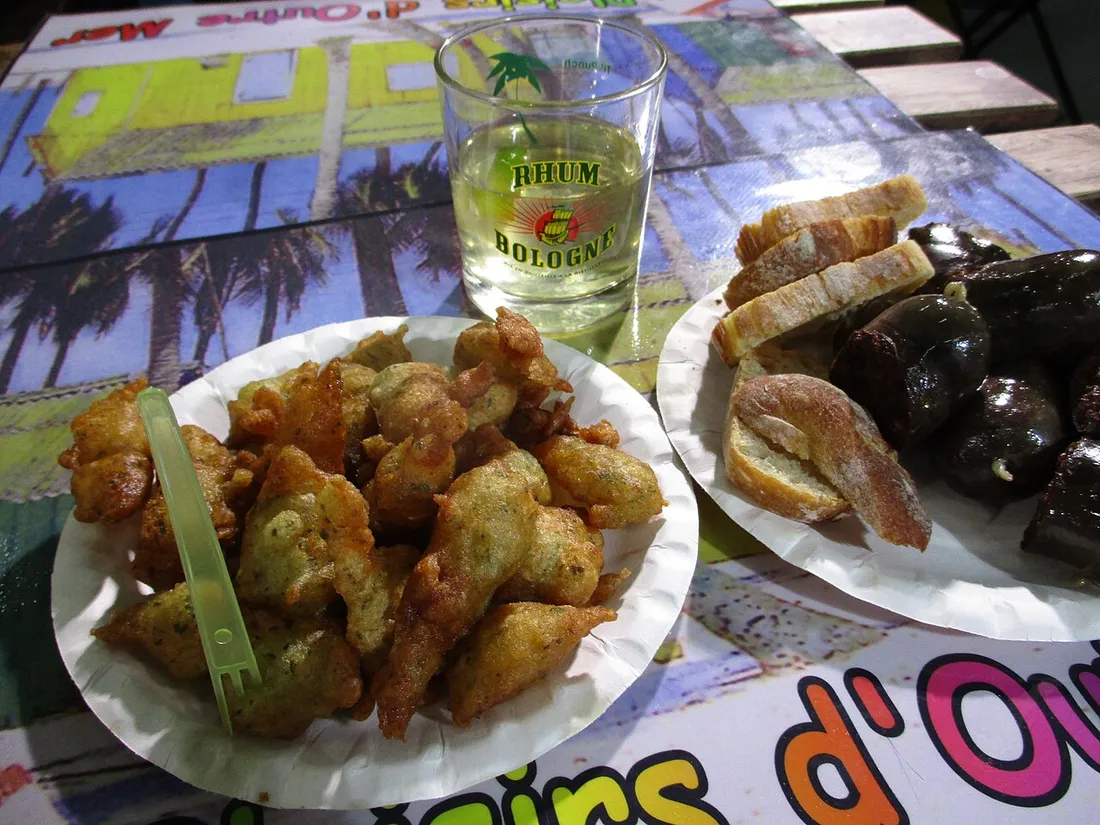
The most common frying mistakes
Here are the faults I see most often, and how to avoid them.
- Oil too cold: below 160 C, the accra soaks up oil and turns greasy and heavy. Check with a thermometer or a small piece of batter that should sizzle at once.
- Oil too hot: above 185 C, the outside browns while the inside stays raw. Aim for 170-175 C.
- Batter too liquid: the accras spread out and don’t puff up. The batter should hold on the spoon.
- Overloading the fryer: too much batter makes the temperature drop. Fry in small batches.
- Forgetting to rest the batter: without the 30-minute pause, the accras are dense.
- Poor desalting: an over-salty accra ruins the whole dish. Always taste before cooking.
Where to taste the best accras, town by town
Martinique is best explored by car (highly recommended): in under an hour from Fort-de-France, you move from one town to the next. Here are my landmarks by area, with realistic prices (3 to 6 EUR per portion at a snack stand, around 8-10 EUR in a restaurant).
Fort-de-France and the center
The large covered market and the seaside ti-snacks serve accras at all hours. Ideal for a first taste, portion around 4 EUR. The capital also has fine modern Creole tables where the accra is reinvented.
Les Trois-Ilets
Very touristy but of high quality: the restaurants around the Pointe du Bout and the Poterie village often offer accras as a starter to a full Creole menu (starter and main around 20-25 EUR). Handy after visiting the Pagerie estate (Josephine de Beauharnais).
Sainte-Anne and the South
After a day at Les Salines beach, the snack stands of Sainte-Anne are perfect for an accras-and-ti-punch aperitif facing the sunset. Also keep in mind Anse Dufour and Anse Noire (black sand) on the Anses-d’Arlet side.
Le Diamant
Facing the famous Diamond Rock, several beachfront spots serve nicely seasoned accras. A great spot to combine a swim and lunch with your feet in the sand.
Le Francois and the Atlantic coast
This is where you’ll find the best seafood accras, thanks to the local fishermen. Make the most of it during an outing to the fonds blancs.
La Trinite / Tartane (Caravelle peninsula)
After a surf session or the Caravelle hike, the eateries of Tartane serve very fresh accras, often homemade.
Saint-Pierre
Heading up toward Mount Pelee and the UNESCO-listed ruins, make a gourmet stop in Saint-Pierre. The history-laden atmosphere adds to the pleasure.
Local tip: combine your accras tour with the Rum Route (the Clement, Depaz at Saint-Pierre, Saint-James, La Mauny and Trois-Rivieres distilleries). An AOC agricultural rum is the ideal companion to these fritters.
Stay in the heart of Martinique’s gastronomy
To taste accras in the best conditions, nothing beats a well-located place to stay, with an equipped kitchen so you can try the recipe yourself after a trip to the market. At Hostel Toucan, we offer hand-picked seasonal rentals across the whole island, from Fort-de-France to the beaches of the South.
Booking directly with us means:
- No platform fees on your reservation
- Free cancellation up to 7 days before arrival
- WhatsApp assistance 7 days a week for your questions, including our favorite culinary addresses (country code +596, time difference -5h in winter / -6h in summer vs Paris)
Discover our accommodation in Martinique and plan your trip with our complete Martinique guide. Do you own a property on the island? Entrust it to our concierge service for owners.
Aime Cesaire Airport at Le Lamentin, a rental car, your first batch of accras that very evening: your Creole getaway can begin with the very best of aperitifs.
FAQ
How long should you desalt cod for accras?
Allow at least 12 hours of soaking in cold water, changing the water 3 to 4 times. Taste a small raw piece before cooking: it should be flavorful but not aggressively salty. Insufficient desalting ruins the whole dish.
At what temperature should you fry cod accras?
Aim for 170 to 175 C. Below 160 C, the accra soaks up oil and turns greasy; above 185 C, the outside browns before the inside cooks. Fry in small batches so the temperature doesn’t drop.
Can you make accras without cod?
Yes. The vegetarian variations with vegetables (giraumon, carrot, Chinese cabbage, local spinach) are common in Martinique, as are shrimp or conch accras on the Atlantic coast. The batter base stays the same; you just adjust the seasoning.
What is the best time to taste accras in Martinique?
All year round, but the dry season known as Careme, from December to April, offers the best weather to enjoy terraces and beachfront snack stands. The Carnival in February and March is also an ideal festive period.