Less than an hour from Cayenne, the eastern road tips into another world. Past the Comté bridge, the forest closes over the river and a pirogue becomes the only way to move forward. This is one of the most complete outings you can do in French Guiana without committing to several days: a single day combining gallery-forest navigation, swimming in a freshwater creek, a visit to an Amerindian community and waterfalls. Here is what it actually looks like, when to do it, and what to bring.
What the Comté is, and why you travel it by pirogue
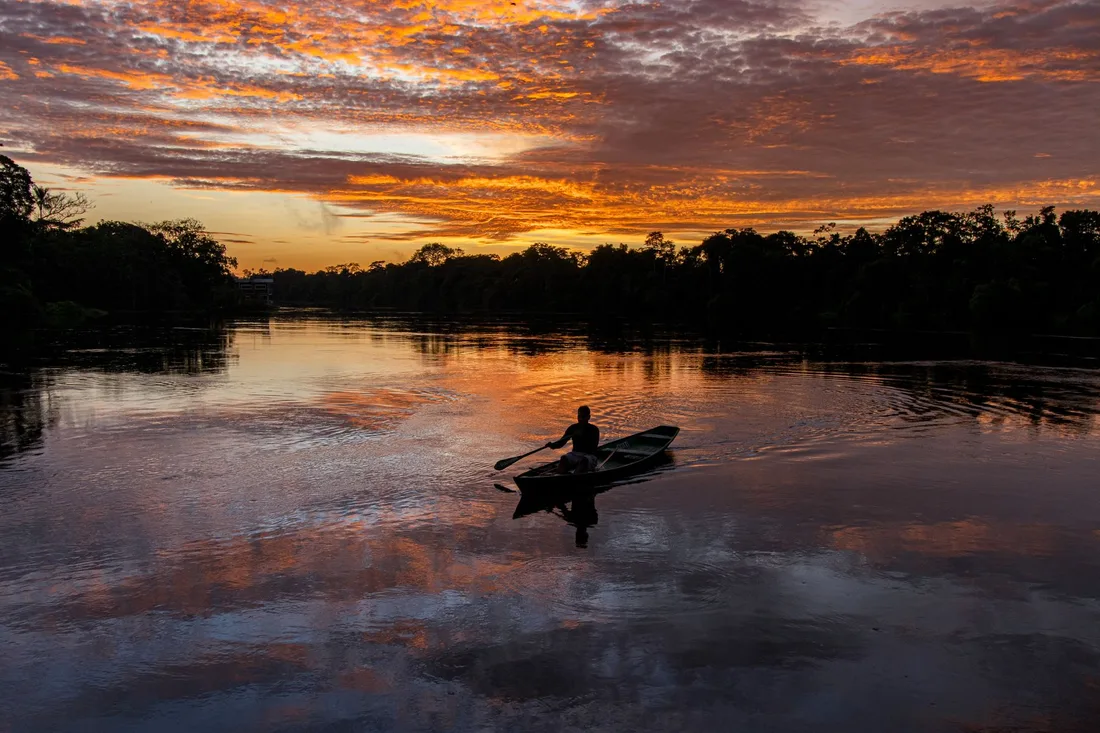
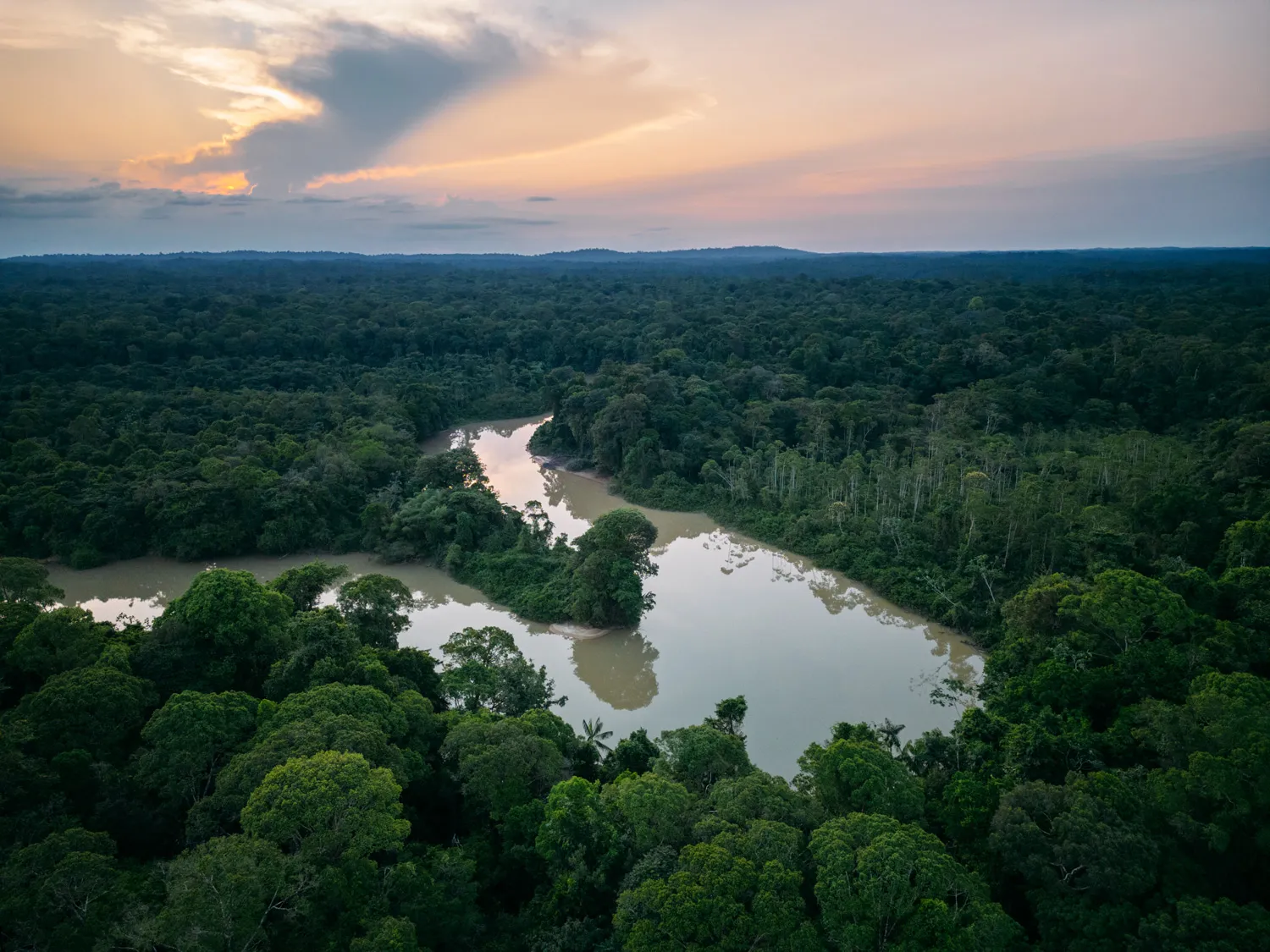
The Comté is a river in eastern French Guiana that joins the Oyack and then the Mahury before reaching the ocean. In the commune of Roura it winds beneath dense gallery forest: the trees meet above the water, light filters through, and the river becomes a vegetal tunnel.
It is a setting the road cannot give you. From a vehicle you see the forest from outside. From a pirogue you are inside it: the engine is cut regularly and you hear howler monkeys, macaws crossing overhead, kingfishers. The best sightings come early in the morning, as the forest wakes — hence departures typically set between 7am and 8am.
Access is generally from Roura or the area around the Comté bridge, roughly 45 minutes to an hour’s drive from Cayenne via the RN2 and the eastern road. You will need a car: there is no practical public transport for this kind of outing.
What a typical day looks like
Formulas vary by operator, but the backbone is the same.
Navigation and crique Gabrielle
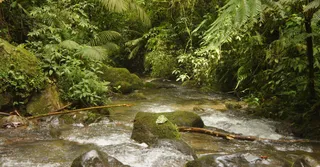
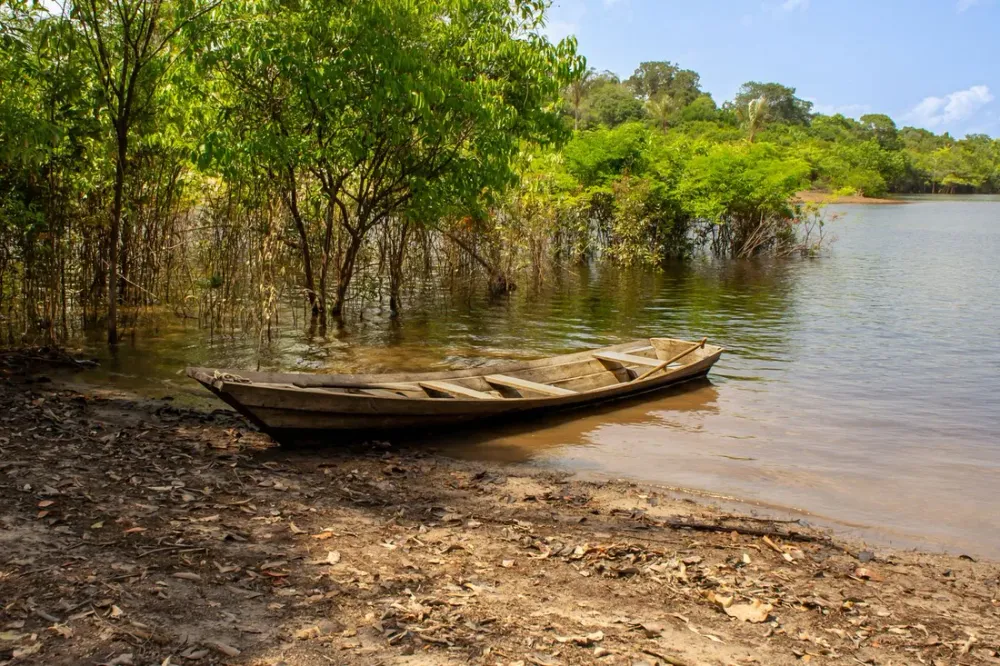
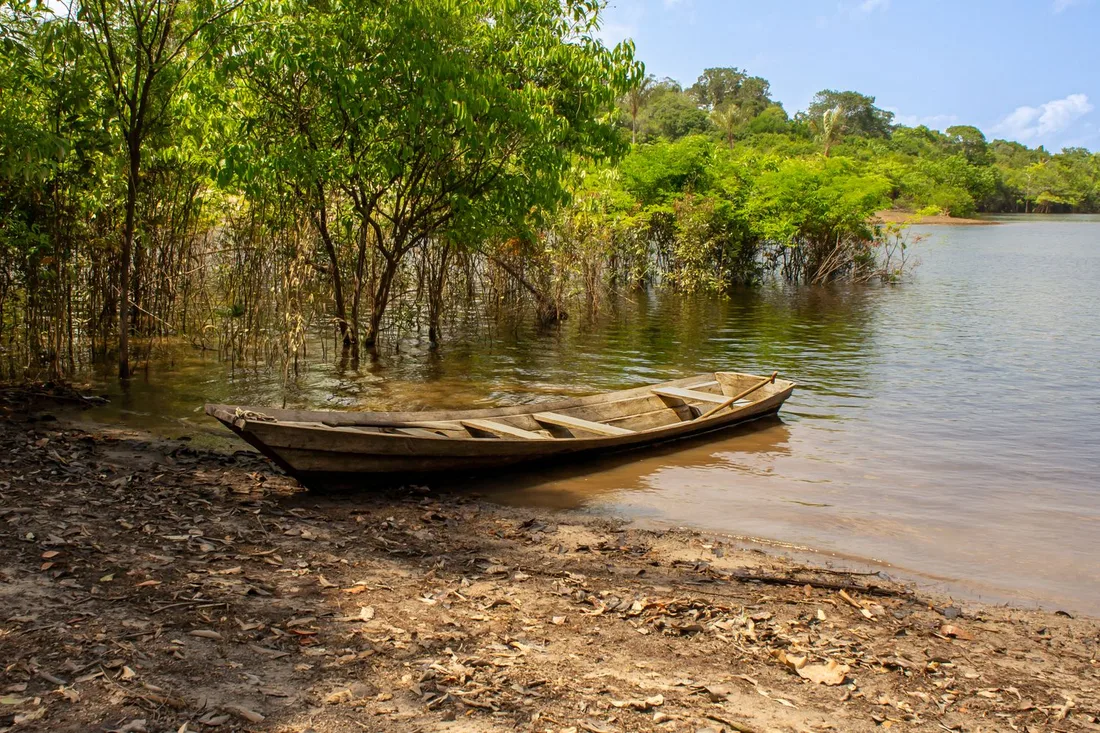
You set off in a motorised pirogue, guided by a boatman who knows the water level and the sandbanks — two parameters that change everything with the season. Crique Gabrielle, a classic tributary in the area, offers cool freshwater, shaded banks and shallow pools in places. This is the swimming stop of the day, and it suits families particularly well.
A word on creek swimming: the water is often dark, tinted by tannins from the vegetation, which is normal and harmless. Always follow your guide’s instructions on permitted zones and currents. Our guide to swimming in Guianese creeks sets out the safety rules.
The Amerindian village of Favard
On the banks of the Comté, the pirogue stops at the village of Favard, an Amerindian community in the Roura area. Visits are always accompanied and at the village’s invitation: this is a place where people live, not a tourist site. You learn how the village is organised, about crafts, plant uses, and fishing and farming techniques.
A few basic rules, which apply everywhere in French Guiana:
- Always ask permission before photographing a person or a home.
- Stay with your guide and do not enter residential areas uninvited.
- Buy crafts on site rather than in a city shop: it is the most direct way to support the community.
- Avoid handing out gifts to children, a well-meaning but problematic practice.
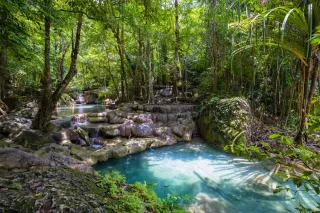
Fourgassié falls
Back towards Roura for the Fourgassié falls, also known as saut Fourgassié: a succession of rock slabs and pools where the water slides more than it drops. It is one of the most popular swimming spots in the Cayenne area, much loved by Guianese families at weekends. The rocks are slippery: water shoes or closed sandals with grippy soles make a real difference. Our dedicated article on Fourgassié falls covers access and on-site advice.
The meal
Most “Comté day” formulas include the meal, served under a carbet or by the river: Guianese creole cooking, often fish or poultry, rice and local vegetables. Check this at booking, as it is the main difference between offers — and flag any allergy or dietary requirement in advance, since improvising in the forest is difficult.
The Cacao variant by pirogue
Many operators offer a second formula, on the same day or as an alternative: heading up towards Cacao, a Hmong village set in the hills around 75 km from Cayenne.
The difference is clear:
- The village visit is unguided, at your own pace.
- The meal is generally not included: you eat there, and that is precisely the point. Cacao is known for its soup and Hmong cooking.
- Sunday morning is the highlight: market day, with fruit and vegetables, crafts and food.
It is a more cultural and culinary outing than a naturalist one. Our guides to the village of Cacao and the Roura-Cacao gourmet circuit cover this option.
When to go: the season changes everything
River levels determine navigation, creek access and the force of the falls. Factor this in before booking.
The main dry season, July to late November
This is the most comfortable period: passable tracks, mostly clear skies, pleasant swimming. On the other hand, late in the dry season water levels drop and some creeks become less navigable or shallower. The falls are then gentler than impressive.
The rainy season, December to July
The river runs high, the vegetation is explosive, the falls spectacular. But showers are frequent, banks muddy, and some outings may be cancelled if levels rise too far or currents get too strong. The brief lull in March is an interesting window.
In every case, call the operator the day before: they are the ones who know whether the water level allows the trip. To plan your stay overall, see when to visit French Guiana.