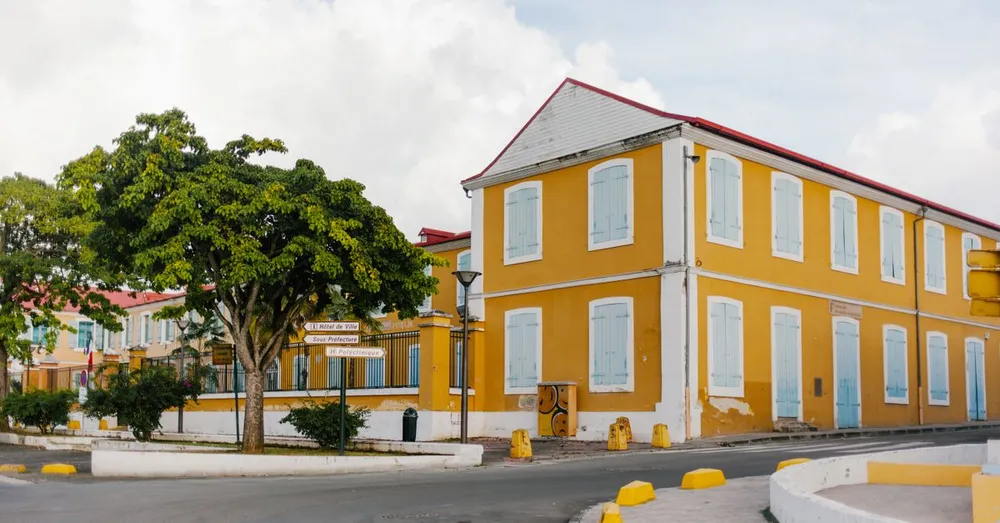
You step off the plane at Aimé Césaire airport in Le Lamentin, pick up your rental car, and already, at the first “Sa ka maché ?” tossed your way by a smiling attendant, you realise that Martinique speaks two languages. Here, French is official — we are in a French overseas department and region (DROM), with the euro, the capital Fort-de-France and its roughly 360,000 inhabitants — but Martinican Creole is the language of the heart, of the market, of the ti-punch among friends and of bursts of laughter on Les Salines beach.
You don’t need to speak it fluently to have a memorable stay. But slipping in a few words of Creole opens doors: a knowing smile from the fruit vendor, a better price on spices, a conversation that truly takes off. Here is our field mini-lexicon, tested in the markets of Fort-de-France and at the seaside counters, to help you travel smart.
Why a few words of Creole change everything
Martinican Creole was born from the meeting of 17th-century French, West African languages, and Carib, English and Spanish words. The result: a lively, vivid, musical language. Everyone understands French here, so no one will hold it against you for not speaking Creole. But the reverse is true too: a single heartfelt “Mèsi” is worth all the tourist guides.
A general pronunciation tip: Creole reads almost as it is written, French-style. The “r” is often very light, even swallowed (you say “maché” for to walk). The “w” is pronounced “oo,” and “tj” sounds like a soft “ky.” Relax your jaw, find the rhythm, and go for it.
The politeness essentials
Politeness is the first key. In Martinique, people greet one another and take their time. Walking into a shop without saying hello is frowned upon, as it is everywhere in the Caribbean.
- Bonjou (bon-JOO) — Hello. To be said systematically when you enter anywhere.
- Bonswè (bon-SWÈ) — Good evening, from mid-afternoon onward.
- Sa ou fè ? (sa-oo-FÈ) — How are you? (literally “what are you doing?”).
- Sa ka maché (sa-ka-ma-CHÉ) — I’m good, all’s well. The all-purpose reply.
- Mèsi (mè-SEE) — Thank you.
- Souplé (soo-PLÉ) — Please.
- An nou ! (a-NOO) — Let’s go! / Here we go!
- Doudou (doo-DOO) — Term of affection (sweetheart, darling). Charming, but best reserved for your loved ones.
- Mi ! (MEE) — Here! / Look! A very common exclamation.
- Pa ni pwoblèm (pa-nee-pwo-BLÈM) — No problem. The island spirit in three words.
At the market: bargaining with a smile
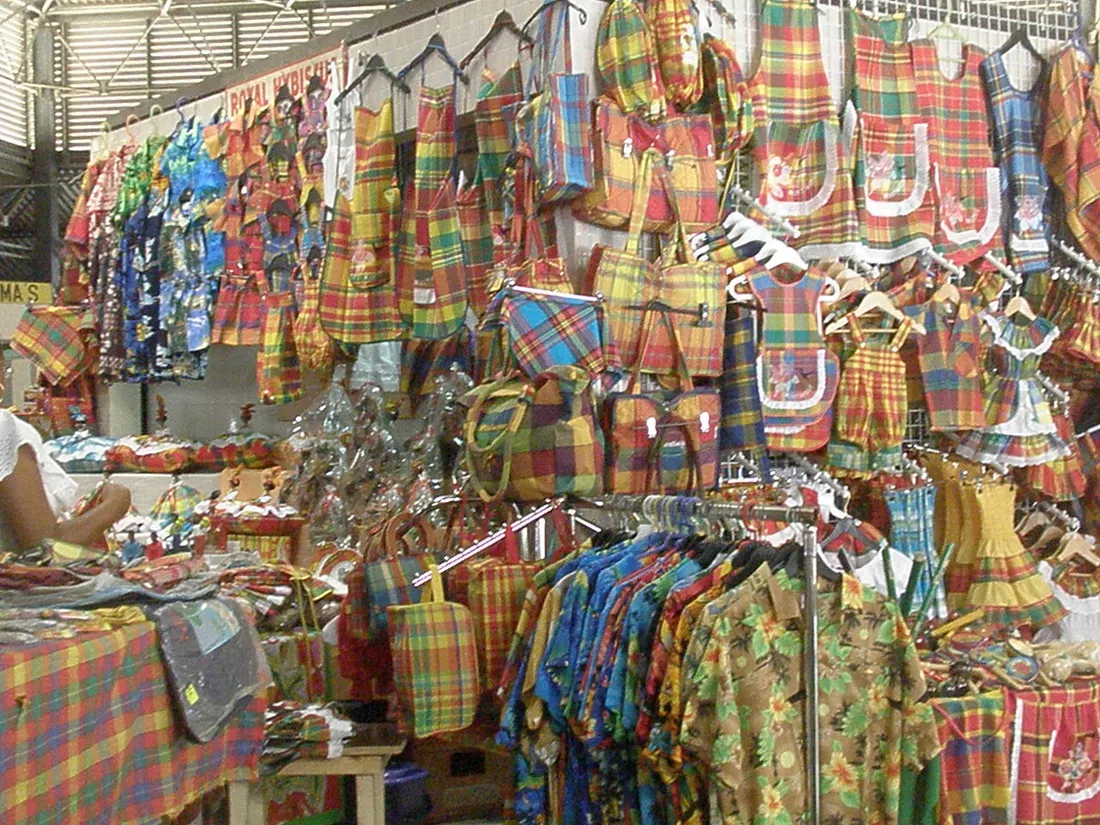
The covered market of Fort-de-France, the fish market in Le François or the stalls of Sainte-Anne are perfect playgrounds for practice. Reckon on 2 to 4 € for a bunch of colombo spices, 1.50 to 3 € per kilo of fruit depending on the season, and don’t hesitate to taste before you buy — that’s the custom.
- Konmen sa ? (kon-men-SA) — How much is it?
- Ki pri ? (kee-PREE) — What price?
- Two chè (two-CHÈ) — Too expensive (to be said with a smile, to get things going).
- Ba mwen (ba-MWEN) — Give me.
- An ti moso (an-tee-mo-SO) — A little piece.
- Bon mâché (bon-ma-CHÉ) — Cheap, inexpensive.
- Lajan (la-JAN) — Money.
- Fwi (FWEE) — Fruit. Ask for prin-Cythère (golden apple), maracudja (passion fruit) and kowosòl (soursop).
Local tip: bargaining is done lightly, never aggressively. A “Two chè, doudou!” tossed out with a laugh often brings the price down by half a euro and sparks genuine warmth.
At the restaurant and bar: ordering like a local
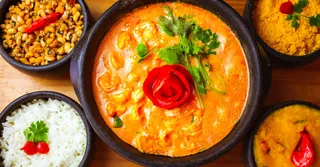
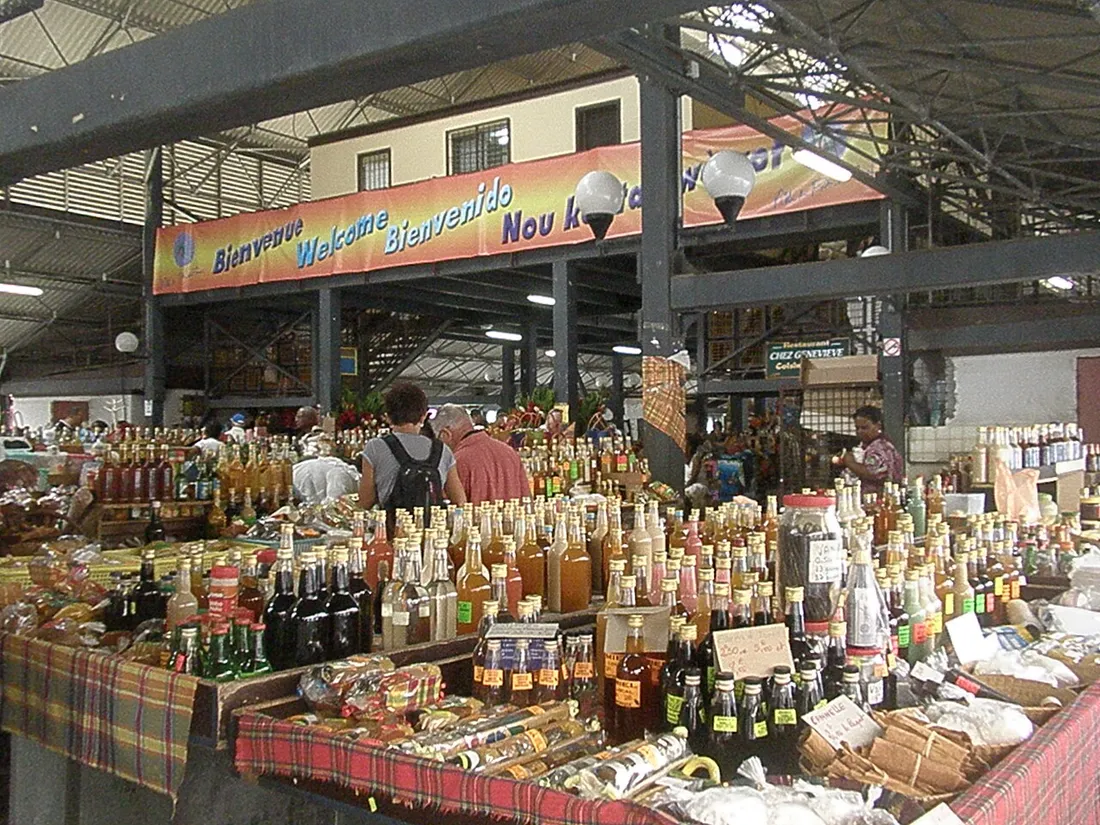
From the accras boat on Anse Dufour beach to the Creole restaurant in Les Trois-Îlets, the table vocabulary is a pleasure to wield. Reckon on 12 to 18 € for a hearty Creole dish, 6 to 8 € for a plate of accras, and 4 to 6 € for a ti-punch.
- Ti-punch (tee-PONCH) — AOC agricultural rum, cane sugar, lime. The institution.
- Sé bon ! (sé-BON) — It’s good, it’s delicious.
- Mwen fen (mwen-FEN) — I’m hungry.
- Mwen swèf (mwen-SWÈF) — I’m thirsty.
- Manjé (man-JÉ) — To eat, food.
- Dlo (D-LO) — Water.
- Rhum vyé (rom-VYÉ) — Aged rum, to be savoured after a trip along the Rum Route (Clément, Depaz, Saint-James, La Mauny, Trois-Rivières).
- Lonbi (lon-BEE) — Conch, that emblematic shellfish.
- Tjenbé rèd (kyen-bé-RÈD) — Hang in there, stay strong! Said when clinking glasses.
Beware of false friends with mainland French
This is where travellers get tripped up — and it’s also where Creole becomes delicious. Some words look like French but don’t mean the same thing.
- Chèché does not mean “to dry” but to look for / search.
- Mâché means to walk or to work (function): “machin-la ka maché” = the car works.
- Bay (pronounced “bye”) does not mean “goodbye” like the English bye, but to give.
- Tjè (kyè) does not refer to a queue but to the heart.
- Lwen looks like the French “loin” (far)… and does indeed mean far, but beware, distances here are relative: “it’s lwen” can mean 15 minutes by road! On an island 60 km long, crossing from Le Diamant to Tartane (Caravelle peninsula) still takes 1h15.
- Tourisme is the same word, but “fè touris” can mean to stroll, to wander aimlessly. Own it — you’re on holiday.
A few phrases to shine
Want to go beyond the strictly useful? These vivid expressions will make your listeners smile.
- Pa palé fò (pa-pa-lé-FÒ) — Don’t speak loudly, gently.
- Tout moun (too-MOUN) — Everyone.
- Zafè-w (za-fè-OO) — Your business, your problem (gently teasing).
- Lè Bondié vé (lè-bon-dié-VÉ) — God willing, a deeply rooted expression of caution.
When to practise during your stay
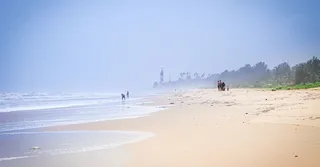
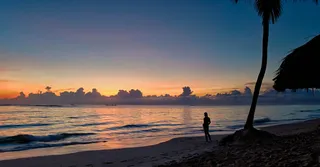
The best time to come remains Carême, the dry season from December to April, with its high point at the February–March Carnival — the dream occasion to hear Creole sung, chanted and poured out in the streets of Fort-de-France and Saint-Pierre (whose volcanic ruins from Mount Pelée are UNESCO-listed). Make the most of the southern markets too, before a beach day at Les Salines, Grande Anse or Anse Noire with its black sand, the Balata Garden or a stop at Diamond Rock.
Our residents’ tip: a car is strongly recommended for exploring the island at your own pace and multiplying the encounters. And after a day spent practising your Creole, there’s nothing like a place to drop your bags stress-free.
At Hostel Toucan, a 100% Martinican concierge and holiday rental service, we welcome our travellers with that extra touch of local soul — including the best tips for practising Creole off the beaten track. Book direct, with no platform fees, enjoy free cancellation up to 7 days before arrival, and stay in touch thanks to our WhatsApp support 7 days a week (dialling code +596, time difference -5h in winter / -6h in summer compared to Paris). Browse our complete Martinique guide, discover our rentals in Martinique, and if you own a property on the island, see how we support owners.
An nou — see you very soon under the coconut palms. Tjenbé rèd!
FAQ
Do you need to speak Creole to travel in Martinique?
No. Martinique is a French department where French is the official language; everyone understands and speaks it. Martinican Creole remains the language of daily life and conviviality. Slipping in a few words like Bonjou, Mèsi or Sa ka maché is enough to build real rapport, with no obligation to master it.
Is Martinican Creole the same as Guadeloupean or Haitian Creole?
These are French-lexicon Creoles, so close and often mutually intelligible, but distinct. Martinican Creole has its own turns of phrase, accent and vocabulary, shaped by the island’s history. A Martinican and a Haitian will understand each other partially, with some differences in pronunciation and words.
How do you say hello and thank you in Martinican Creole?
Hello is Bonjou (pronounced bon-JOO) and good evening is Bonswè (bon-SWÈ), to use from mid-afternoon onward. Thank you is Mèsi (mè-SEE) and please is Souplé (soo-PLÉ). Greeting people as you enter a shop or restaurant is essential: it’s a mark of respect much appreciated locally.
When should you come to Martinique to enjoy the Creole atmosphere?
The best time is Carême, the dry season from December to April, sunnier and ideal for the southern beaches like Les Salines. The February–March Carnival is the high point to hear Creole sung and to vibrate to the island’s rhythm, in the streets of Fort-de-France and Saint-Pierre.