Caribbean cuisine is often summed up by its accras and colombo, but that would mean missing an entire side of local culture: the sweet side. Martinique’s creole desserts tell the story of sugarcane, cocoa, coconut and guava with disarming generosity. After years of scouring the bakeries of Fort-de-France and the beachside stalls, here is my round-up of the must-try sweets, their history, a few simple recipes you can recreate in your rental, and my go-to spots to taste them.
Why creole desserts deserve your attention
Martinican creole pastry is a cuisine of thrift and abundance. Sugarcane is turned into syrup and caramel, fresh coconut fallen from the palm is grated by hand, and sun-drenched local fruits are candied. Every family defends its own version of coconut flan or banana jam.
The best time to enjoy them remains Lent (the dry season, from December to April): the markets overflow with fruit, and the February–March carnival adds its own share of festive sweets. At Aimé Césaire Airport in Le Lamentin, many visitors leave with a box of coconut confections tucked under their arm.
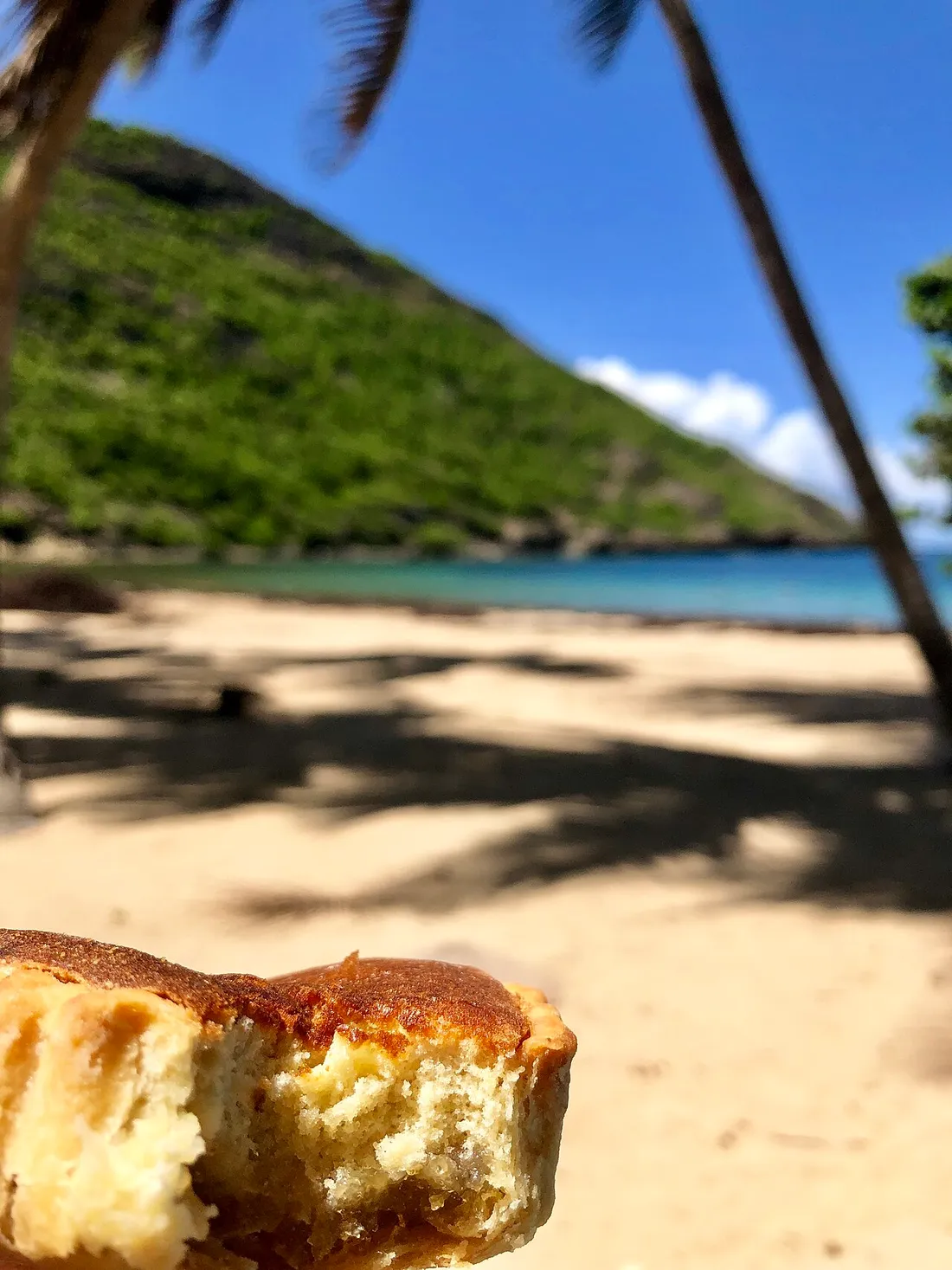
The tourment d’amour, the star from Les Saintes
It’s impossible to talk about creole pastry without starting with the tourment d’amour. This individual tartlet combines a shortcrust base, a thin layer of jam (banana, guava or coconut) and a soft sponge on top. It fits in the palm of your hand and disappears in two bites.
A Guadeloupean origin, a Martinican adoption
The tourment d’amour was not born in Martinique but in Les Saintes, the small archipelago attached to Guadeloupe. Legend has it that the women of Terre-de-Haut would prepare it to pass the time while the fishermen were out at sea, hence its evocative name (literally “torment of love”). The cake crossed the waters and settled in so well that you’ll find it today in most markets and bakeries across the island.
Expect to pay €1.50 to €2.50 a piece at a market, a little more at a polished pastry shop. The good test: the sponge should stay moist and the jam fragrant, never just a layer of set sugar.
Coconut flan, the Sunday creole dessert
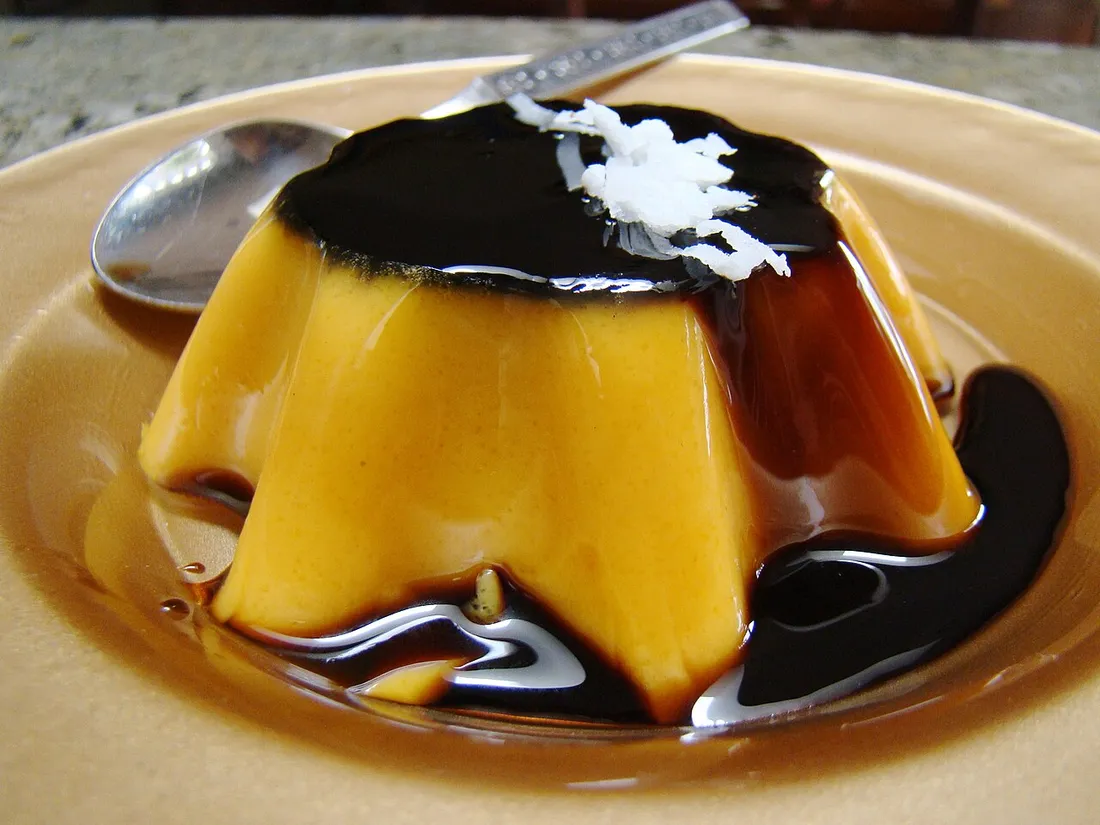
If a single sweet had to embody the family table, it would be the creole coconut flan. Creamy, fragrant and coated in an amber caramel, it closes out Sunday lunches and festive meals. It comes either in individual portions or in a large dish to share.
Its lighter cousin, the coconut blanc-manger, relies on set coconut milk and is served well chilled. Both play on the same star ingredient: coconut, ideally freshly grated.
A simple coconut flan recipe to try in your rental
With an equipped kitchen, this is one of the easiest desserts to nail on the spot. For 6 people, allow 15 minutes of prep and 45 minutes of baking:
- 1 can of sweetened condensed milk (about 400 g)
- 400 ml of coconut milk
- 4 eggs
- 100 g of grated coconut
- The zest of 1 lime, a hint of vanilla or cinnamon
- Sugar for the caramel
Prepare an amber caramel in the bottom of the mould. Beat the eggs with the condensed milk, coconut milk, grated coconut and flavourings. Pour over the caramel and bake in a bain-marie at 160 °C for 45 minutes: the flan should be set but still wobbly in the centre. Let it cool in the fridge for several hours before turning it out.
The doucelette, soft caramel made with coconut milk
Less familiar to visitors, the doucelette is nonetheless a cult confection: a soft caramel slowly cooked from coconut milk, cane sugar and vanilla, sometimes with added cocoa or banana. The texture, somewhere between fruit paste and caramel, melts gently in the mouth, which is exactly where it gets its name (from doux, “soft/sweet”).
It’s sold wrapped in parchment paper, often by the local jam makers. Perfect to slip into your suitcase: it keeps for several weeks.
The other creole sweets worth knowing
Martinique brims with sugary specialities you’ll discover as you wander the markets. The ones to taste first:
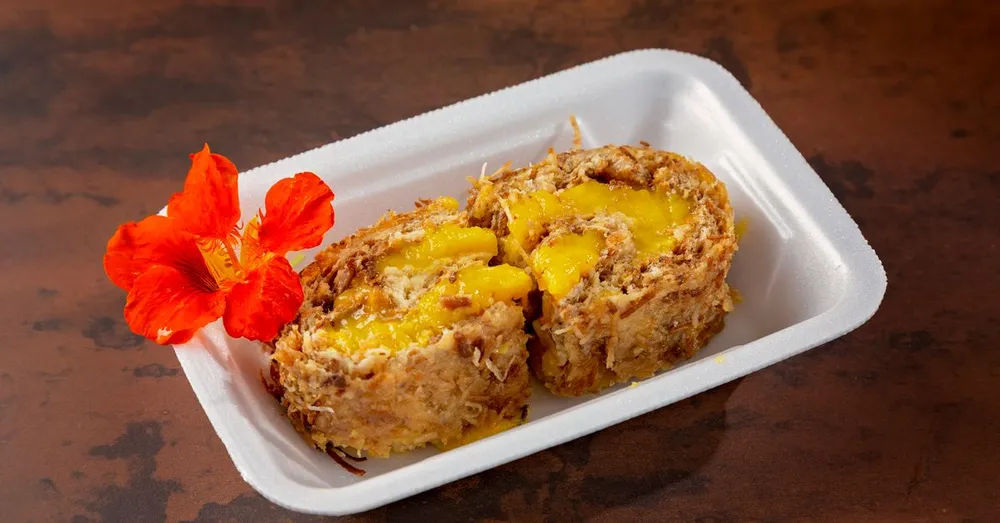
- Coconut tablette: shavings of fresh coconut set in a brown-sugar syrup, scented with vanilla. Crunchy and addictive, sold at €2 to €3 a portion.
- Coconut sorbet, churned by hand at markets and on beaches, €2 to €4 a scoop. An institution.
- Pain au beurre and communion chocolate: braided brioche served with a thick, spiced chocolate, traditional at christenings and first communions.
- Local jams: guava, banana, pineapple, golden apple (June plum), to spread or to gift.
- Sweet-potato cake (made with sweet potato) and coconut sweets, grandmother’s treats par excellence.
As for fruit, Lent and summer bring passion fruit, soursop, guava and mango at their peak: the ideal raw material for homemade sorbets.
Where to taste the best creole desserts, town by town
Martinique is easy to explore by car (highly recommended): in under an hour from Fort-de-France, you move from one town to the next. Here are my landmarks by area.
Fort-de-France and the centre
The large covered market and the downtown bakeries serve tourments d’amour, coconut flans and tablettes at all hours. It’s the best starting point for a comparative tasting and for spotting the coconut-confection makers.
Les Trois-Îlets
Very touristy but high quality: the Pottery Village and the addresses around Pointe du Bout offer polished creole desserts to end a meal, perfect after a visit to the Pagerie estate (Joséphine de Beauharnais).
Sainte-Anne and the South
After a day at Les Salines beach, the stalls of Sainte-Anne line up coconut sorbets and sweets facing the sunset, before heading up towards Le Diamant and its famous rock.
La Trinité, Tartane and the Atlantic coast
On the Caravelle peninsula, after the trail or a surf session, the bakeries of Tartane offer very fresh, often homemade pastries.
Saint-Pierre and the North
Heading up towards Mount Pelée and the UNESCO-listed ruins, stop at a bakery in Saint-Pierre: the history-laden atmosphere only adds to the pleasure of a well-chilled coconut flan.
Local tip: combine your sweet tour with the Rum Route. An aged AOC agricultural rum (Clément, Depaz, Saint-James) is the ideal companion to a doucelette or a coconut tablette.
Making your own creole desserts in your rental
The real luxury in Martinique is cooking your own sweets after a trip to the market: a coconut flan or a guava jam asks for nothing more than an equipped kitchen and a few ingredients bought locally.
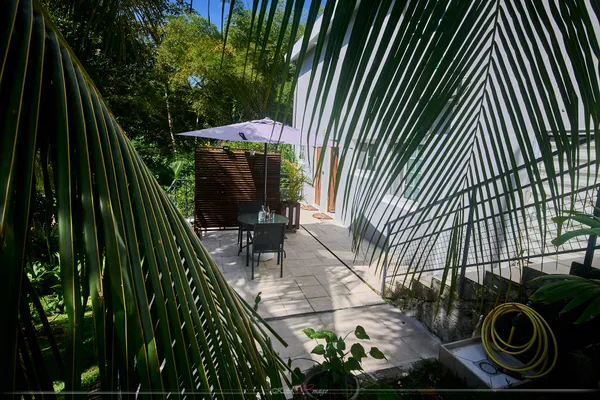
At Hostel Toucan, we offer seasonal rentals in Martinique hand-picked on the ground, often with a proper kitchen and well located between the southern beaches and the roads up to Saint-Pierre. Booking directly with us means:
- No platform fees on your reservation
- Free cancellation up to 7 days before arrival
- WhatsApp assistance 7 days a week for the best foodie addresses of the moment (dialling code +596, time difference −5h in winter / −6h in summer vs Paris)
To build your stay, check out our complete guide to Martinique. And if you own a property on the island, discover our concierge service for owners.
Market in the morning, grated coconut in the afternoon, flan chilling for the evening: a creole stay is best savoured one spoonful at a time.
FAQ
What is the origin of the tourment d’amour?
The tourment d’amour was born in Les Saintes, the archipelago attached to Guadeloupe. The women of Terre-de-Haut, the story goes, would prepare it while waiting for the fishermen to return from sea, hence its romantic name. This jam-filled tartlet (coconut, banana or guava) topped with sponge then spread widely across Martinique, where you’ll find it in most markets.
What are the must-try creole desserts in Martinique?
The classics are the tourment d’amour, coconut flan and coconut blanc-manger, the doucelette (soft coconut-milk caramel), coconut tablette and coconut sorbet. Add to these the local jams (guava, banana), the communion pain au beurre, the sweet-potato cake and coconut sweets. Coconut and sugarcane are the star ingredients of this pastry tradition.
Can you make a coconut flan yourself in your rental?
Yes, it’s one of the simplest creole desserts. All you need is sweetened condensed milk, coconut milk, eggs, grated coconut and sugar for the caramel. Allow 15 minutes of prep and 45 minutes of baking in a bain-marie at 160 °C, then a spell in the fridge. An equipped kitchen and a nearby market are all it takes.
Where can you buy creole desserts to bring home from Martinique?
The large covered market in Fort-de-France is the best place to find doucelettes, coconut tablettes and wrapped local jams, which keep for several weeks. The producers at the southern markets (Sainte-Anne, Le Marin) and the bakeries of Saint-Pierre or Tartane are also good options. Remember to check the packaging for air travel.