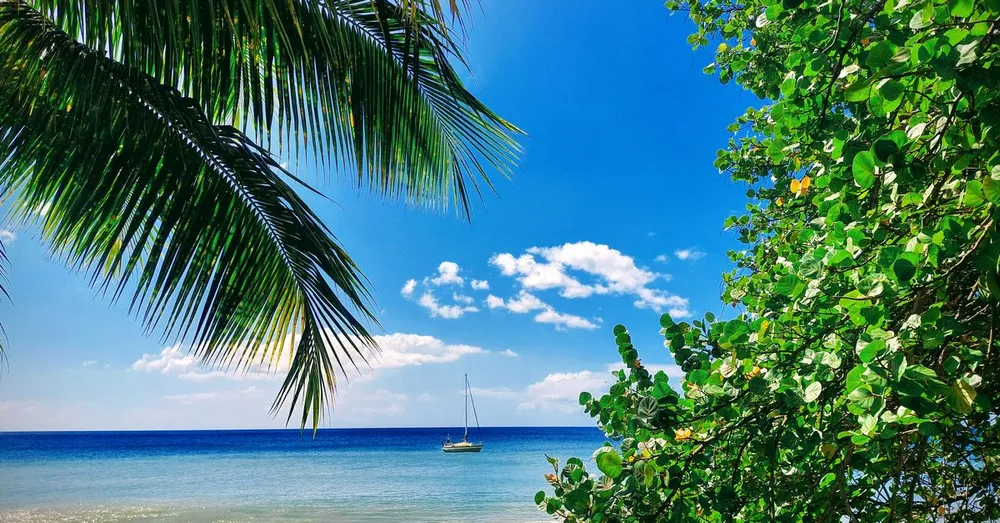
Set on the Caribbean coast of northern Martinique, between Saint-Pierre and Fort-de-France, the town of Le Carbet is one of those stops that rushed visitors skip far too often in favour of the southern beaches. That’s a mistake. Here the sand is black and volcanic, inherited from the nearby Mount Pelée. It is also, so the story goes, the shore where Christopher Columbus is said to have landed in 1502 during his fourth voyage. Add the memory of the painter Paul Gauguin, a colonial estate turned botanical garden, and a zoo that delights families, and you have a full day out just 40 minutes from Aimé Césaire airport.
After several years living on the island and guiding travellers across it, here is our hands-on guide to discovering Le Carbet without missing a thing.
Le Carbet, gateway to the northern Caribbean coast
Le Carbet has around 3,500 inhabitants and stretches along the coastline, backed by the first slopes of Mount Pelée. Its name comes from the “carbet,” the communal dwelling of the Kalinago Amerindians who lived in the region before colonisation. The town keeps an authentic atmosphere, far from the tourist bustle: colourful fishing boats hauled onto the sand, small Creole houses, grilled-fish restaurants right by the sea.
To set the scene: Martinique is a French overseas department and region (DROM), with Fort-de-France as its capital and around 360,000 inhabitants. You pay in euros, French and Creole are spoken, and the dialling code is +596. The time difference with Paris is -5h in winter and -6h in summer. The island is 80 km long; the north, more winding and mountainous, is best enjoyed by car.
How to get to Le Carbet
- From Aimé Césaire airport (Le Lamentin): about 35-40 minutes via the N2 (~35 km).
- From Fort-de-France: 30 minutes along the Caribbean coast (~25 km).
- From Saint-Pierre: barely 10 minutes (~7 km), which makes the two perfectly combinable in a single day.
Our local tip: a car is strongly recommended. Public transport exists but remains impractical for linking up the sites of the north. Budget around €35-50 per day for a rental, depending on the season.
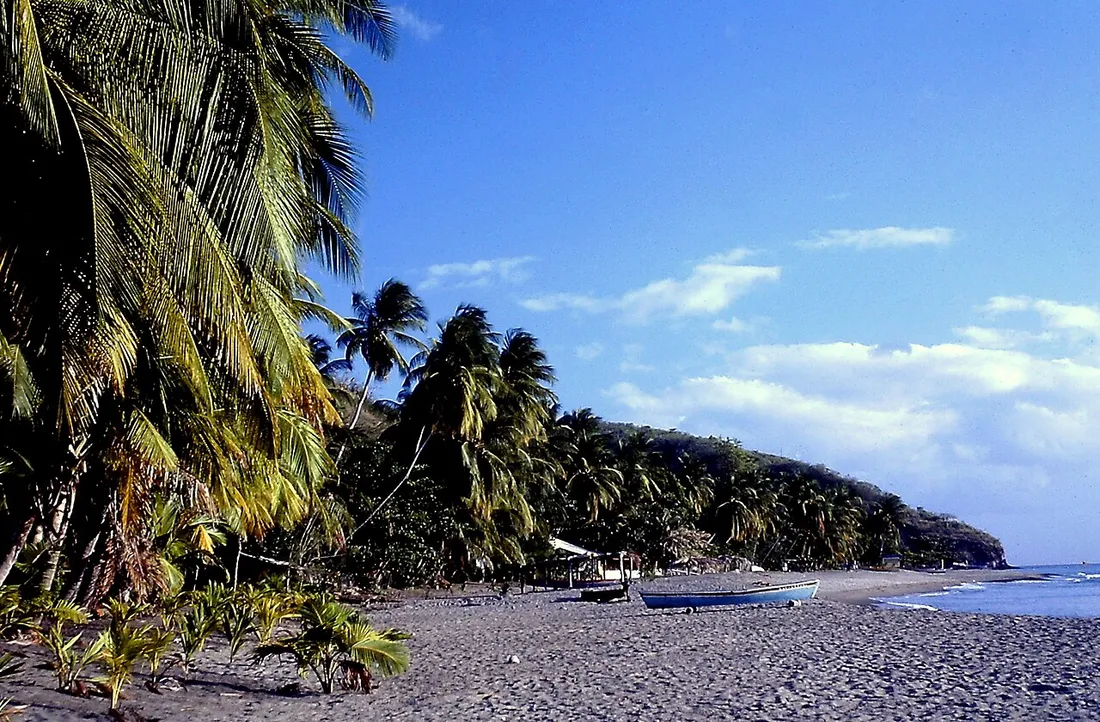
A black sand beach facing the Caribbean Sea
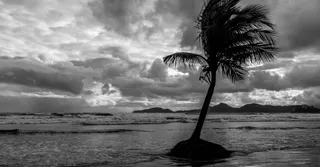
The Plage du Coin, Le Carbet’s best-known beach, unrolls a long ribbon of grey-black sand of volcanic origin. The water is calm, shallow and ideal for family swimming. This dark sand, which heats up quickly in the sun, surprises visitors used to postcard images of white sand, but it has a raw charm typical of northern Martinique.
Black sand isn’t unique to Le Carbet: you’ll also find it at Anse Noire (in the southern town of Anses-d’Arlet) or at Anse Couleuvre, further north. But at Le Carbet it comes with a lively setting: beach huts, coconut-sorbet sellers, and spectacular sunsets, since the beach faces due west over the Caribbean Sea.
Practical tips for swimming
- Best time: the dry season, the Carême, from December to April, offers clearer water and clear skies. Carnival enlivens the island in February-March.
- In the morning to enjoy calm water before the afternoon breeze.
- Water shoes come in handy: black sand absorbs heat and can burn your feet in the middle of the day.
- Snorkelling: the rocky seabed near the headlands shelters parrotfish and surgeonfish.
In the footsteps of Paul Gauguin
This is the angle that makes Le Carbet unique. In 1887, the painter Paul Gauguin spent nearly five months in Martinique, before his famous voyages to Polynesia. He set up his brushes at Anse Turin, within Le Carbet’s territory, and painted several canvases shaped by the tropical light and the Creole women carrying loads. This Caribbean chapter, less famous than Tahiti, was nevertheless decisive in the evolution of his palette.
A museum dedicated to Gauguin existed for a long time at Anse Turin. Depending on the period, the museum space goes through phases of renovation or reopening: ask locally before your visit. Either way, walking on this beach where the painter set up his easel, facing the same sea, remains a feeling all its own. It was also at Le Carbet that the writer Lafcadio Hearn briefly stayed. The town thus nurtures a genuine artistic and literary memory.
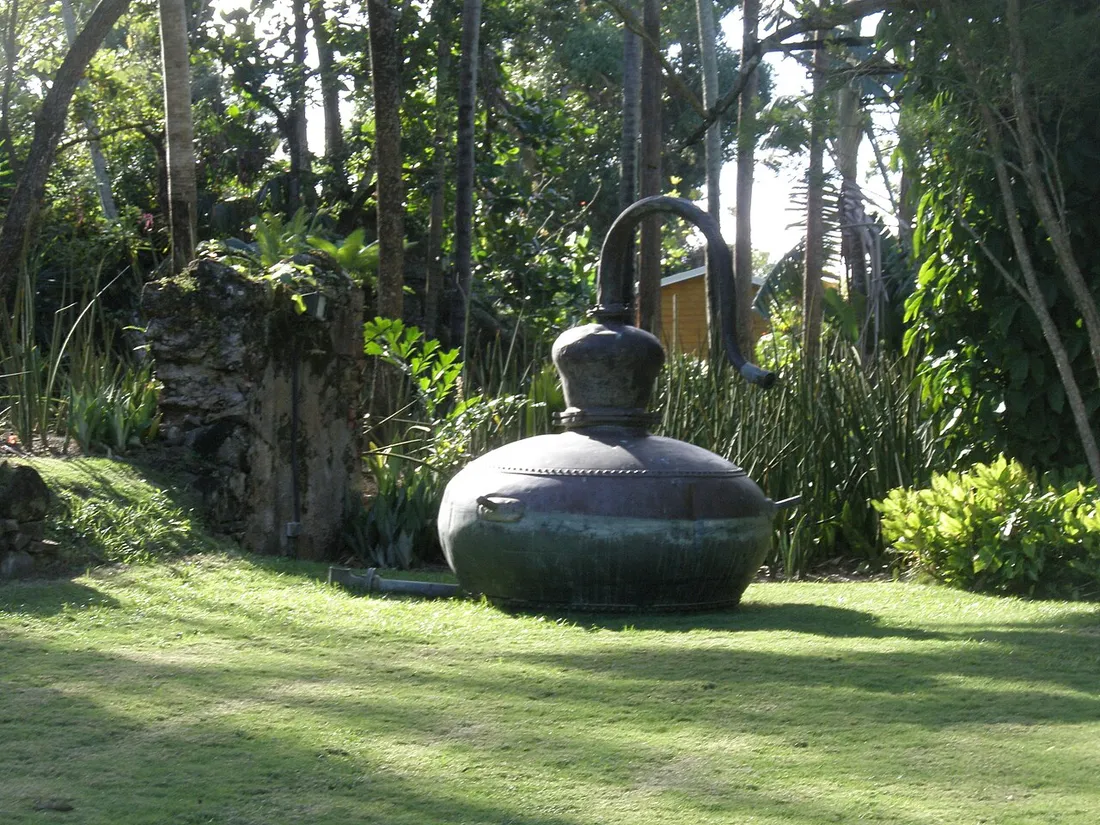
The Anse Latouche Estate and the Zoo de Martinique
At the southern entrance to Le Carbet hides one of the sites families love most: the remains of the Anse Latouche Estate, one of the island’s oldest sugar plantations, devastated by the eruption of Mount Pelée in 1902. Today, its stone ruins are wrapped in lush vegetation and home to the Zoo de Martinique.
The route blends heritage and nature: you wander among the walls of the old sugar mill, the basins, the aqueduct, in the middle of an abundant tropical garden. The zoo features species from the Caribbean and beyond — jaguars, lemurs, parrots, iguanas, monkeys — with suspended walkways that children adore.
Practical info for the visit
- Duration: allow 2h to 2h30 to take it all in at a relaxed pace.
- Indicative prices: around €18-19 for adults, €11-12 for children (free for the youngest). Check the current prices on site.
- Shade: the site is very wooded, so pleasant even in full heat; still, bring water, a hat and closed shoes.
- Best in the morning: the animals are more active and the light makes the garden glow.
An ideal day in Le Carbet (our itinerary)
Here’s how we organise a day for a first visit to the north:
- 9am — Visit the Anse Latouche Estate and the Zoo, before the big heat.
- 11:30am — A swim and some lazing on the black sand beach of Le Coin.
- 12:30pm — Lunch of grilled fish or accras in a beachfront hut.
- 2pm — A stop at Anse Turin, in the footsteps of Gauguin.
- 3:30pm — Head to neighbouring Saint-Pierre, its listed town centre and its 1902 ruins (UNESCO designation in progress), then a tasting at the Depaz distillery, at the foot of Mount Pelée.
This sequence combines the best of the north: history, volcano, volcanic beaches and AOC agricultural rum. To extend the day, the Route des Rhums (Depaz, Saint-James, Clément, La Mauny, Trois-Rivières) and Mount Pelée are within easy driving distance.
Where to stay to explore Le Carbet and the north
Le Carbet and its surroundings (Saint-Pierre, Le Prêcheur, Fonds-Saint-Denis) make an excellent base for anyone wanting to get off the beaten track of the touristy south. Staying in the north means waking up facing the Caribbean Sea, enjoying crowd-free beaches and venturing out to Mount Pelée and the distilleries.
At Hostel Toucan, we offer hand-picked holiday rentals all across the island, with direct booking and no platform fees, free cancellation up to 7 days before arrival, and WhatsApp assistance 7 days a week — invaluable for real-time recommendations, such as knowing whether the Gauguin museum is open or which beach hut serves the best catch of the day.
- Discover our available accommodation on the rentals in Martinique page.
- Plan your whole stay with our complete Martinique guide.
- Own a property on the island? Our concierge service for owners manages your rental from A to Z.
Le Carbet is not just a beach to pass through: it’s a dive into authentic Martinique — that of history, of the light that inspired a great painter, and of generous volcanic nature. A stop that deserves far more than a quick detour.
FAQ
Why is the sand black at Le Carbet?
Le Carbet’s black sand is of volcanic origin: it comes from the erosion of rocks and ash from Mount Pelée, the volcano that dominates northern Martinique. That’s why you find these dark beaches throughout the island’s northern Caribbean coast, as well as at Anse Noire in the south.
What is the connection between Le Carbet and Paul Gauguin?
In 1887, the painter Paul Gauguin spent nearly five months in Martinique, part of it at Anse Turin, within Le Carbet’s territory. There he painted several canvases shaped by the tropical light. A museum space was long dedicated to him on site; remember to check its opening hours before your visit.
Is the Zoo de Martinique at Le Carbet worth it with children?
Yes, it’s one of the north’s favourite family outings. Set among the ruins of the Anse Latouche Estate in the middle of a tropical garden, it features jaguars, lemurs, parrots and iguanas along suspended walkways. Allow 2h to 2h30 for the visit, ideally in the morning.
How long does it take to reach Le Carbet from the airport?
Allow about 35 to 40 minutes by car from Aimé Césaire airport in Le Lamentin, roughly thirty kilometres via the N2. From Saint-Pierre, Le Carbet is only 10 minutes away. A car is strongly recommended for exploring the north of the island.