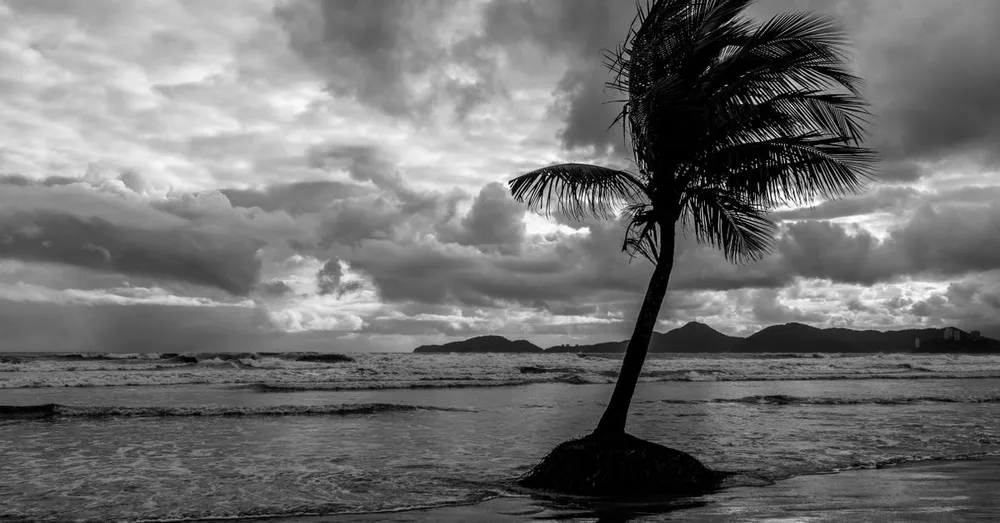
When people ask me where to find the “real” Martinique, the one that still smells of wet wood and sea spray, I never point them to the postcard beaches of the South. I talk about the Northern Atlantic coast: Marigot, Sainte-Marie, Basse-Pointe, all the way to the edges of Le Prêcheur. Here the sand is black, the currents have character, and certain coves must be earned at the price of a muddy trail or a bumpy track. After several years driving this coastline, here is my honest guide to the Northern beaches, focused on two gems: Anse Charpentier and Anse Couleuvre.
Why the Northern Atlantic is so different from the South
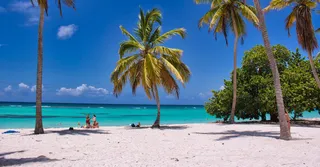
The South of Martinique (Les Salines in Sainte-Anne, Anse Dufour, Grande Anse) unfurls turquoise lagoons protected by the coral reef. The North, by contrast, faces the Atlantic Ocean head-on. The result: a more powerful swell, water that is often choppy, and that famous black volcanic sand inherited from Mount Pelée, which heats up fast in the sun and gives the beaches an almost mineral appearance.
This is a coastline for travelers who seek authenticity rather than calm swimming. You’ll cross paths with fishermen, coconut groves, and rivers tumbling down from the humid tropical forest. Crowds remain sparse, even at the height of the dry season (Lent, from December to April, the best period). A rental car is essential here: public transport doesn’t serve these hidden access points, and allow 1h15 to 1h30 of driving from Aimé Césaire airport in Le Lamentin.
Anse Charpentier (Marigot): black sand facing the Atlantic
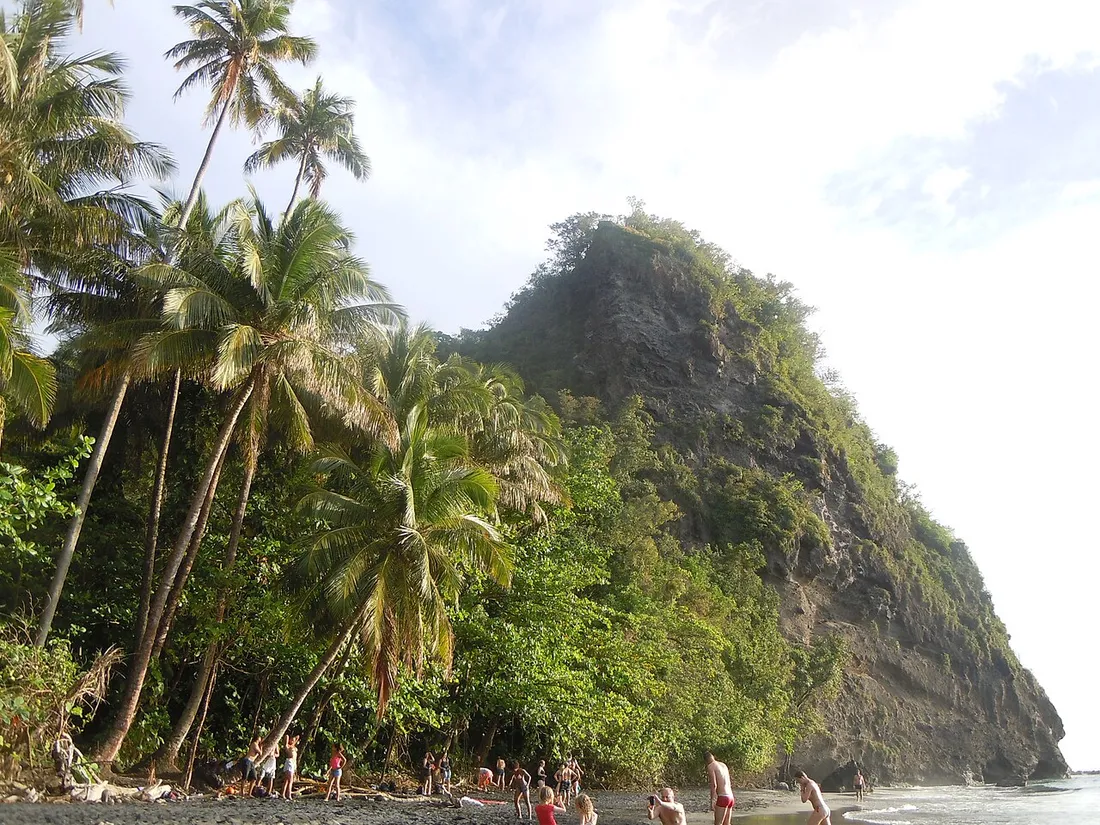
Anse Charpentier nestles in the town of Marigot, on the north-Atlantic coast, about a 45-minute drive from La Trinité. It is one of the most photogenic black-sand beaches on the island, dominated by a curious pierced rock that erosion has carved into an arch.
Getting there
- From Marigot, head toward the Charpentier district and then a narrow little road that descends to the sea.
- Parking is basic: a few informal spots along the track. Arrive early on weekends.
- A short trail leads down to the sand. Bring closed shoes: the terrain can be slippery after rain.
Swimming and safety
Let’s be clear: Anse Charpentier is not a calm swimming beach. The Atlantic rollers and rip currents can catch you off guard. I recommend:
- Staying right by the shoreline, in the area where you can touch the bottom.
- Avoiding swimming on days of heavy swell (check the local weather bulletins).
- Never leaving children alone near the water.
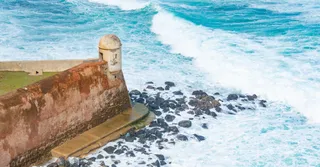
That said, it’s a magnificent spot for a sunrise stroll, photos, a picnic in the shade of the sea grapes, and watching the fishermen at work. The contrast of the charcoal sand, the lush vegetation and the white foam is striking.
Anse Couleuvre (Le Prêcheur): the beach at the end of the world
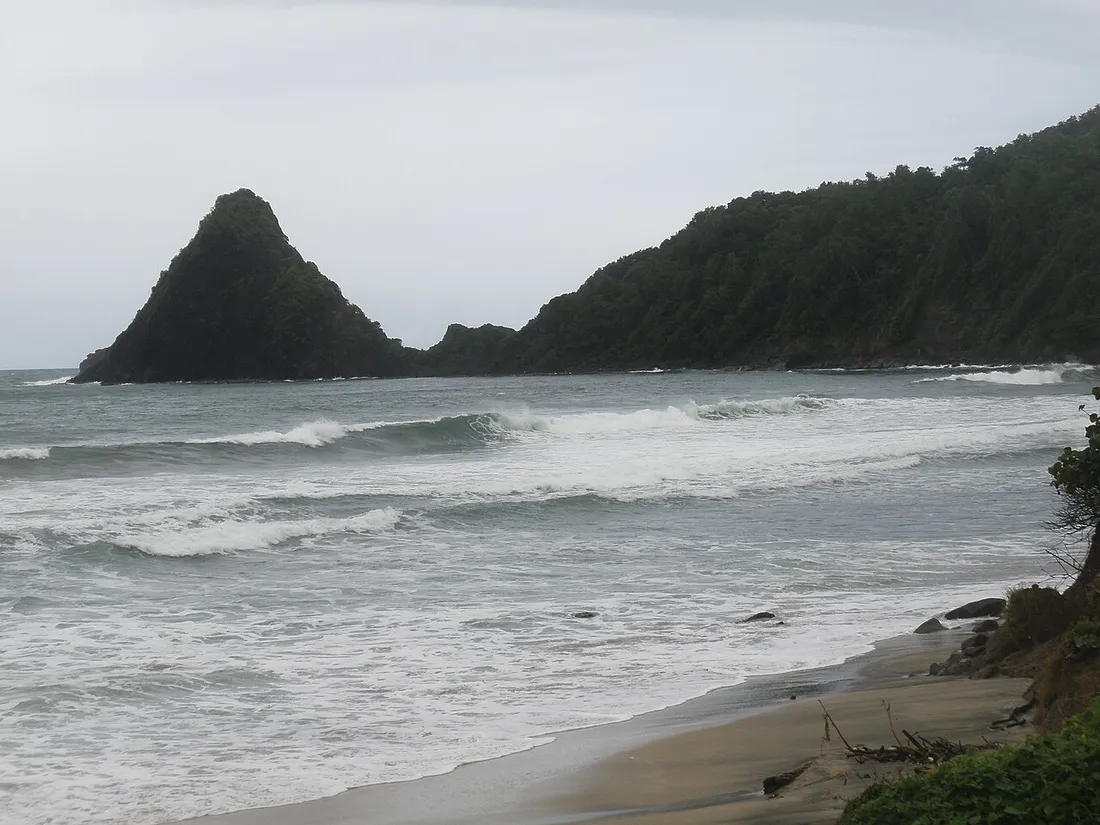
Further to the northwest, beyond Saint-Pierre and the town of Le Prêcheur, the road literally ends at Anse Couleuvre. It is the very last beach you can reach before the wild coast that runs toward Grand’Rivière. People come here as much for the beach as for the hike.
The access trail
From the car park at the Céron estate (a former distillery, an absolute must-see), a shaded trail of about 15 to 20 minutes descends through a spectacular tropical forest: tree ferns, giant bamboo, and the famous breadfruit and kapok trees. The path is easy but can be muddy.
- Walking distance: ~800 m, moderate elevation change.
- Bring water, hiking shoes and insect repellent.
- The return, uphill, is a little more demanding.
What awaits you below
A beach of deep black sand, wedged between two jungle-covered cliffs and lapped by often powerful water. It is also a site known for sea turtle nesting (from March to October depending on the species): we watch, we never disturb, and we leave no litter behind.
Swimming here, once again, must be done with caution: no lifeguards, real currents. Many visitors come mainly for the hike and the end-of-the-world atmosphere. The more adventurous press on toward Anse Lévrier or Grand’Rivière on a trek, but that requires a good level of fitness and ideally a guide.
My one-day itinerary in the North
To make the most of this coast, here is the loop I recommend to my travelers:
- Morning: an early start, heading for Saint-Pierre. Visit the listed ruins (the town destroyed by the eruption of Mount Pelée in 1902) and the small volcanology museum. Allow 1h30.
- Late morning: drive up to Le Prêcheur and hike to Anse Couleuvre (2h round trip including a swim).
- Lunch: a Creole table in Le Prêcheur or a picnic on site. Local meal budget: 15 to 25 € per person.
- Afternoon: the scenic Route des Rhums. Tasting stop at the Depaz distillery, at the foot of Mount Pelée (entry often free, tasting of AOC agricultural rum).
- Atlantic-side variation: if you’re staying near La Trinité or Sainte-Marie, Anse Charpentier at Marigot makes a superb stop at sunset.
For a broader look at the island, see our complete guide to Martinique, which also details the must-sees of the South and the Caravelle peninsula.
Practical tips from a local
- When to come: favor Lent (December to April) for dry trails and a slightly calmer sea. Avoid the days after heavy rain.
- Gear: closed shoes, water, sunscreen, a hat, and a waterproof bag. The black sand heats up fast: sandals to cross the beach are welcome.
- Swimming safety: none of these beaches has lifeguards. Respect your limits, watch the children, and skip swimming on swell days.
- Respect for the place: these coves are fragile. Take your litter with you, pick nothing, and keep your distance from the wildlife.
- Connectivity: dialing code +596, time difference of -5h in winter / -6h in summer compared to Paris. Mobile coverage is poor on some of the descents around Le Prêcheur: let someone know your itinerary.
Where to stay to explore the North
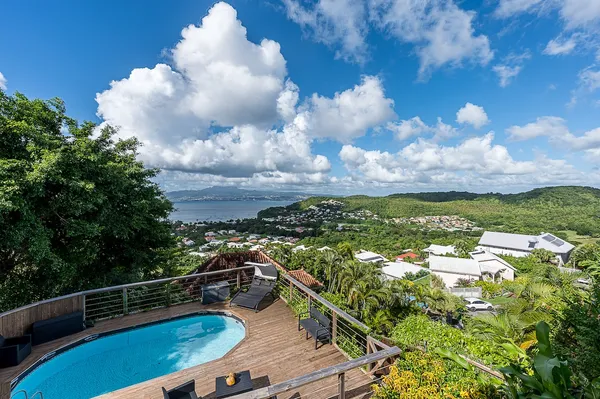
The North is best discovered over two to three days. Rather than making long round trips from the South, I recommend setting down your bags between Saint-Pierre and La Trinité. Hostel Toucan offers carefully selected seasonal rentals across the whole island, with a concierge service designed for explorers.
By booking directly through our Martinique rental offer, you benefit from:
- Direct booking with no platform fees (you pay the fair price).
- Free cancellation up to 7 days before arrival.
- WhatsApp assistance 7 days a week, invaluable for last-minute advice on sea conditions or the trails.
Do you own a property in the North and want to showcase it to travelers in search of authenticity? Discover our dedicated support for owners.
The Northern Atlantic is not the easy, brochure Martinique. It’s a rawer, more secret Martinique, one that rewards curiosity. Anse Charpentier and Anse Couleuvre are its perfect ambassadors: black sand, sea foam, silence, and that feeling, rare today, of arriving somewhere before everyone else.
FAQ
Can you swim at Anse Charpentier and Anse Couleuvre?
Yes, but with great caution. These Northern Atlantic beaches are unsupervised and exposed to swell and currents that can be strong. Stay near the shore, where you can touch the bottom, and skip swimming on days of heavy swell. Many visitors come mainly for the hike, the photos and the wild atmosphere.
How do you reach Anse Couleuvre?
Anse Couleuvre is in Le Prêcheur, beyond Saint-Pierre. From the car park at the Céron estate, a shaded trail of about 15 to 20 minutes (800 m) crosses the tropical forest down to the black-sand beach. Bring water, good shoes and insect repellent. The uphill return is a little more demanding.
Why is the sand black in the North of Martinique?
The black sand comes from the volcanic activity of Mount Pelée. The volcanic minerals ground down by erosion give this characteristic dark color, which you also find in the South at Anse Noire. This sand heats up fast in the sun: sandals are recommended for crossing the beach.
What is the best time to visit the Northern beaches?
The dry season, known as Lent, from December to April, is ideal: dry trails, a slightly calmer sea and better visibility. Avoid the days after heavy rain, which make the access tracks and trails slippery. A rental car is essential to reach these hidden access points.