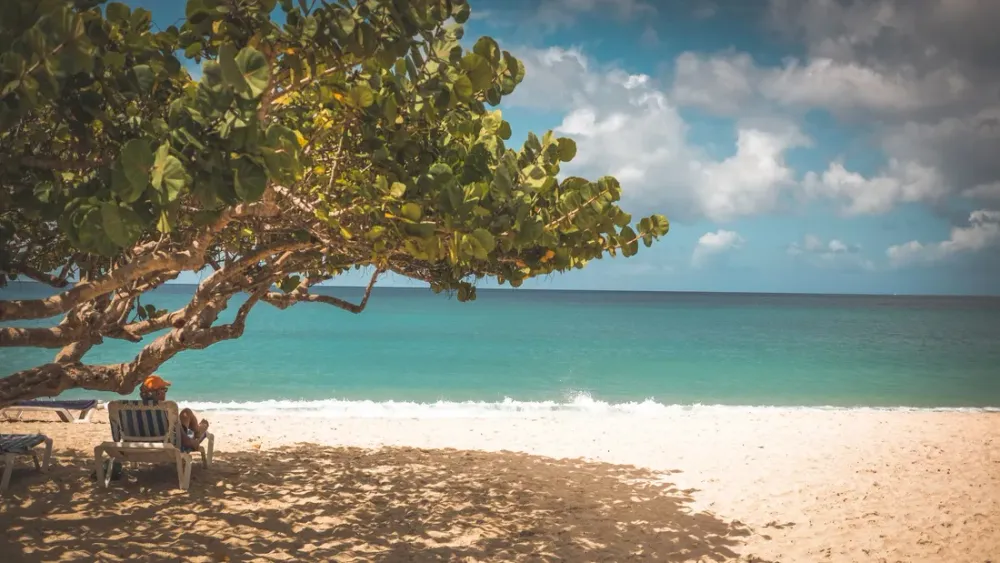
You have just set down your suitcases in Martinique after a job transfer, a professional project or simply the urge for a change of life. The first few weeks are usually swallowed up by paperwork: setting up utilities, house hunting, enrolling the children at school, sorting out a vehicle. Then comes the first truly free weekend, and with it a very simple question: where do you start when it comes to discovering the island? Martinique covers around 1,100 km², which makes it drivable from end to end, but each region has its own personality, its own beaches, its own rhythm. This guide offers a gradual, realistic way of making the island your own over your first weekends, without rushing everywhere, taking real distances, traffic and local habits into account.
Understanding the island’s geography before you set off
Before planning your outings, it helps to build a mental map. Martinique is organised around several broad areas, and your weekends will work far better if you think in zones rather than in “places to tick off”.
- The centre and the urban area: Fort-de-France, Le Lamentin (home to Aimé Césaire airport), Schoelcher. This is the economic and administrative heart of the island, often congested at rush hour.
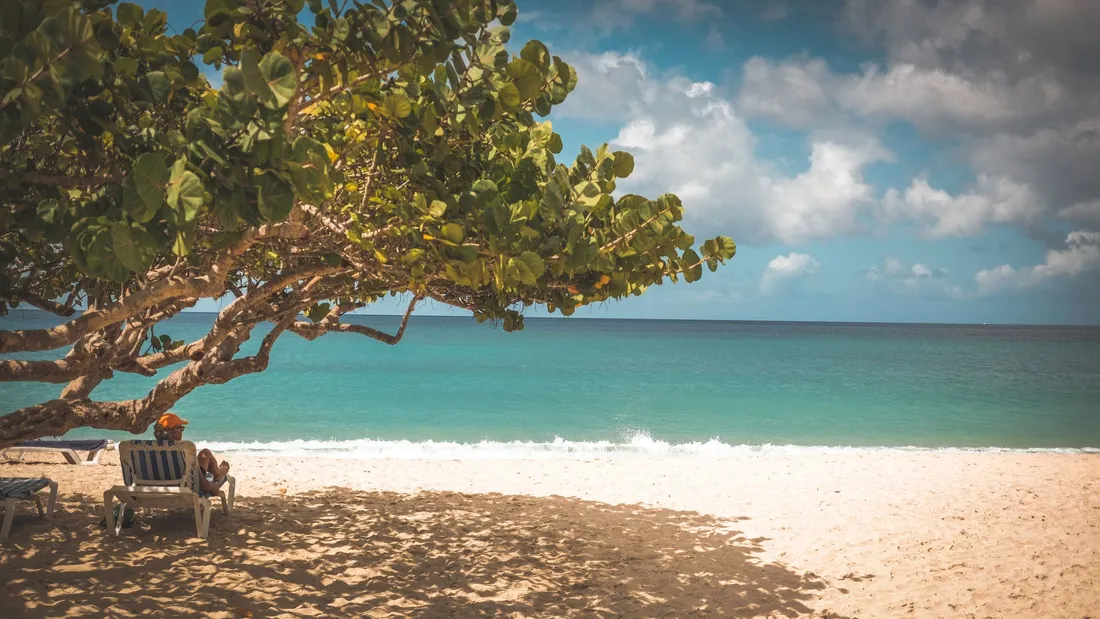
- The South: Les Trois-Îlets, Sainte-Anne, Le Diamant, Sainte-Luce, Le Marin. This is postcard Martinique, with the best-known beaches and turquoise water.
- The Caribbean North: Saint-Pierre, Le Carbet, Le Prêcheur, right up to Montagne Pelée. A wilder, greener Martinique, steeped in history.
- The Atlantic North and the Caravelle peninsula: Trinité, Tartane, Sainte-Marie, with a rougher ocean and countryside landscapes.
The terrain matters a great deal: roads in the North are winding, and a distance that looks short on the map can take longer than expected. As a rough guide, allow an hour to an hour and a half to cross from one zone to another, and more on a Friday evening or during holiday periods.
A word of method
For your first weekends, pick one zone per outing rather than trying to see everything. You will avoid exhaustion, you will enjoy it far more, and you will come home eager to explore each area in greater depth next time.
Weekend 1: the South and its iconic beaches
The first instinct of many newcomers is to head South, and it is an excellent choice for finally feeling like you have “arrived”.
- Les Salines in Sainte-Anne: probably the most famous beach on the island, with white sand and coconut palms. Arrive early in the morning at weekends, as the car park fills up fast and natural shade is in high demand.
- Le Diamant beach: a long stretch of sand facing the famous Rocher du Diamant. Swimming calls for caution depending on the swell, but the view is magnificent.
- Sainte-Luce and Anse Corps de Garde: more family-friendly beaches, often appreciated for their relative calm.
- The village of Les Trois-Îlets: departure point for the ferry to Fort-de-France, a pleasant alternative to driving.
Remember to bring water, sun protection and, if possible, a parasol: the sun is strong for much of the year. Many beaches have small stalls or food trucks serving accras, bokits or fresh fruit juices, at prices that vary by location and season.
The ferry, a discovery in its own right
From Les Trois-Îlets or Pointe du Bout, ferries link up with Fort-de-France in around twenty minutes. It is a restful way to reach the capital without the traffic jams, and the crossing of the bay offers a beautiful perspective on the city and the surrounding hills.
Weekend 2: Fort-de-France and Martinican culture
After the beaches, take the time to explore the capital, which newcomers in a hurry often drive straight through.
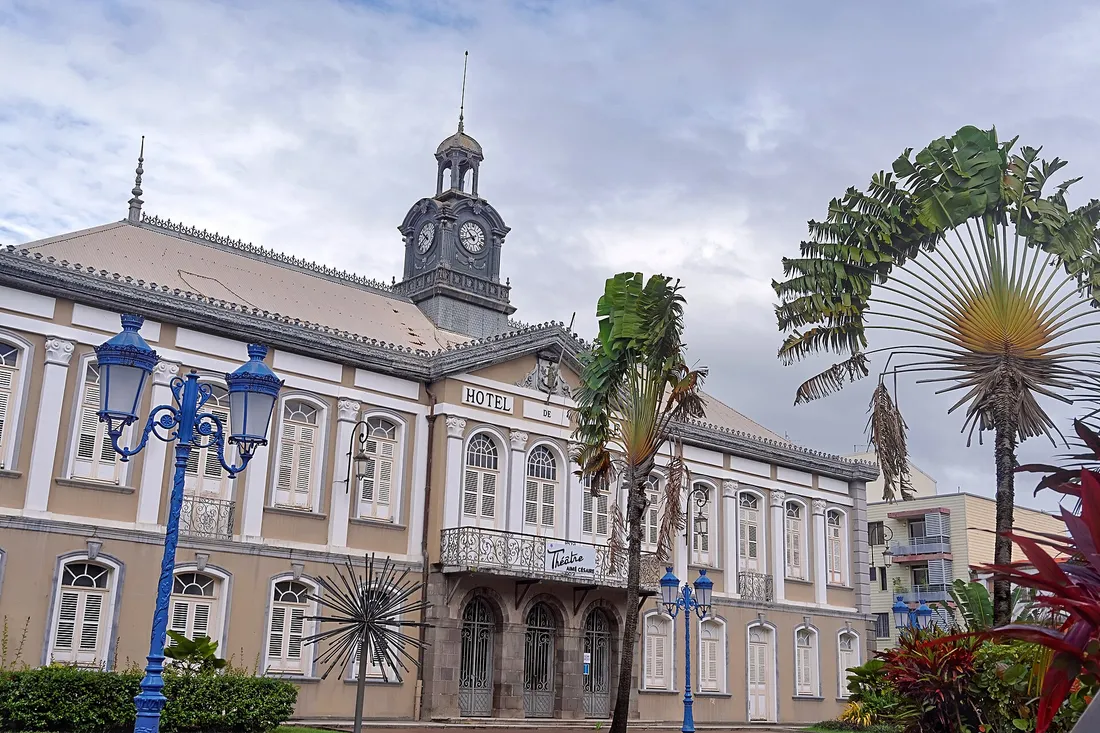
- The Schœlcher library: a remarkable late nineteenth-century building with striking metal architecture.
- The covered market (spice market): perfect for discovering local spices, rum, jams and crafts. A good place to start cooking Creole at home.
- La Savane park and Fort Saint-Louis: to understand the military history of the bay.
- Saint-Louis cathedral: another fine example of city-centre architecture.
The centre is at its liveliest on weekdays and Saturday mornings; it is much quieter on Sundays. For parking, favour covered car parks, which are simpler than hunting for an on-street space.
Getting your bearings for everyday life
These first weekends are also a chance to scout out the shops you will rely on day to day: supermarkets, markets, petrol stations, pharmacies. Note the opening hours, which often differ from mainland France, with closures on Sunday afternoons and sometimes Monday mornings for some village businesses.
Weekend 3: the Caribbean North and the history of Saint-Pierre
The Caribbean North offers a striking contrast with the South: lush vegetation, black volcanic sand beaches and a history shaped by the eruption of Montagne Pelée in 1902.
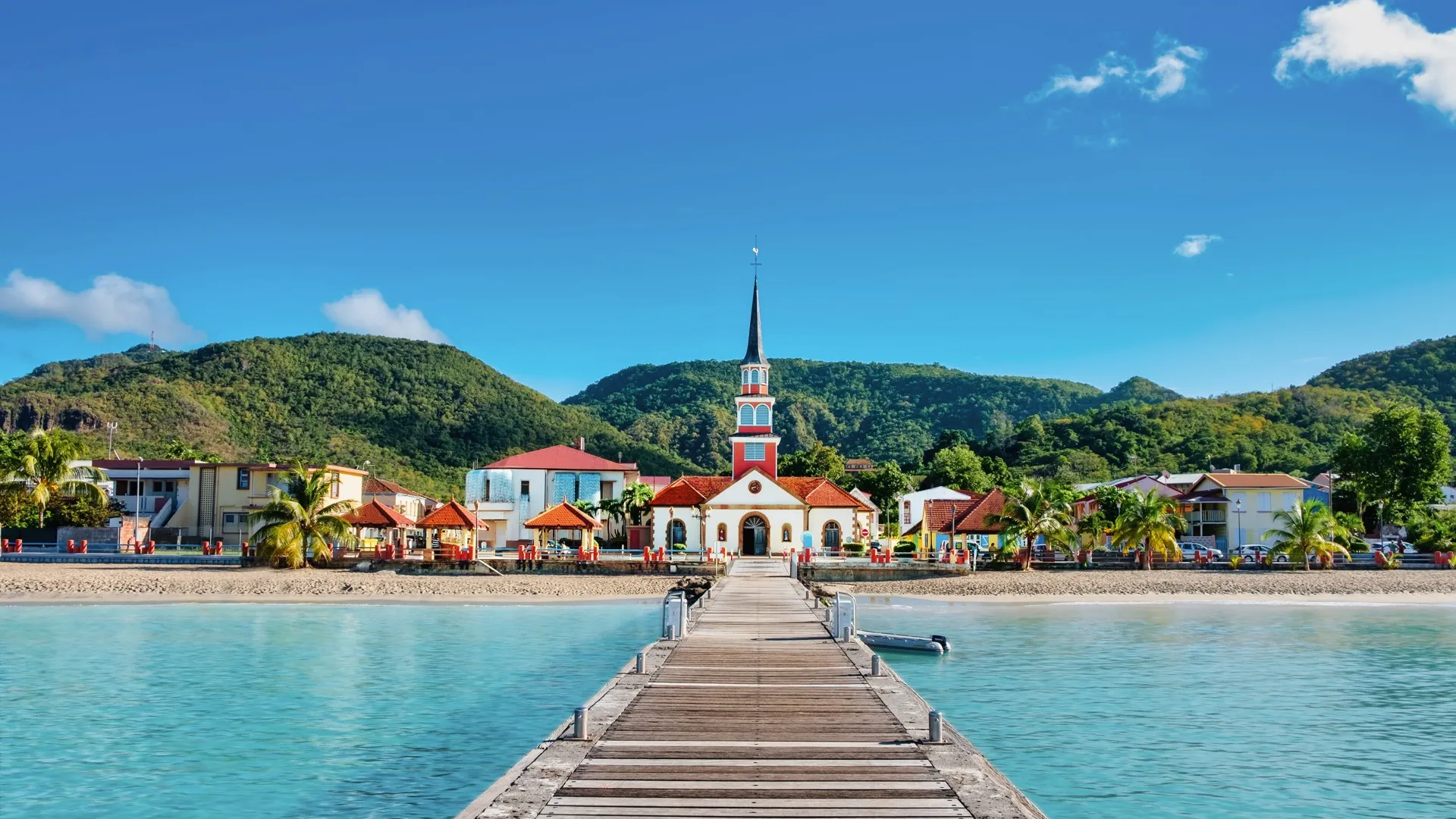
- Saint-Pierre: the former economic capital, nicknamed the “Little Paris of the West Indies” before the 1902 disaster. The ruins of the theatre and Cyparis’s cell are a reminder of that defining episode.
- Le Carbet: dark sand beaches and sites linked to the passage of Christopher Columbus and, later, the painter Paul Gauguin.
- The distilleries: the region is home to several distilleries where you can discover how AOC Martinique agricultural rum, a celebrated speciality, is made.
The Caribbean North road is winding and demands attention, especially in the rain. Allow more time than the distance suggests, and stop along the way to enjoy the viewpoints.
Up to Montagne Pelée
For the more athletic, the climb up Montagne Pelée (around 1,397 metres) is a demanding hike best saved for clear days, as the summit is often in the clouds. Check conditions and trail status before setting off, and let someone know your route.