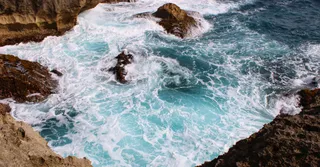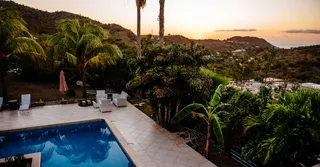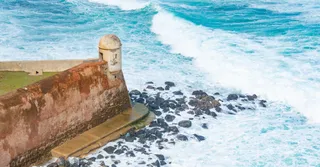
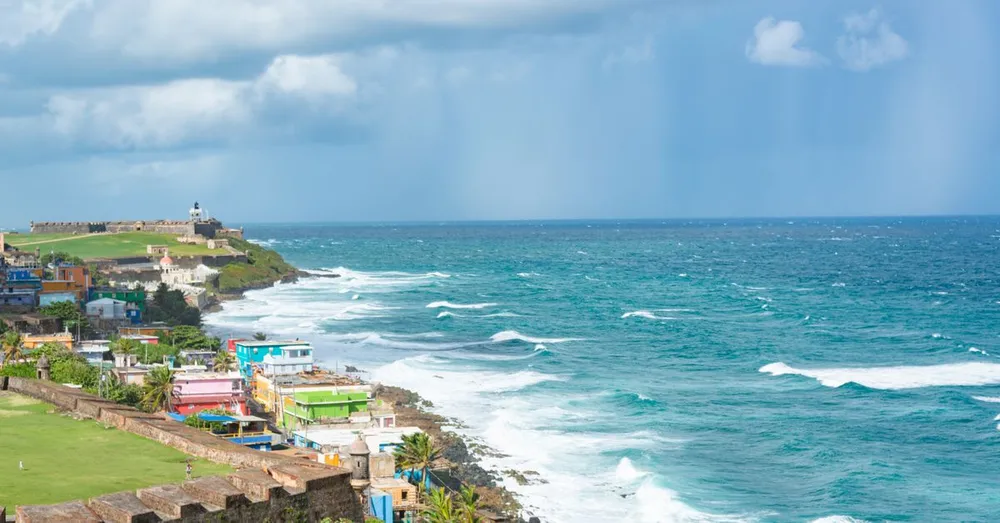
When an owner shows me photos of their future purchase — a terrace over the sea, a turquoise lagoon — I always ask the same question before talking about returns: “Which coast does it face?” Because in Martinique, the same sea view isn’t worth the same depending on whether it looks out over the Caribbean or the Atlantic. The reason comes down to one word: sargassum. I live on the island and manage rentals on both coasts: the issue of sargassum and rentals in Martinique isn’t a minor seasonal detail, it’s a structural factor in choosing the town, communicating with guests and setting the pricing grid. This educational content is no substitute for advice from a notary or a chartered accountant.
Sargassum in Martinique: understand before you invest
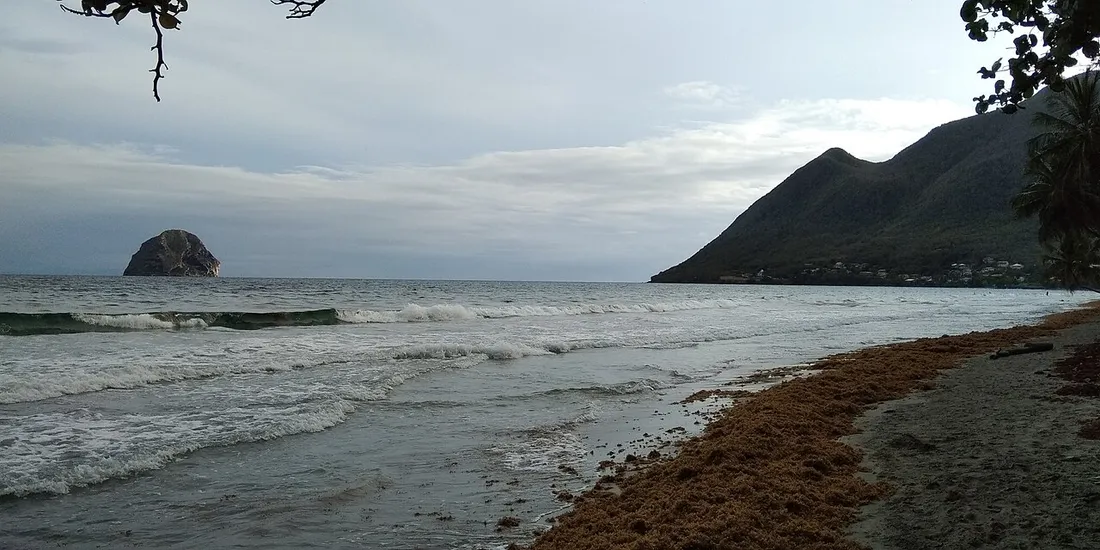
Martinique, a French overseas department (capital Fort-de-France, euro, French and Creole, dialing code +596), has two maritime worlds: the Caribbean coast to the west, sheltered, and the Atlantic coast to the east, exposed to the trade winds. These brown algae from the central Atlantic, driven by the prevailing wind, wash up primarily on the windward shores: Le Robert, Le François, Le Vauclin, La Trinité, Tartane and the entire eastern coastline. The leeward coast — Les Trois-Îlets, Le Diamant, Sainte-Luce, Le Carbet, Saint-Pierre, and the Caribbean beaches of Sainte-Anne — is very largely spared.
The problem isn’t just visual: as it decomposes, sargassum releases a rotten-egg smell (hydrogen sulfide) that can drive a guest away in two hours. Hence a real rental management issue.
Seasonality: the calendar every host must know
The rhythm of strandings runs almost opposite to the high tourist season:
- December to March: low to no strandings. This is the dry season (the Carême), the best tourist period, boosted by Carnival (February–March).
- April to June: gradual appearance on exposed coasts, varying from year to year.
- July to October: peak strandings, right in the middle of the summer holidays and during the Tour des Yoles in late July.
- November: gradual decline.
The summer lull on the Atlantic coast is offset by a surf and nature clientele spread more evenly across the year. But recent seasons have blurred the pattern, with earlier arrivals — 2025 was a record year for strandings according to Météo-France. So an Atlantic rental is no longer run “by the calendar” but “by the bulletin.”
Choosing your town: the coast before the view
For an investor, the first decision isn’t the type of property but the coast: the impact of sargassum on an Airbnb is decided the moment you sign.
Investing on the Caribbean coast: a premium for peace of mind
The leeward coast sells a sea view that stays one all year round, with no risk of odor. The towns of the west and the Caribbean south (Trois-Îlets, Le Diamant, Sainte-Luce, Le Carbet) enjoy this serenity, which justifies higher purchase prices and firmer nightly rates. This is the choice of predictability: fewer complaints, more stable reviews.
Investing on the Atlantic coast: the right price, provided you know how to manage
Investing on Martinique’s Atlantic coast isn’t a mistake — it’s a different craft. Land is more affordable and the clientele (surfers from Le Vauclin and Tartane, the “fonds blancs” sandbars at Le François, hikers from La Caravelle) is often more loyal, but it demands constant vigilance. Two nuances make the difference:
- Micro-local location is paramount. A property on a hilltop morne, or set back a few hundred meters from the shore, largely escapes the odor while keeping the view. A waterfront spot on a closed cove, where the algae stagnates, is the worst case.
- The fonds blancs often save the day. At Le François and Le Robert, the main draw — excursions to Joséphine’s Bathtub — happens offshore. A rental sells very well on that argument, even when the town beach is affected.
Golden rule: never buy an Atlantic sea view without checking the stranding history of the exact cove. The same town can hold a spared inlet and a saturated bay just two kilometers apart.
Communicating about sargassum: transparency as a strategy
Hiding the subject protects nothing: a disappointed guest leaves an “unbearable smell” review that drags down a listing for months. Transparency, by contrast, defuses it. My method on Atlantic properties:
- State the coast honestly in the description (Atlantic coast, possible seasonal strandings), steering toward the strengths — surf, fonds blancs, nature — rather than swimming.
- Give the official source: the stranding forecast bulletin from Météo-France Martinique, now the reference. Sharing the information inspires trust.
- Prepare a swimming plan B: list two or three Caribbean beaches under 30–45 minutes away in the welcome guide (Anse Dufour, the black-sand Anse Noire, Grande Anse d’Arlet, Les Salines).
- React fast via WhatsApp: a proactive message (“stranding forecast this week, here are our backup beaches”) beats ten apologies after the fact. This transparency translates into better reviews, and therefore better occupancy.
Building your pricing grid against sargassum
On the Atlantic, the pricing grid depends not only on climate and school holidays: it factors in the sargassum risk. My realistic ranges for a well-managed Atlantic one-bedroom (T2):
- December to April (Carême, low risk): full rate, €80 to €140 a night, with peaks at Carnival. This is where most of the margin is made.
- May–June and November (shoulder season, variable risk): intermediate rate, €65 to €100, with a clear weather notice.
- July to October (stranding peak): don’t slash prices blindly, but adjust. A rate trimmed by 15 to 25%, combined with clientele targeting (surf, remote work, regional), maintains occupancy.
The calculation that makes the difference
An Atlantic T2 bought for €180,000 (notary fees of 7 to 8% on existing property, €8,000 to €12,000 of furniture made costlier by the octroi de mer tax) and rented at €110 a night at 55–60% occupancy generates €22,000 to €24,000 gross: after expenses (including insurance suited to the cyclone season from June to November), its profitability remains comparable to a Caribbean property that’s more expensive to buy — provided sargassum management is impeccable. On the tax side, the furnished rental falls by default under the LMNP regime, with a tourist tax and a declaration at the town hall (details in our complete Martinique guide; see a chartered accountant for the setup).
Turning the constraint into an advantage with local support
Managing an Atlantic rental from mainland France, 7,000 km away and -5h in winter, -6h in summer relative to Paris, is a real challenge: a stranding has to be seen on site and a worried guest writes in the evening, in the dead of night for Europe. An on-the-ground presence changes everything.
At Hostel Toucan, a concierge service based in the French overseas territories, we treat sargassum as just another management parameter: monitoring the Météo-France bulletin, proactive communication, a welcome guide with backup beaches, adjusting the pricing grid and a full operational chain (check-in, cleaning, maintenance). We favor direct booking with no platform fees, with free cancellation up to 7 days before arrival and WhatsApp support 7 days a week — ideal for reassuring a guest during a stranding period.
To buy or rent better on the Atlantic side, browse our Martinique rentals, then discover our management offer on the owners page. Well chosen and well run, an Atlantic rental turns the sargassum constraint into an argument for honesty — and into solid income.
FAQ
Do sargassum strandings affect all of Martinique?
No. They wash up mainly on the Atlantic coast (windward shore): Le Robert, Le François, Le Vauclin, La Trinité, Tartane and the entire east. The Caribbean coast to the west and south (Trois-Îlets, Le Diamant, Sainte-Luce, Le Carbet, the Caribbean beaches of Sainte-Anne) is very largely spared. The choice of coast is therefore decisive.
Should you avoid investing in a rental on the Atlantic coast because of sargassum?
Not necessarily. The Atlantic coast offers more affordable land and a loyal clientele (surf, fonds blancs, nature). The key is the micro-local location — a property up high or set back from the shore largely escapes the odor — and rigorous management: monitoring the bulletin, transparency, and rates adjusted to the July-to-October peak.
How should you communicate about sargassum in a rental listing?
Through transparency. Announce the Atlantic coast and the seasonal risk, highlight the property’s strengths (surf, fonds blancs, nature), point to the Météo-France Martinique bulletin and list two or three backup Caribbean beaches in the welcome guide. A proactive host, reachable on WhatsApp, earns better reviews than one who hides the subject.
When do sargassum strandings peak in Martinique?
The peak is generally from July to October, with a build-up from April to June and a decline in November; December to March (the high Carême season) is usually the calmest. But recent seasons have been earlier and more intense (2025 was a record year), which is why it’s important to follow the bulletin rather than the calendar alone.