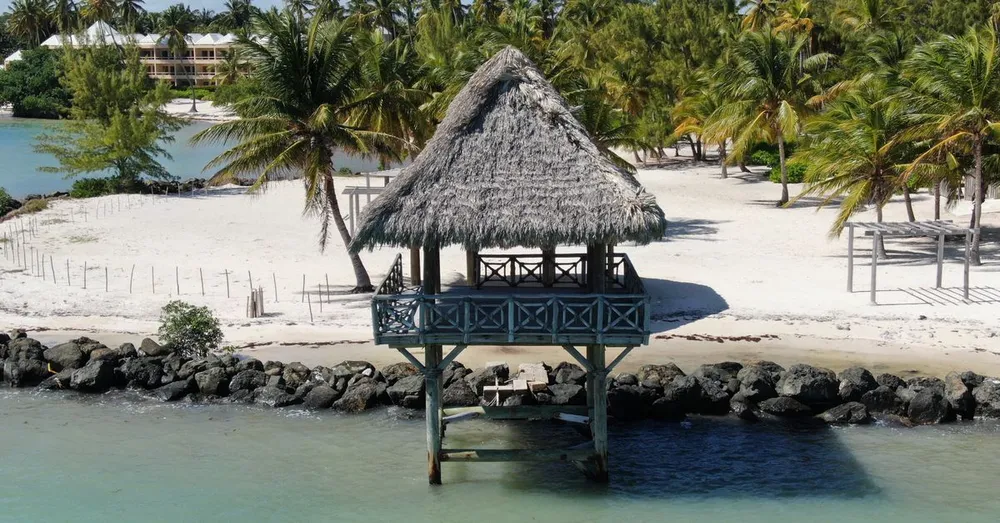
People often ask me, in La Trinité as much as in Fort-de-France: “You live in Tartane, but we only go there for the day, right?” That’s the misunderstanding I want to clear up. Most travelers treat the Caravelle Peninsula as an excursion to tick off between two beaches in the South. Yet a stay in Tartane, Martinique is a choice in its own right: you don’t sleep on one side of the island by accident. On the Atlantic side, you choose the wind, the authenticity of a fishing village and a landscape that hasn’t been smoothed over for tourism.
This guide isn’t just another list of activities, but a decision aid: who a rental in Tartane suits, how the trade winds change daily life, how much to budget and how to set up your base here rather than driving back and forth from Sainte-Anne.
Why choose a stay in Tartane over the touristy South
Martinique feels different depending on which coast you settle on. The Caribbean South (Les Trois-Îlets, Sainte-Anne, Le Diamant) packs in the postcard beaches and the buzz; the Atlantic coast plays another tune, rawer and windier. Setting up your base in Tartane, a village in the commune of La Trinité at the heart of the Caravelle Peninsula, means making several concrete choices:
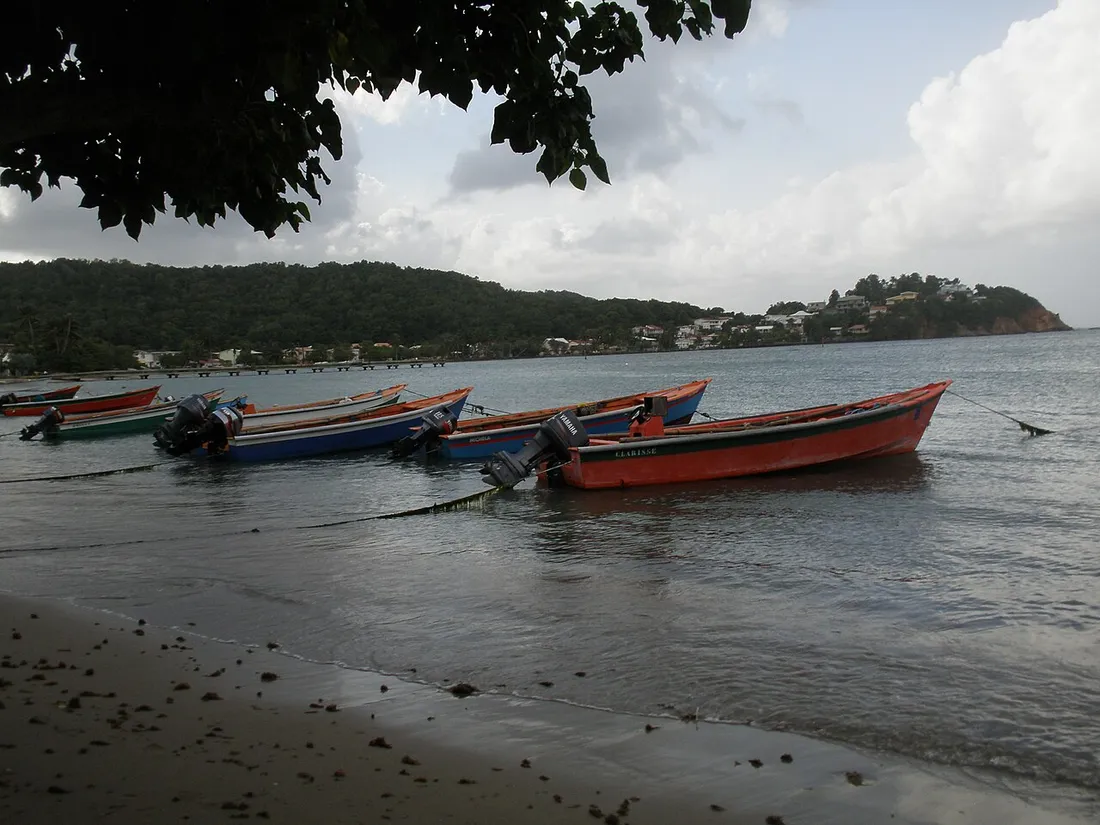
- A fishing village that’s still real: no large hotel resorts, but colorful Creole houses, an early-morning fish market and yoles in the harbor.
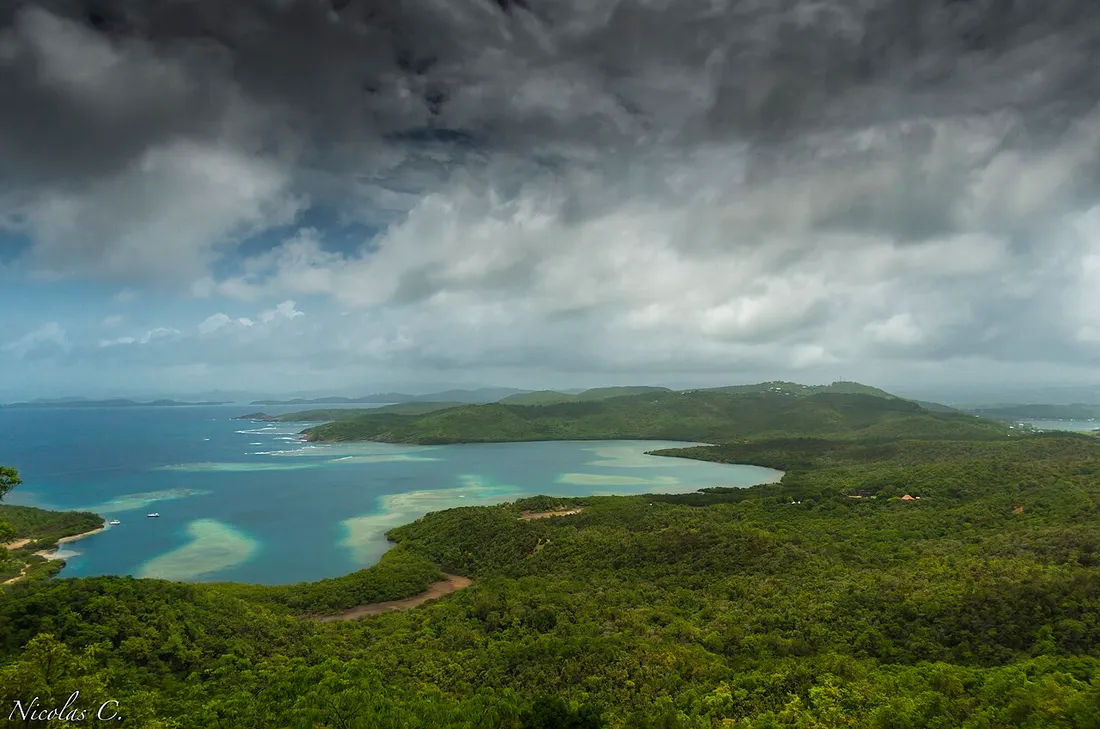
- Nature on your doorstep: the Caravelle Nature Reserve (around 400 hectares classified since 1976), its mangrove, dry savanna, lighthouse and the ruins of Château Dubuc, just minutes away.
- A drier microclimate and calmer beaches: cut off from the humid highlands by the trade winds, the peninsula gets less rain than the Caribbean North, and Anse l’Étang stays far quieter than Les Salines on a Sunday.
In return, you accept the wind, a choppier sea and fewer dining options in the evening: it’s this trade-off that should guide your choice of a stay in Tartane, Martinique.
Who a rental in Tartane is really for
Let’s be honest: Tartane isn’t for everyone. A rental in Tartane is an excellent choice for:
- Lovers of nature and walking: reserve, mangrove and coastal trails 10 minutes away, best tackled at daybreak.
- Surfers and watersports fans: Anse Bonneville, fully east-facing, is one of the most accessible spots for surfing on Martinique’s Atlantic coast; staying on site lets you string together morning sessions.
- Those who cook their holidays: with the village’s fish market, a rental with a fully equipped kitchen makes complete sense.
- Self-sufficient couples and families seeking authenticity: a peaceful pace, sheltered seafront beaches, far from the tourist zones (a car is essential).
Conversely, the Caribbean South is the better bet if you’re after nightlife, restaurants open late, a perfectly calm white-sand beach for toddlers, or if you’re traveling without a car.
Wind and sea: the trade-off to understand before booking
This is the point guides often fail to spell out clearly. The Atlantic coast is swept by the trade winds nearly all year round, which changes daily life during a stay, in both directions:
- A welcome coolness: the wind makes the evenings more pleasant than in the South, you often sleep better, and there are fewer mosquitoes in the exposed areas.
- A choppier sea: swimming calls for caution, with currents that can be strong at falling tide. Favor the sheltered coves (Tartane seafront, Anse l’Étang) and ask the locals.
- Sand and sea spray: on a wind-exposed terrace, a well-oriented rental, slightly tucked away, makes all the difference.
My advice as a resident: if the wind worries you for swimming, choose a rental in Tartane near the seafront or Anse l’Étang, and save the big southern beaches (Les Salines, Pointe Marin) for day trips.
When to come for a successful stay
The dry season, Carême, from December to April, is ideal: clear skies, a calmer sea, consistent surf swell and discreet mosquitoes; it’s also the Carnival window (February-March). The wet season (June to November) remains doable but rainier, with the cyclone season calling for vigilance. For peace and quiet, avoid the peak of the school holidays.
Budget for a stay in Tartane: what to expect
Staying on the Atlantic side brings a real budget advantage: a less touristy area than the South, so rental rates are often gentler for an equivalent standard. A few realistic ranges (peak dry season):
- Studio or small apartment for 2: around €55 to €90 a night depending on standing and view.
- Villa or Creole house for 4 to 6 people: around €120 to €220 a night, more with a pool and sea view.
- Fresh fish meal at a village snack bar: €15 to €22 a dish (grilled fish, rice, plantain).
- Fish at the morning market: €8 to €15 a kilo, ideal if you cook on site.
On top of that comes a sizeable fuel budget (the North is winding, the drives push up the mileage) and the municipal tourist tax, levied in La Trinité as everywhere on the island: from a few tens of cents to a little over a euro per person per night depending on the accommodation’s rating.
Local tip: do your shopping and fill up the tank in La Trinité (shops, supermarket) rather than relying on Tartane itself, where supply is limited. Once on the peninsula, beyond the village, there are no shops at all.
Setting up your home base: getting around and venturing out
A car is essential: public transport is scarce and impractical for reaching the remote corners of the peninsula. A few travel times from your base:
- La Trinité (shops, services): 10 minutes.
- Aimé Césaire Airport (Le Lamentin): around 45 minutes via the bypass then the N4.
- Fort-de-France: 50 minutes to 1 h 15 (around 40 to 50 km, winding road).
- Le François and its white sandbanks: 30 to 40 minutes for a day among the islets.
- Saint-Pierre and Mount Pelée: 1 h to 1 h 15, a day of heritage and nature in the North.
- Southern beaches (Sainte-Anne, Les Salines): 1 h 15 to 1 h 30, for the occasional excursion.
From Tartane, you can explore the whole north-east Atlantic coast: Le Robert and its islets, Le François and its Joséphine’s Bathtub, Sainte-Marie and its tombolo. The time difference (-5 h in winter, -6 h in summer compared to Paris) also makes dawn wake-ups easy, perfect for the fish market and the morning surf.
Where to stay for a trip to Tartane and the Caravelle
To make the most of the peninsula, it’s best to sleep on site or very close: Tartane itself, the rest of La Trinité, or the neighboring central-eastern communes. You’ll avoid long daily drives and enjoy the morning surf sessions without constraint.
At Hostel Toucan, we manage vacation rentals selected with genuine knowledge of the North Atlantic. Booking directly with us means:
- direct booking with no platform fees, so you pay the fair price;
- free cancellation up to 7 days before arrival;
- WhatsApp support 7 days a week, from choosing the surf spot to the best fish snack bar.
To plan your trip, check out our complete guide to Martinique, browse our accommodations in Martinique, and if you own a property in the La Trinité area, discover our concierge services for owners.
Choosing a stay in Tartane means accepting a bit of wind and simplicity in exchange for a truer Martinique: a village that lives off the sea, a nature reserve on your doorstep and waves at daybreak. For many, it’s exactly the island they were hoping for on this side.
FAQ
Is it better to stay in Tartane or in the South of Martinique?
It depends on your profile. Tartane and the Caravelle Peninsula suit lovers of nature, surfing and authenticity, who accept the wind and a more limited dining offering in the evening. The South (Sainte-Anne, Les Trois-Îlets, Le Diamant) is preferable for very calm white-sand beaches and a lively scene. Many combine the two: a base in Tartane and occasional excursions to the South.
Do you need a car for a stay in Tartane?
Yes, it’s essential. Public transport is scarce and impractical for reaching the beaches and trails of the Caravelle Peninsula and exploring the Atlantic coast. Allow around 45 minutes from Aimé Césaire Airport in Le Lamentin, and do your shopping in La Trinité, as supply is limited in Tartane.
Is the wind a problem for a stay on the Atlantic side?
The trade wind is steady but above all beneficial: cooler evenings, better sleep and fewer mosquitoes. On the other hand it makes the sea choppier on exposed spots: favor the sheltered coves (Tartane seafront, Anse l’Étang) for swimming and stay alert to the currents. A well-oriented rental clearly improves comfort on the terrace.