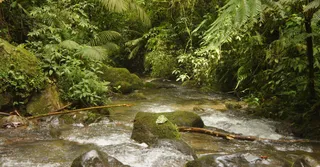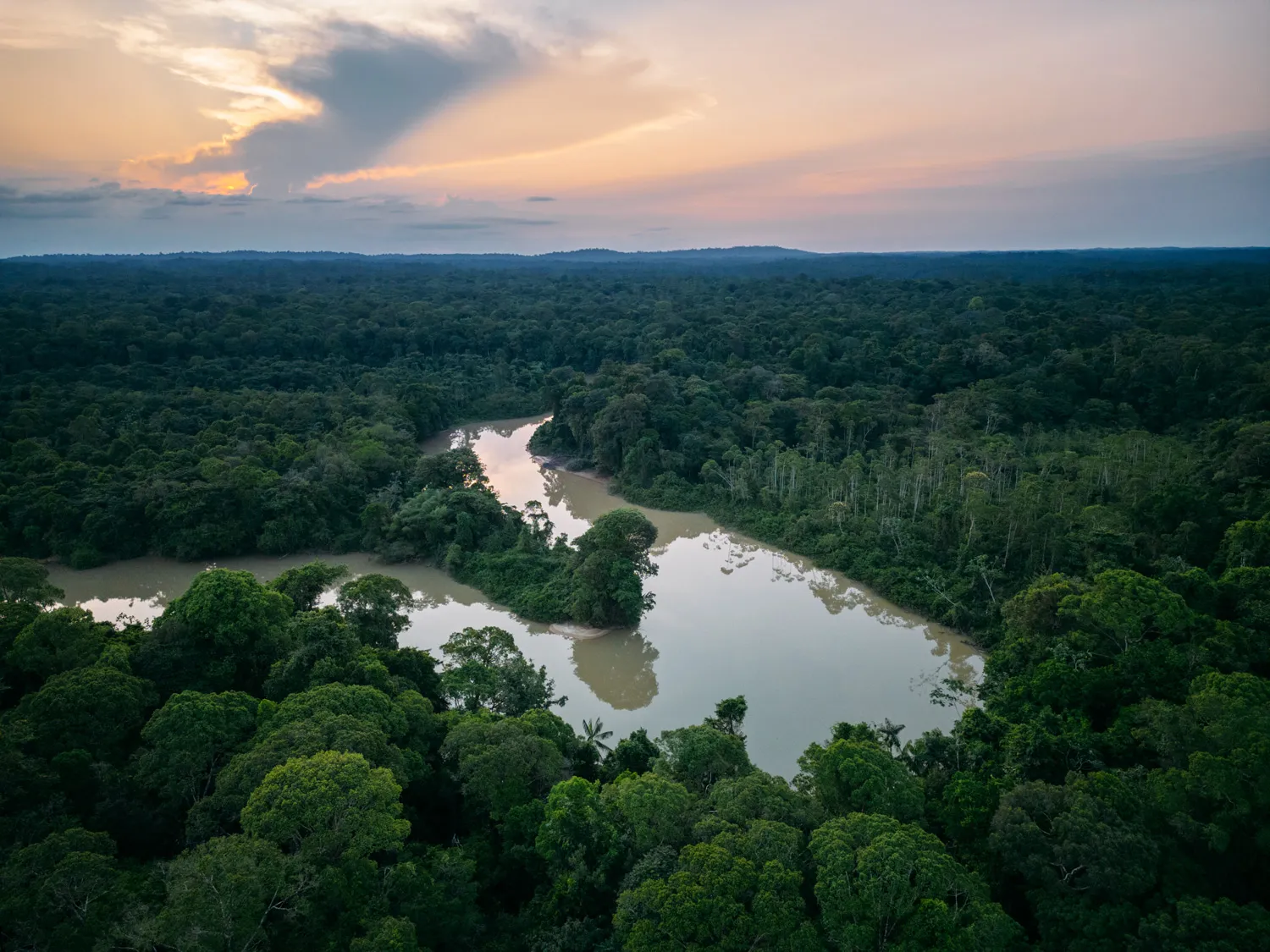
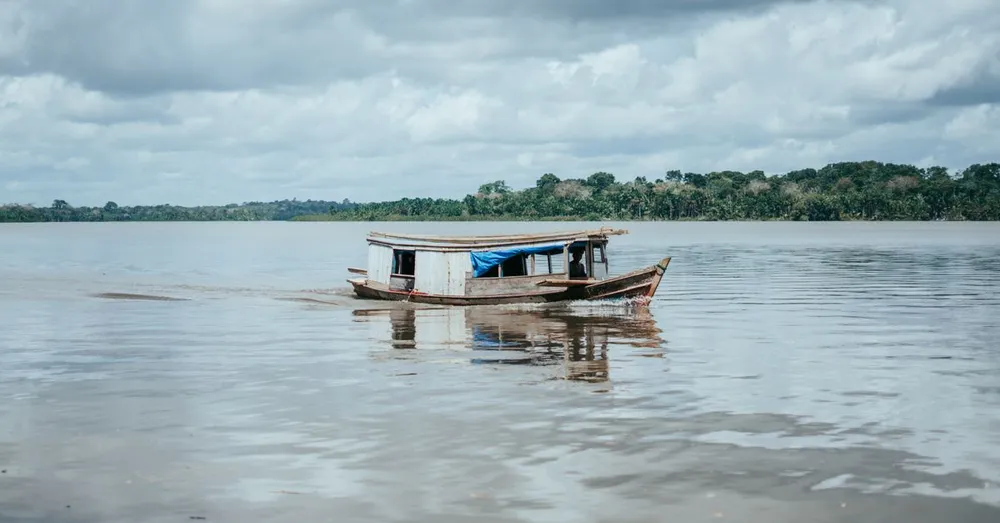
A natural border between France and Suriname, the Maroni River is one of French Guiana’s great adventures. This is where the road ends and the river takes over: a lifeline, a cultural corridor and a journey to the very heart of the peoples who have lived along it for centuries. To travel up the Maroni by pirogue is to enter a world where the history of marronage, tembé art and the Amazon rainforest all speak to one another. In this guide, you’ll learn how to plan your trip respectfully, where to stay and how to engage with these communities as a mindful traveller.
The Maroni in brief: a river that connects more than it divides
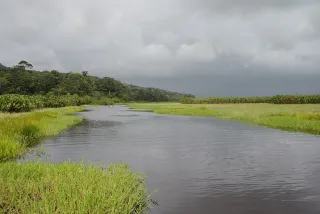
Stretching roughly 600 km, the Maroni is the longest waterway in French Guiana. Born in the forested massif of the south, it flows down towards the Atlantic and traces the border with Suriname. But to reduce the Maroni to a mere borderline would be a mistake: for the communities living along its banks, it is above all a link. People cross it to visit family, to trade, to go to school or to the clinic. The two banks often share the same language, the same culture and the same history.
The river is dotted with sauts (rapids) that only experienced pirogue pilots know how to navigate. It is this geography, at once generous and demanding, that has shaped a way of life unique in French Amazonia.
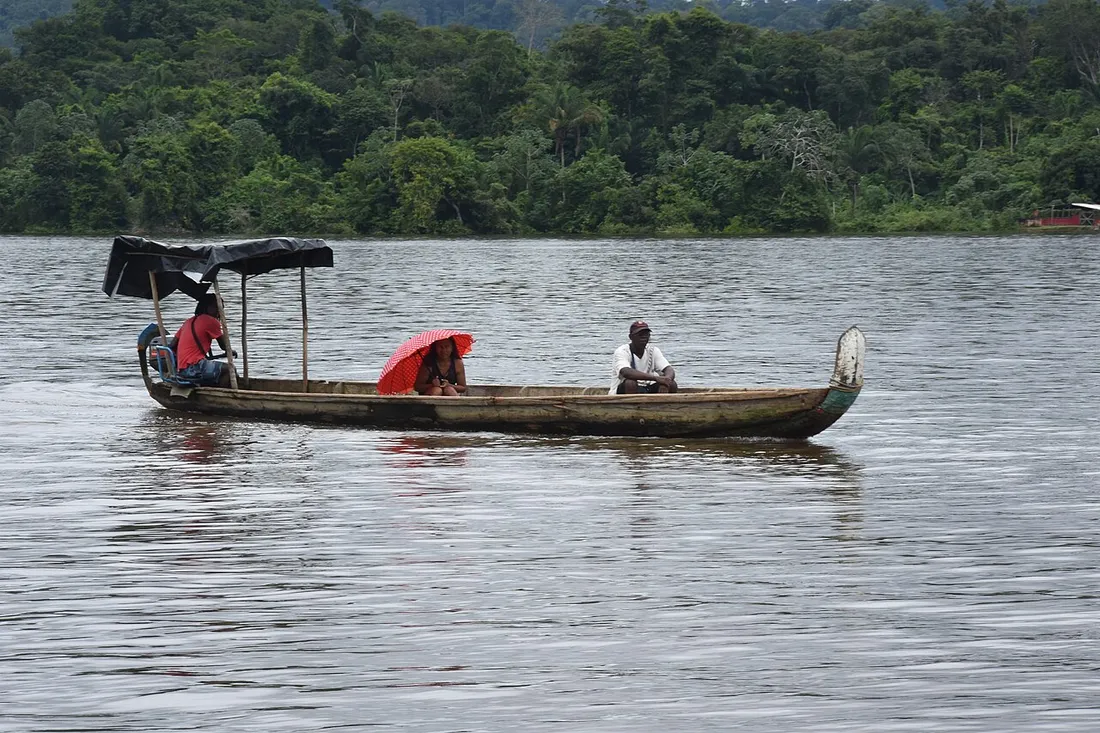
Saint-Laurent-du-Maroni, gateway to western French Guiana
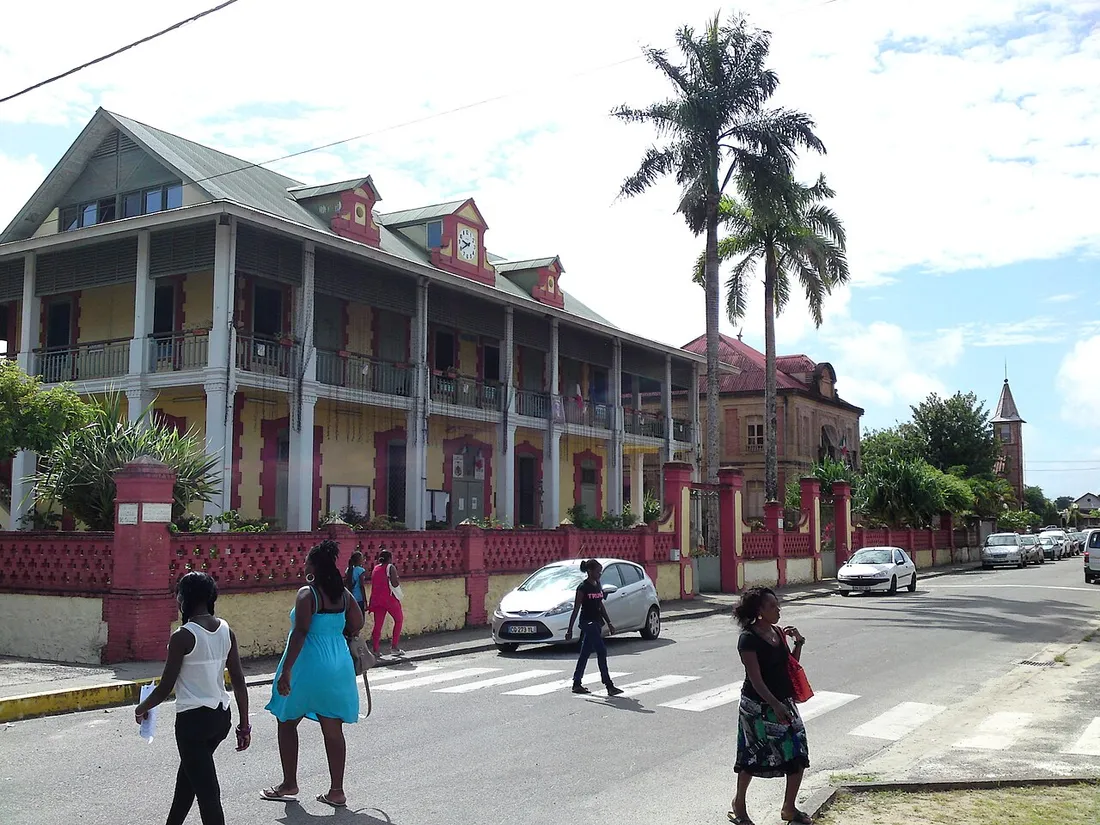
Saint-Laurent-du-Maroni is the major town of western French Guiana and the natural starting point for any exploration of the river. Set on the bank, it preserves striking colonial architecture and a lively frontier atmosphere, just a few minutes by boat from the Surinamese town of Albina.
The Camp de la Transportation, memory of the penal colony
You cannot understand Saint-Laurent without visiting the Camp de la Transportation. It was through this camp that the convicts deported from mainland France passed, from the late 19th century to the mid-20th century. The guided tour, through the cells and courtyards, tells a dark but essential chapter of French Guiana’s history. Among the cells is the one assigned to Henri Charrière, known as “Papillon”.
A few tips for this stage:
- Go for a guided tour: the explanations give the place its full meaning.
- Bring water and sun protection, as the courtyards offer little shade.
- Allow roughly half a day to combine the camp with a stroll through the historic centre (the colonial town and its former administrative buildings).
Saint-Laurent is also the ideal place to make your final purchases (food, cash, equipment) before heading up the river, where shops are scarce.
The peoples of the river: a unique cultural mosaic
The Maroni is home to one of the richest cultural diversities in French Guiana. Two broad human groups live side by side here, each with its own language, social organisation and skills.
The Bushinengé, descendants of the Maroons
The Bushinengé (often translated as “people of the forest” or “Maroons”) are the descendants of the enslaved people who, in the 17th and 18th centuries, fled the plantations of Suriname to rebuild free societies in the heart of the forest. These are the famous Maroons, and their story of resistance is one of the most powerful in the Americas.
Several Bushinengé peoples live along the Maroni:
- The Aluku (or Boni), found mainly on the upper Maroni, around Maripasoula.
- The Ndjuka (or Djuka), numerous along the river and its tributaries.
- The Saramaka (Saramaca), renowned for their craftsmanship and mobility.
- The Paramaka, settled notably around Apatou.
Each of these communities has its own language, its drums, its rituals and an organisation built around lineages. Respect for local customs, traditional authorities and sacred sites is essential here.
The Amerindian peoples
The river is also the territory of several Amerindian peoples, the first inhabitants of these lands: the Kali’na and Lokono, more towards the mouth and the coast, and the Wayana and Teko (Émérillon) on the upper Maroni and its headwaters. Their intimate knowledge of the forest, fishing and navigation remains very much alive today.
Tembé art, the visual signature of the Maroni
If one thing strikes travellers on the Maroni, it is tembé art. This Bushinengé art form is recognisable by its interlaced geometric patterns, painted in red, black, white, yellow and green, or carved into wood. You’ll see it on pirogues, paddles, house façades, benches and everyday objects.
Tembé is not merely decorative: it carries meanings linked to relationships, emotions and the history of the communities. In Saint-Laurent as in the villages, you can:
- Visit an artisans’ workshop and watch the painting or carving technique.
- Buy an object directly from the artisan, which supports the local economy fairly.
- Always ask for permission before photographing a person or a work.
Buying an authentic piece of tembé is a lovely way to bring home a meaningful souvenir, provided you do so with respect for the artist’s work.