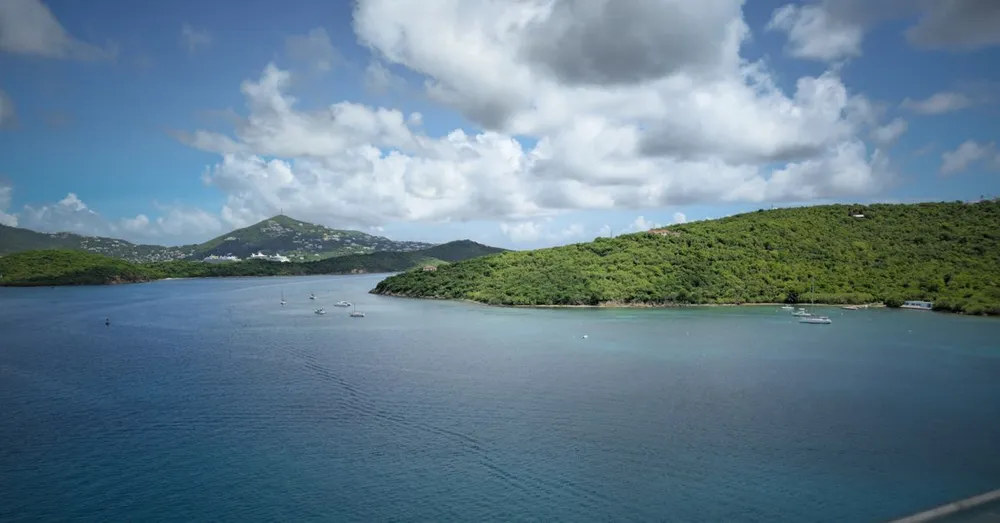
Terre-de-Haut is tiny, and that is exactly what makes the Saintes archipelago so exhilarating to explore in a single day. Its bay ranks among the most beautiful in the world, its flower-lined lanes rival any Mediterranean village, and you can go from a colonial fort to a palm-fringed crescent beach in under ten minutes by scooter. The trick is to pace your day well, because the last ferry won’t wait for you. Here is the itinerary we recommend to our travellers, refined season after season.
Choosing your departure point: Trois-Rivières or Pointe-à-Pitre
It all starts with the ferry, and your choice of port sets the pace for the whole day.
From Trois-Rivières (Basse-Terre): the fastest option
This is our favourite option if you are staying in Basse-Terre or in the south. The crossing takes only about twenty minutes and generally costs between 23 and 28 euros round trip for an adult (around 15 euros for a child). Departures are clustered in the morning, often around 7:45-8:00 a.m. and 9:00 a.m., with returns in the late afternoon.
Highlights:
- Short crossing, ideal if you get seasick
- Quiet pier, easier parking
- Arrival on Terre-de-Haut by 8:30 a.m., with the island to yourself
The downside: Trois-Rivières is off the beaten track. Allow about 1h15 of driving from Le Gosier or Sainte-Anne, and nearly 1h30 from Pôle Caraïbes airport. Get up early.
From Pointe-à-Pitre: convenient but longer
Departing from the Bergevin maritime terminal, the crossing takes about 45 minutes to 1 hour and costs between 35 and 49 euros round trip depending on the company. It is pricier and longer, but unbeatable if you are staying in Grande-Terre (Gosier, Sainte-Anne, Saint-François) and want to avoid the drive to Basse-Terre.
Our tip: book your ferry tickets the day before online, especially during the dry season (December to April) and school holidays. Sailings sell out quickly. Arrive at the pier 30 to 45 minutes before departure.
Renting a scooter on arrival: the real smart move
As you step off the ferry at Terre-de-Bourg, a whole line of rental operators awaits you on the quay. The scooter is the king of transport on the island: Terre-de-Haut is barely 6 km long, tourist cars are banned, and the hills are steep when you tackle them on foot under the sun.
Rates and practical info:
- 50cc scooter: about 30 to 38 euros per day
- Deposit via credit card hold (often 300 to 600 euros)
- A or B licence required, two helmets provided
- Electric bike as an alternative: 25 to 30 euros per day
Book your scooter by arriving early: models go fast when three ferries dock at the same time. If you are travelling as a pair on a single two-wheeler, pack a light backpack, water and sunscreen, since there is no storage box. For a family or group, the shared shuttles (4x4 taxis) remain an option at 5-8 euros per trip.
The optimized one-day itinerary for Les Saintes
Here is how we string together the must-sees without rushing, starting from an arrival around 8:30 a.m.
Morning: the village and Fort Napoléon
Begin by strolling through the village of Terre-de-Bourg before the heat sets in: Creole houses, the Notre-Dame-de-l’Assomption church, small artisan shops. Try a tourment d’amour, the island’s emblematic pastry, filled with coconut.
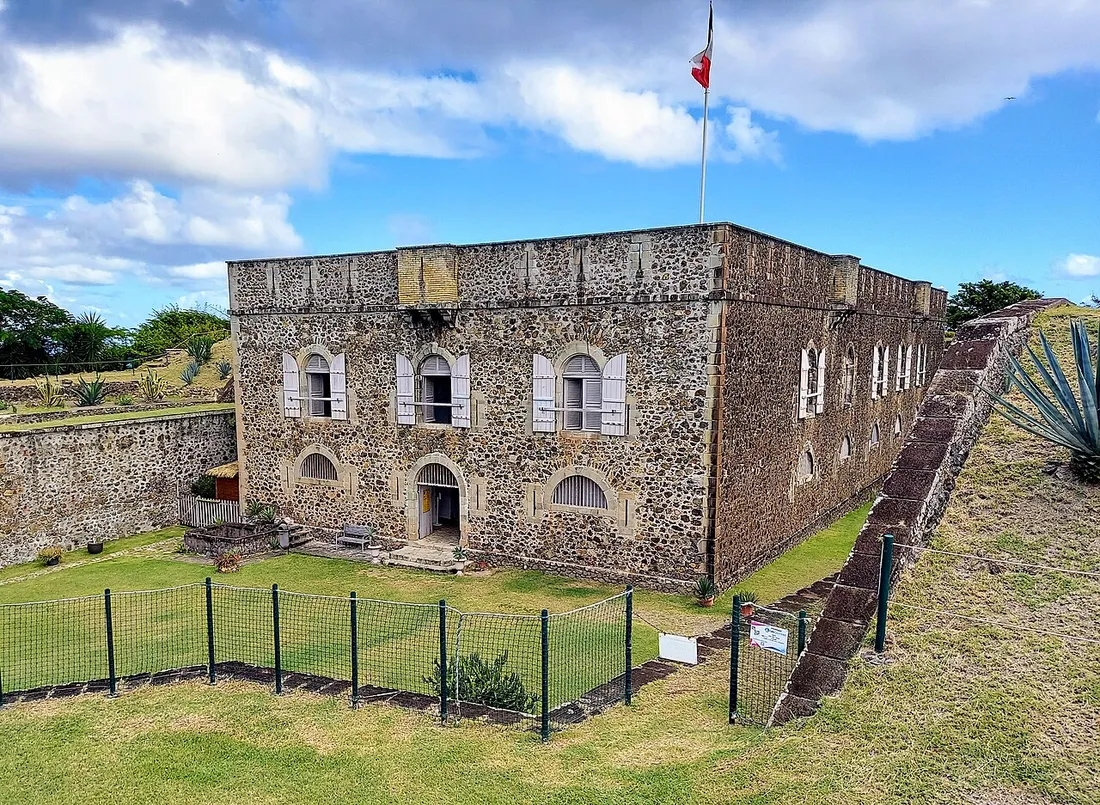
Then head to Fort Napoléon, perched 114 metres above the bay. Built in the 19th century, it now houses a museum on the history of Les Saintes and the famous 1782 naval battle, along with a superb garden of cacti and succulents where iguanas roam. Admission is around 6 euros. The panoramic view over the bay and the Pain de Sucre alone justifies the climb. Allow 1 to 1h30 for the visit.
Pain de Sucre: snorkelling at the foot of the rock
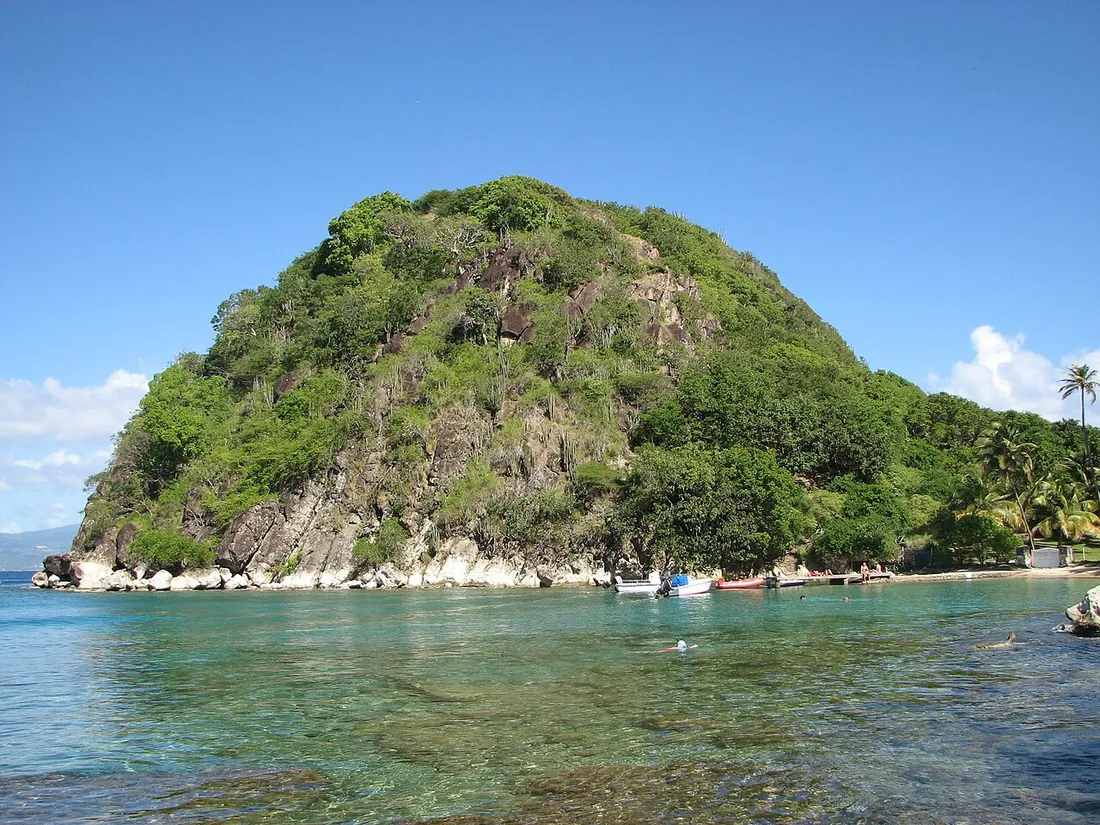
Head back down towards the Pain de Sucre, a volcanic peak that plunges into turquoise water. The small beach at its foot is one of the best snorkelling spots on the island: a mask and snorkel are enough to spot parrotfish, sea urchins and corals along the drop-off. Access is via a flight of steps from the scooter parking. Bring your own gear or rent it in the village (5-8 euros).
This is the ideal moment for a swim break before lunch. The crowds of tourists tend to arrive in the afternoon, so you get to enjoy the peace and quiet.
Lunch break
Back in the village or along the road, several spots serve no-fuss Creole cuisine: accras, grilled fish, colombo. Expect 18 to 28 euros for a main course by the sea. Reserve if you are aiming for a popular restaurant in high season.
Fort Napoléon or Pompierre beach: the big afternoon trade-off
This is THE question our travellers ask us. With a tight day, you can’t do everything in depth. Here is how to decide.
Choose Fort Napoléon if…
- You love history, museums and beautiful gardens
- You want the iconic panoramic photo of the bay
- You are travelling as a couple or among adults
- The sea is rough that day (less pleasant beaches)
Choose Pompierre beach if…
- You are coming above all to relax and swim
- You are travelling as a family with children (shallow water, golden sand)
- It is very hot and you are looking for shade under the coconut palms
- You prefer nature over heritage
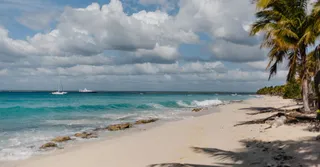
Pompierre beach, on the east coast, is arguably the most beautiful on Terre-de-Haut: a long crescent-shaped bay lined with coconut palms, closed off by two rocks between which the sea surges. The scooter drops you there in 10 minutes from the village, followed by a 5-minute walk from the car park.
Our personal verdict: do the Fort in the morning (cool air, soft light, fewer crowds) and save Pompierre for the afternoon. That way you don’t really have to choose, you combine. If time is truly short, keep Pompierre: it is the image you will take away from Les Saintes.
Catching the return ferry stress-free
The classic trap of a day in Les Saintes is to get lulled by Pompierre and miss the boat. Note your return time as soon as you board in the morning.
- Return the scooter at least 30 minutes before departure
- Be at the pier 30 minutes before the scheduled time
- The last ferry generally leaves between 3:30 and 4:30 p.m. depending on the port
- Keep a margin: only one sailing per company in the afternoon
To dig deeper into the entire butterfly-shaped archipelago, check out our complete guide to Guadeloupe, covering the other islands (Marie-Galante, La Désirade) and the must-sees of Grande-Terre and Basse-Terre.
Setting up your base before the excursion
A day in Les Saintes is all the more enjoyable when you sleep close to the right port. For a departure from Trois-Rivières, it is best to stay in southern Basse-Terre; for Bergevin, Grande-Terre is ideal.
At Hostel Toucan, we hand-pick accommodation in Guadeloupe designed for travellers who want to roam: itinerary advice, direct booking with no platform fees, free cancellation up to 7 days before arrival and 7-day WhatsApp assistance for your last-minute questions (ferry schedules, weather, scooter booking). We know the archipelago from the inside and tailor every stay to your departure point.
Do you own a property in Guadeloupe and want to showcase it to travellers in search of local experiences? Discover our concierge service for owners.
Summary: a successful day in Les Saintes
- Book the ferry and scooter in advance, especially in the dry season
- Leave from Trois-Rivières to save time, from Pointe-à-Pitre for convenience
- Fort Napoléon in the morning, snorkelling at the Pain de Sucre, Creole lunch
- Pompierre in the afternoon for a family swim
- Watch the last boat’s time: the margin is your peace of mind
In just a few kilometres, Les Saintes condense everything that makes Guadeloupe charming: heritage, crystal-clear waters, Creole art of living. A single day is enough to fall in love, and often enough to want to come back.
FAQ
How much does the ferry to visit Les Saintes cost?
From Trois-Rivières, expect between 23 and 28 euros for an adult round trip for a crossing of about 20 minutes. From Pointe-à-Pitre (Bergevin maritime terminal), the ticket runs from 35 to 49 euros round trip for 45 minutes to 1 hour at sea. Book online the day before, especially during the dry season from December to April.
Should you rent a scooter or walk in Les Saintes?
The scooter is strongly recommended. Terre-de-Haut is 6 km long with steep hills, and tourist cars are banned. Expect 30 to 38 euros per day for a 50cc. On foot, you would limit your day to the village and the Pain de Sucre. The electric bike (25-30 euros) or the shuttle taxi are alternatives.
Fort Napoléon or Pompierre beach: which to choose in a day?
If you can, do both: Fort Napoléon in the morning (cool air, panoramic view, museum and iguana garden) then Pompierre beach in the afternoon for swimming. If forced to choose, favour the Fort for history and the iconic photo, or Pompierre if you are travelling as a family and looking to relax.
What is the best time to visit Les Saintes?
The dry season, from December to April, offers the best sunshine and calm seas ideal for snorkelling at the Pain de Sucre. It is also high season: book ferry, scooter and accommodation in advance. Avoid the cyclone season from September to November, which is rainier.