You have just landed in French Guiana after a job transfer, a first posting or a life change. The first few weeks are usually a whirlwind: finding permanent housing, getting the utilities connected, enrolling the children in school, working out the local rhythms. In the middle of all that, here is some good news: French Guiana can be explored at weekends from day one, without waiting until you are fully settled. In fact, these nearby escapes are one of the best ways to understand your new region, scout the neighbourhoods you might want to live in and build your first landmarks. This guide offers a practical way to approach your first weekends while still making progress on your move.
Understanding the geography of French Guiana on arrival
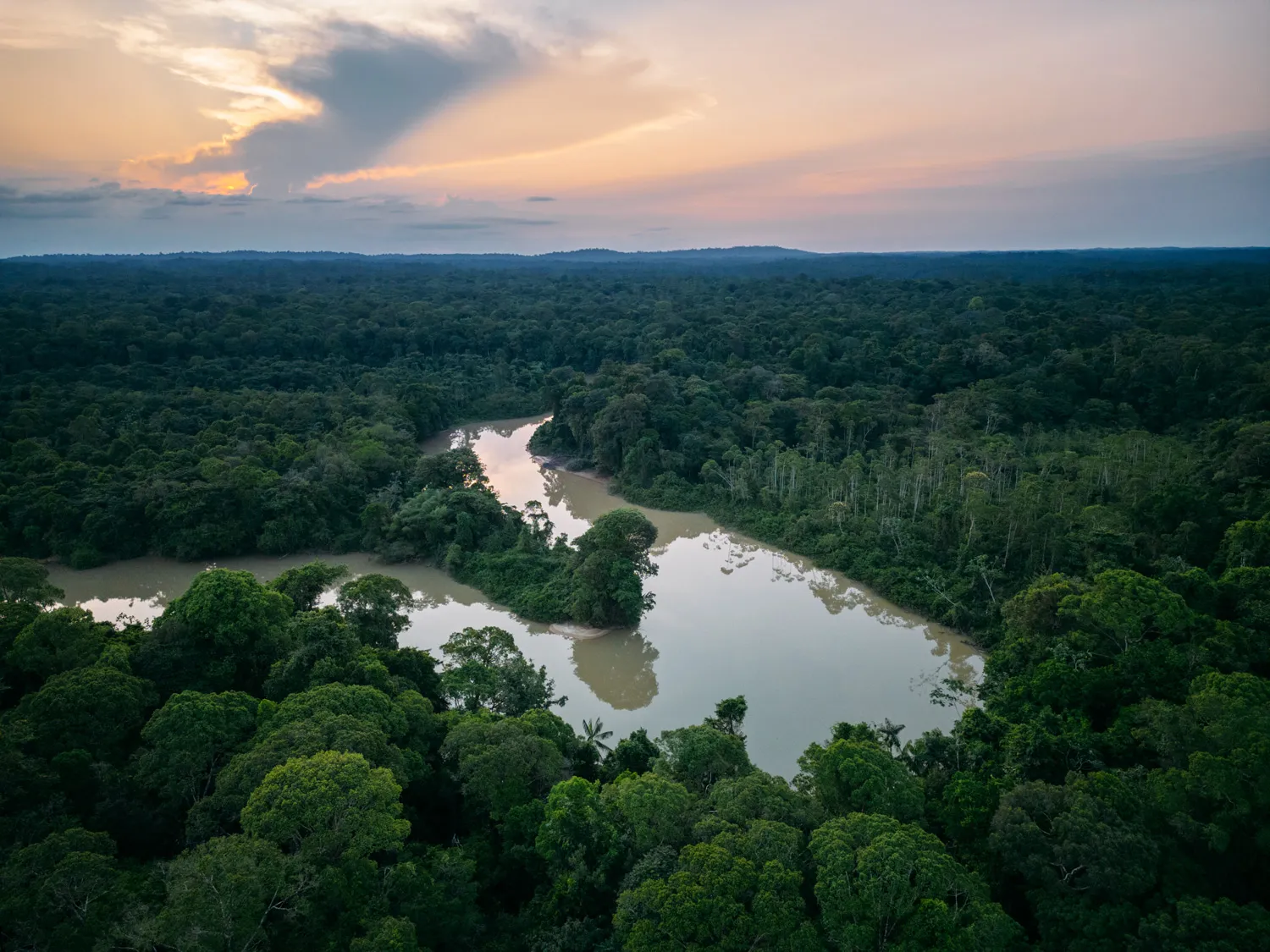
French Guiana is anything but a small territory: it is the largest region in France, mostly covered by Amazon rainforest, with a population concentrated along the coast. Understanding this layout will spare you plenty of surprises when planning your weekends.
Most of daily life takes place along a coastal strip running from Saint-Laurent-du-Maroni in the west to Cayenne and its outskirts in the east. Between the two, the main road passes through Kourou, Sinnamary and Iracoubo. To the south, the interior (Maripasoula, Camopi, Saül) is essentially reachable only by plane or dugout canoe: that is not where your first weekends will happen.
In practice, your early outings will most often take place within a fairly accessible radius around your base:
- The Cayenne metropolitan area: Cayenne, Rémire-Montjoly, Matoury, with the beaches, the market and the historic centre.
- The route towards Kourou (as a rough guide, allow around an hour’s drive from Cayenne depending on traffic): the Space Centre and the Îles du Salut.
- The west coast towards Saint-Laurent-du-Maroni, further away but ideal for a two-day weekend.
- The nearby inland communes such as Roura, Cacao or the Kaw area, for nature and rivers.
Getting around: a car is almost essential
Public transport remains limited outside the Cayenne metropolitan area. To explore freely, a car is virtually unavoidable. Many newcomers rent a vehicle for the first few weeks, until they buy one or have their own shipped over. Budget for this from the moment you arrive: it largely determines how independent you will be when discovering the region.
Your first weekends: a step-by-step programme
There is no need to aim too high on your very first Saturday. The idea is to alternate discovery and moving-in logistics, gradually increasing distance and ambition.
Weekend 1: getting to know Cayenne
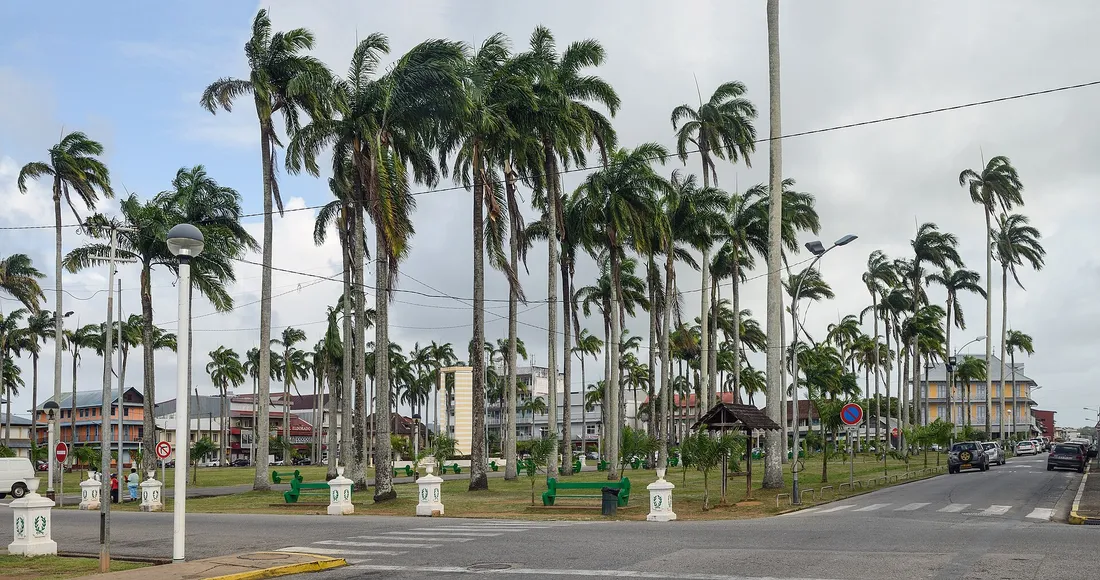
Devote your first outing to your home base. Stroll around the Place des Palmistes and the historic centre with its colourful Creole façades. The Cayenne market (traditionally busiest at the end of the week, particularly on Wednesday, Friday and Saturday morning) is a must for discovering local produce, spices, Chinese soups and the multicultural atmosphere of the territory. Finish with the beaches of Rémire-Montjoly, the closest and the busiest at weekends.
Weekend 2: nature close to home
Head out to Roura and the Kaw area, known for its marshes, its wildlife (caimans, birds) and its sunset canoe trips, often run by local operators. Another option: the village of Cacao, known for its Hmong community, its Sunday market and its rolling landscapes, a contrast with the coast.
Weekend 3: Kourou and the Îles du Salut
Head to Kourou to discover the Guiana Space Centre, one of the territory’s landmark sites (visits must be booked in advance and depend on available slots). From Kourou, boat shuttles serve the Îles du Salut, including the famous Devil’s Island, steeped in penal-colony history. An ideal first two-day weekend.
Weekend 4 and beyond: the west coast
Once you feel comfortable on the road, set off for Saint-Laurent-du-Maroni, a town shaped by the history of the penal colony (the Camp de la Transportation is open to visitors) and by the proximity of Suriname, on the other side of the Maroni river. It is also a gateway to river excursions.
Finding somewhere to live on arrival: the key question
This is often the biggest headache of a relocation: where do you sleep while looking for permanent housing? Signing a lease remotely, from mainland France, without having seen the neighbourhood or grasped the distances, is rarely a good idea. The most stress-free approach is to plan for temporary accommodation on site for the first few weeks.
Why temporary accommodation is often the best option
- You take the time to visit in person before committing to a long-term lease.
- You test the neighbourhoods for real: the home-to-work commute, schools, shops, street atmosphere.
- You avoid the nasty surprises that come with renting a place based on photos.
- You have a comfortable base for your first weekends of exploration.
At Hostel Toucan, we offer exactly that: furnished accommodation in French Guiana suited to newcomers, a turnkey base where you can drop your bags while you find your permanent home. It is also a way of testing life on the ground with no long commitment before making your choice.
Scouting the neighbourhoods of the metropolitan area
During your first few weeks, use your journeys to observe the main residential areas:
- Cayenne: the town centre and neighbourhoods such as Montabo, valued for being close to the sea and to amenities.
- Rémire-Montjoly: a sought-after residential commune, close to the beaches, often popular with families.
- Matoury: close to Félix Éboué airport and to many services, well located if you work in that area.
Each area has its advantages depending on your workplace, your budget and your lifestyle. Nothing replaces driving through these neighbourhoods yourself, several times, at different times of day.
Practical life: the formalities not to forget
Moving overseas involves a certain number of formalities. Here is a checklist of the main steps to anticipate as soon as you arrive, to be adapted to your personal situation.
- Open or transfer your bank account and check access to local cash machines.
- Get the utilities (electricity, water) connected at your permanent home when the time comes.
- Take out an internet / mobile subscription (coverage varies from one commune to another).
- Look into school enrolment if you have children (the calendar and procedures are specific to the territory).
- Update your address with the authorities and other organisations.
- Arrange the shipping or purchase of a vehicle.
- Check your vaccinations and read up on prevention (yellow fever vaccination is in fact compulsory in French Guiana).
- Identify the healthcare providers and the pharmacy in your area.
Health and the tropical environment
French Guiana is an equatorial territory: heat and high humidity all year round, a pronounced rainy season (traditionally from December-January to June-July, as a rough guide) and a drier season afterwards. Adapt your weekends to the weather: some tracks and river excursions are more practicable depending on the season. Also think about mosquito protection, an everyday necessity.