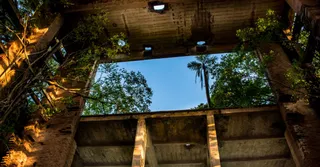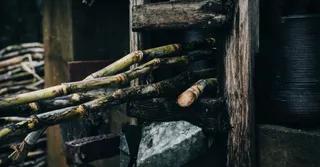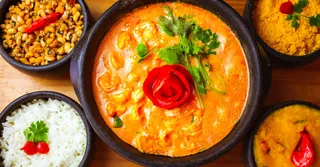
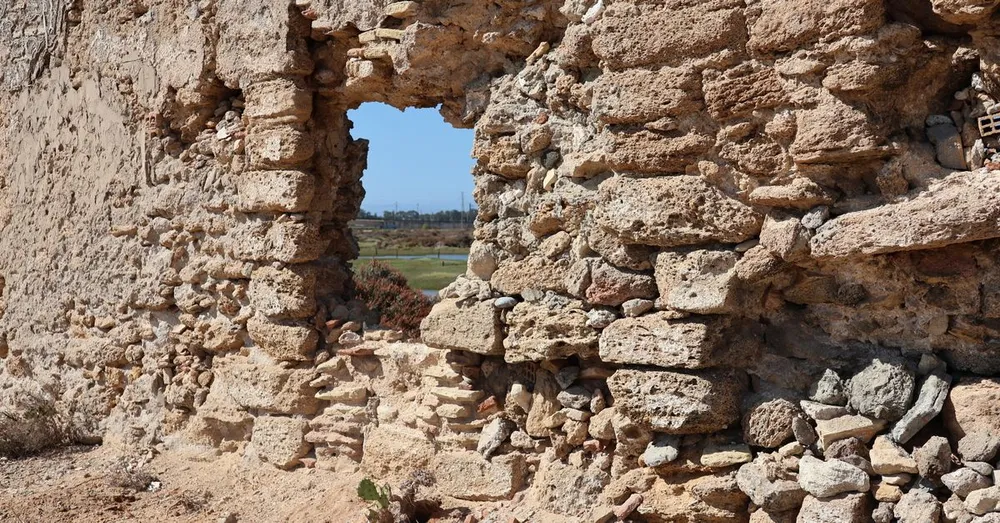
As you fly over the Guadeloupe “butterfly” on your landing at Pôle Caraïbes, you can still spot dozens of stone windmills scattered across Grande-Terre. Many lie in ruins, some have been restored, and all tell the same story: that of an island that lived three centuries to the rhythm of sugarcane. To understand the history of sugar in Guadeloupe is to grasp how an archipelago was shaped — in its geography, its economy, its population, and even its cuisine.
A resident of the island and a heritage enthusiast, I regularly take our travellers along these trails. Here is an accessible account that links the old stones to the flavours you’ll taste that very evening at a local lolo eatery.
In the beginning: white gold and the birth of the plantations
From the mid-17th century, sugarcane cultivation — introduced with know-how that came from Brazil — radically transformed the island. The early crops of tobacco and indigo gave way to a far more profitable monoculture: sugar, nicknamed white gold.
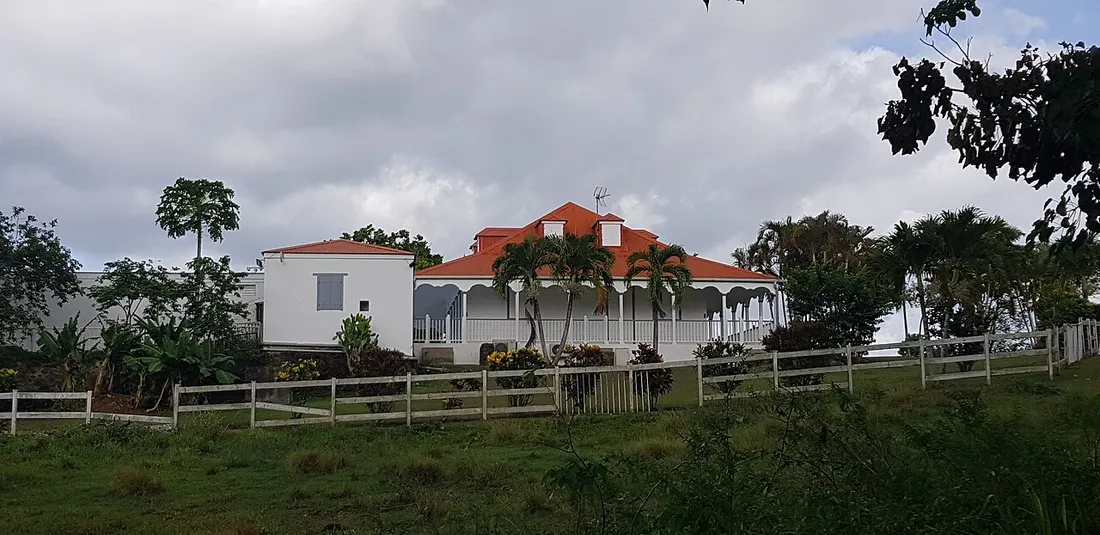
This economy was organised around a unique kind of unit: the habitation, or plantation estate. The word refers not to a mere house, but to a complete, almost self-sufficient agricultural domain.
A typical Guadeloupe plantation brought together:
- the master’s house, often set on high ground to catch the trade winds
- the slave quarters, lower down and set apart
- the mill (windmill in Grande-Terre, water- or animal-powered in Basse-Terre) that crushed the cane
- the sugar works with its boiling kettles where the vesou (cane juice) was cooked
- the curing house, where the sugar drained in earthenware moulds
This organisation left an indelible mark on the land: many place names and towns still bear the names of former plantations.
Why so many windmills in Grande-Terre?
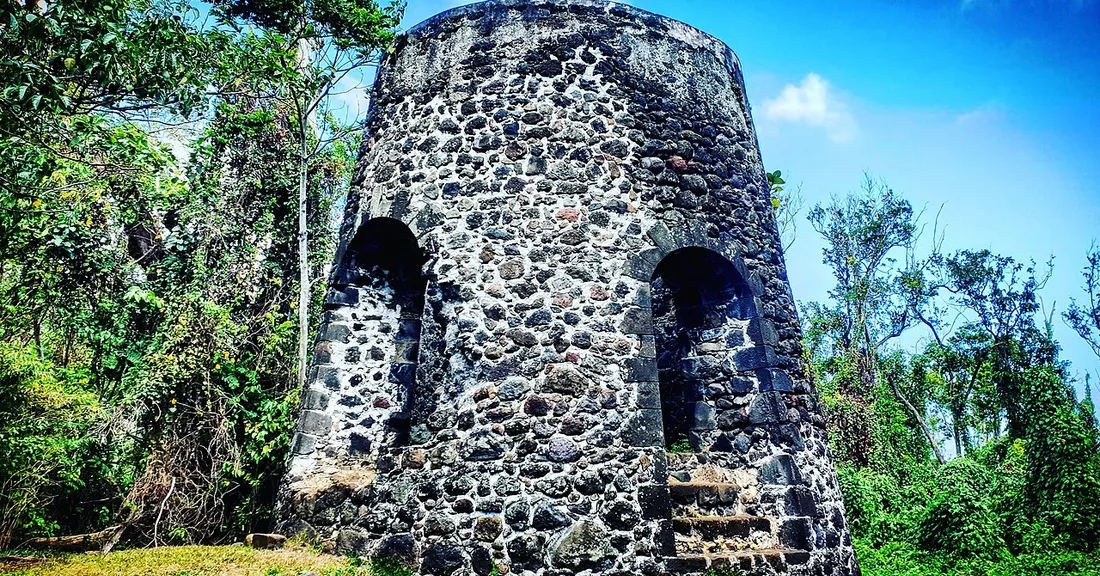
The answer lies in geography — a key point for understanding the archipelago. Grande-Terre, flat and limestone, is swept by the trade winds: so windmills were built here, perfect for a landscape without rivers. Basse-Terre, volcanic and mountainous (La Soufrière rises to 1,467 m), has abundant waterways: there, water mills were favoured. This simple contrast sums up the whole duality of the butterfly-shaped island.
Slavery, the tragic foundation of the sugar economy
You cannot tell the history of sugar without naming its human reality. The profitability of the plantations rested on the forced labour of hundreds of thousands of Africans deported through the transatlantic slave trade. This is the painful bedrock of Guadeloupe’s entire colonial heritage.
A few markers to place this memory during your stay:
- slavery was first abolished in 1794, then reinstated by Napoleon in 1802
- the definitive abolition came in 1848, championed notably by Victor Schoelcher
- 20 May is the date commemorating abolition in Guadeloupe, a public holiday widely observed
To delve deeper, the Mémorial ACTe in Pointe-à-Pitre (the island’s economic hub) is essential. Built on the site of a former sugar factory, this Caribbean Centre for the Memory of the Slave Trade and Slavery offers a powerful journey: reckon on around €15 for adult admission and 2 to 3 hours for the visit. To my mind, it’s the first stop for anyone who truly wants to understand the island.
From mills to factories: the industrial revolution of sugar
After 1848, the end of servile labour and competition from European beet sugar upended the model. The small artisanal plantations were no longer viable. Enter the central factories, large industrial units capable of processing the cane of an entire district.
This was the golden age of the great sugar mills of the late 19th and 20th centuries. A few heirs still operate today:
- the Gardel factory, at Le Moule (Grande-Terre), remains the archipelago’s last large sugar mill in operation
- the neighbouring Damoiseau distillery carries on producing rum from local cane
The sugar harvest (cutting and crushing) runs from February to June, peaking in March–April. If you come during the dry season (December to April), the best time, you’ll cross paths with trucks laden with Grande-Terre cane — a living image of this still-ongoing history.
Visiting the sugar heritage today: our favourite stops
Good news for the curious: the heritage is everywhere, and often free or inexpensive. Here are the sites I recommend, by area.
In Grande-Terre
- Le Moule: the historic cradle of cane, with the Gardel factory and fine windmills in the surrounding countryside
- the isolated windmills between Le Moule, Sainte-Anne and Saint-François: spot them from the road; several are freely accessible for a photo
- the Pointe-à-Pitre market: to connect history with gastronomy (spices, syrups, local cane sugar)
In Basse-Terre
- the Habitation La Grivelière, at Vieux-Habitants: a former coffee and cane estate, listed as a Historic Monument and one of the best preserved in the Caribbean (guided tour around €10)
- the Rum Museum (Reimonenq, Sainte-Rose): to understand the cane–sugar–rum chain, around €10 admission
Heading to Marie-Galante, “the island of a hundred mills”
If a single excursion were to embody this chapter of history, it would be Marie-Galante, 35 minutes by ferry from Pointe-à-Pitre or Saint-François (reckon on €25 to €35 round trip). Nicknamed the island of a hundred mills, it preserves an exceptional sugar heritage:
- the Bézard Mill, beautifully restored, which shows how a windmill really worked
- the Habitation Murat, a former estate turned ecomuseum, with its ruins and gardens
- the three legendary distilleries Bielle, Bellevue and Père Labat (Poisson), where the rum reaches up to 59 degrees
A full day is barely enough. Find all our practical pointers in our complete guide to Guadeloupe.
The imprint of sugar on Creole cuisine
Here is the loveliest extension of this history: it can still be tasted. The cane didn’t only produce sugar for export — it nourished a whole culinary culture that you’ll rediscover at every meal.
- agricultural rum (pure cane juice) and its cousin traditional rum (from molasses), the base of ti-punch and rhum arrangé (infused rum)
- batterie syrup (cane syrup), used in sauces and pastries
- the emblematic desserts: coconut blanc-manger, tourment d’amour from Les Saintes, coconut sorbets sold at the markets
To taste a ti-punch made with a rum distilled just a few kilometres from an 18th-century mill is to drink the island’s history in a glass. This African, Indian and Creole heritage can also be read in the colombo and the spices: three centuries of blending that became a source of pride.
Plan your stay following the trail of sugar
Exploring this heritage means choosing your base well. The Gosier / Sainte-Anne area, in Grande-Terre, is ideal: close to the airport, the turquoise beaches, and less than an hour from both the windmills of Le Moule and the ferry docks for Marie-Galante.
At Hostel Toucan, we offer holiday rentals with direct booking and no platform fees, free cancellation up to 7 days before arrival, and WhatsApp support 7 days a week to point you towards the best plantations to visit or to book your ferry. Discover our accommodation in Guadeloupe and craft a stay that blends beaches, history and Creole flavours.
Do you own a property on the archipelago? Our concierge service showcases it to travellers seeking authenticity and heritage: discover our owners offer.
In summary
The history of sugar in Guadeloupe is not a closed chapter: it lives on in the windmills of Grande-Terre, in the Gardel factory that still crushes cane, in the Mémorial ACTe, and in every ti-punch served on a terrace. Between Le Moule, Vieux-Habitants and Marie-Galante, this heritage trail gives a rare depth to a stay in the Caribbean, far beyond the lagoon.
FAQ
Why are there so many windmills in Guadeloupe?
Because Grande-Terre, flat and limestone, has no rivers but is swept by the trade winds: the windmill was the ideal solution for crushing cane there. Basse-Terre, volcanic and well-watered, used water mills instead. There were hundreds of mills at the height of the sugar economy, and many survive today, in ruins or restored.
Where can you best see the sugar heritage and colonial legacy?
Three complementary stops: the Mémorial ACTe in Pointe-à-Pitre (history of slavery, around €15), the Habitation La Grivelière at Vieux-Habitants in Basse-Terre (a listed estate), and above all Marie-Galante, “the island of a hundred mills,” with the Bézard Mill and the Habitation Murat. Allow a full day for Marie-Galante, reachable in 35 minutes by ferry.
What is a “habitation” (plantation) in Guadeloupe?
A habitation is not a house, but a complete, self-sufficient colonial agricultural estate: master’s house, quarters, mill, sugar works and curing house. It was the basic unit of the cane economy, founded on the forced labour of enslaved people. Many Guadeloupean place names still bear the names of these former plantations.
Does sugar cultivation still exist in Guadeloupe?
Yes. The Gardel factory, at Le Moule, remains the last large sugar mill in operation, and the cane also feeds the agricultural rum distilleries. The sugar harvest takes place from February to June, peaking in March–April. If you come during the dry season (December to April), you’ll see the harvested fields and the cane trucks crisscrossing Grande-Terre.