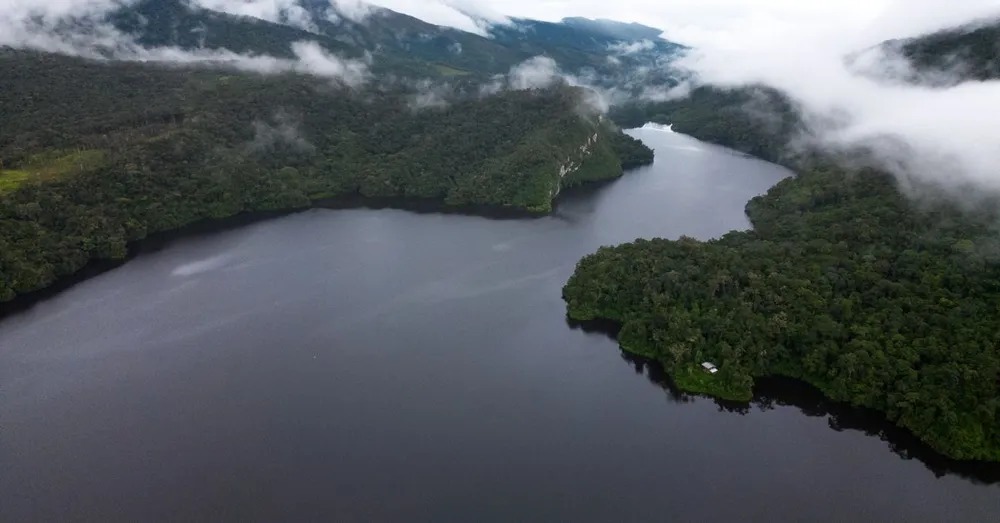
At the far eastern edge of French Guiana, where the Oyapock river traces the natural border with Brazil, hides one of the most spectacular aquatic sights of the French overseas territories: Saut Maripa. Far from the classic tourist trails of Cayenne or Kourou, this string of rapids offers a raw, authentic experience where the Amazon rainforest plunges into tea-coloured water. From Saint-Georges-de-l’Oyapock, a simple pirogue is all it takes to reach this site, which alone sums up the magic of eastern Guiana. Here is our guide to discovering it like a local.
What is a “saut” in French Guiana?
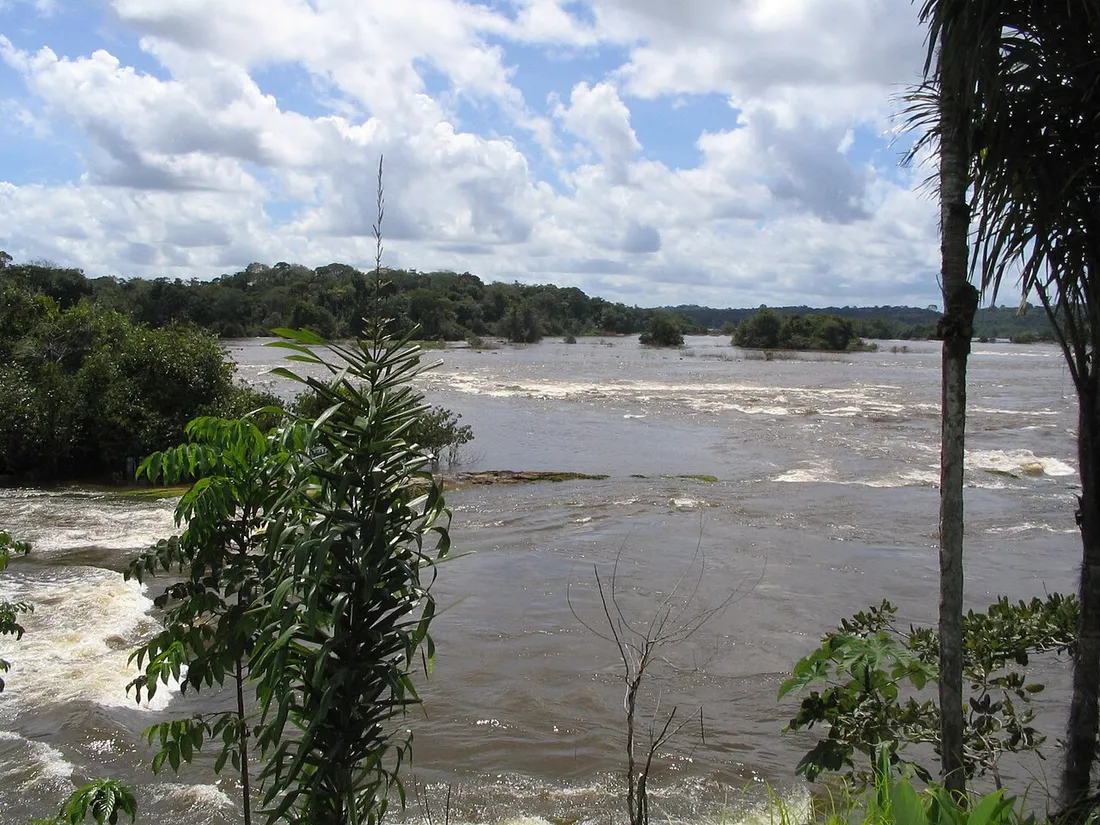
To fully understand the appeal of Saut Maripa, you first need to clear up a point of vocabulary. In French Guiana, a saut does not refer to a vertical waterfall, but to a succession of rapids: rocky thresholds where the river speeds up, churns and splits into turbulent channels. It is a legacy of the language of the pirogue pilots, for whom each saut represents an obstacle to clear or skirt around.
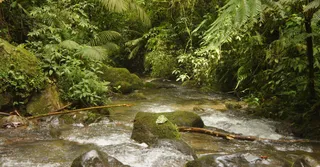
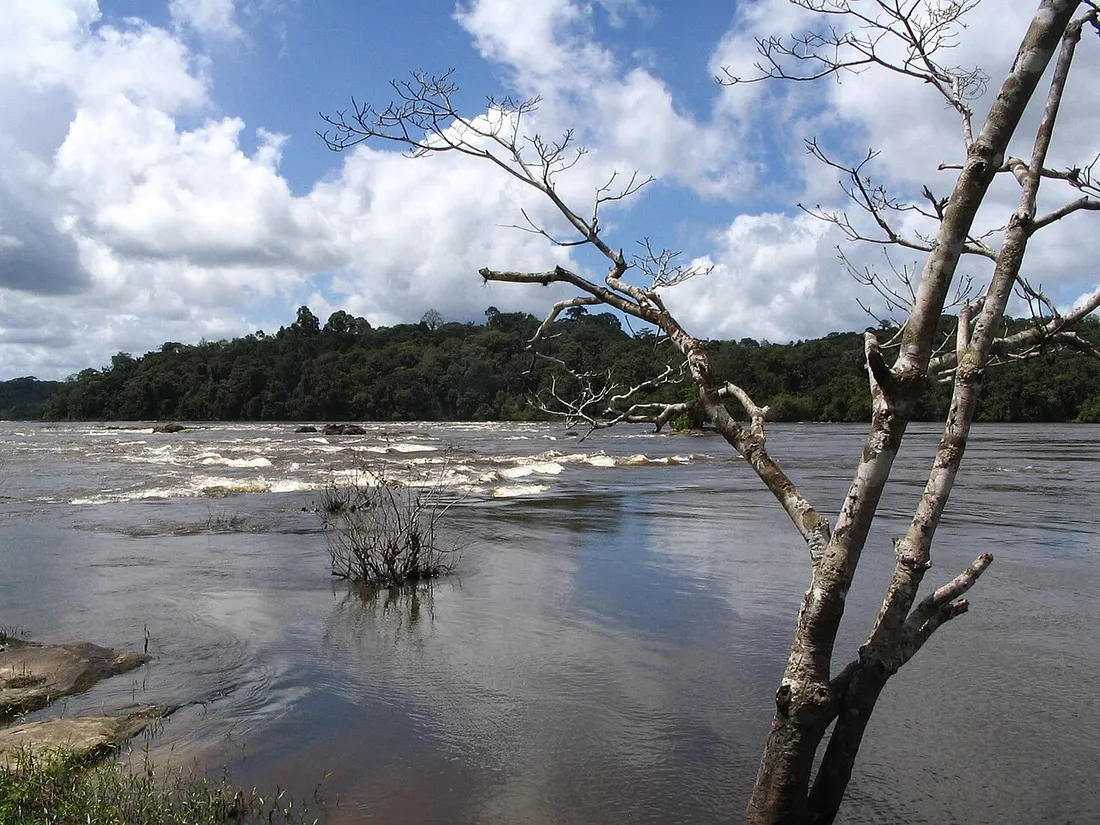
Saut Maripa is one of the most impressive on the Oyapock. Over several hundred metres, the water tumbles between slabs of granite polished by the centuries, forming channels, natural pools and rock beaches where you can settle. When the level is right, you can hear the roar well before you arrive.
Why Saut Maripa is worth the detour
- A backdrop of completely preserved primary forest, with no concrete development whatsoever.
- The rare feeling of being on the border between two countries: the opposite bank is the Brazilian state of Amapa.
- Water perfect for swimming in the calm pools, between two rapids.
- No crowds: here, you cross paths with more pirogue pilots than tourists.
Where is Saut Maripa located?
Saut Maripa lies on the Oyapock, upstream from Saint-Georges, the easternmost town in French Guiana. Saint-Georges is connected to Cayenne by the RN2, a fully paved road of about 190 km, meaning a 2.5 to 3-hour drive by car. It is the only road access, and it crosses spectacular forest landscapes, including the crossing of the commune of Regina.
Once in Saint-Georges, the road ends: the relay is the pirogue. You reach the saut by going up the river from the dégrad (the landing) of the town.
Practical landmarks
- Cayenne -> Saint-Georges: ~190 km, 2.5-3 hours via the RN2.
- Saint-Georges -> Saut Maripa by pirogue: about 30 to 45 minutes of navigation depending on the river level.
- Car essential: no reliable public transport serves this corner of French Guiana on a daily basis.
- Remember to fill up on fuel at Regina or Saint-Georges, as stations are scarce along the RN2.
Reaching the saut by pirogue: the heart of the adventure
The pirogue is the quintessential Guianese experience, and it is what gives the trip all its flavour. On the Oyapock, the pilots are often of Amerindian (Palikur, Karipuna) or Brazilian origin, and their knowledge of the river is unrivalled.
How to organise the trip
There is no formal ticketing: you book a pirogue with a local pilot, directly at the dégrad of Saint-Georges or through a host. A few realistic price guidelines:
- Half-day trip to Saut Maripa: expect 40 to 70 € per person depending on the size of the group.
- Privatising a pirogue (up to 6-8 people): often 250 to 400 € for the day, transport and waiting time included.
- A small additional contribution may be requested for fuel if the river level forces long detours.
Always negotiate the price before setting off, and confirm the return time. In the dry season, the low level makes some passages technical: trust the pilot who knows every rock.
On site: what to do at Saut Maripa?
- Swim in the calm pools (never in the rapids themselves).
- Picnic on the granite slabs, in the shade of the canopy.
- Watch the wildlife: kingfishers, macaws in flight, sometimes giant otters upstream.
- Photograph the contrast between the dark water and the white foam of the rapids.
Saint-Georges-de-l’Oyapock: much more than a departure point
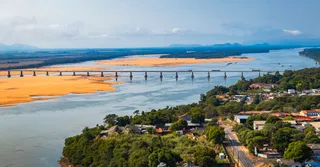
Don’t treat Saint-Georges as a mere stopover. This multicultural town, where Creoles, Amerindians, Bushinenge and Brazilians live side by side, has an atmosphere unique in French Guiana. From the central square, you can see Oiapoque, the Brazilian town across the water, linked by the binational bridge inaugurated about a decade ago.
To combine with your visit
- Stroll along the riverfront at sunset.
- Sample Brazilian cuisine in the town’s small restaurants (the real rubs shoulders with the euro).
- Push on to Trois-Paletuviers, an Amerindian village accessible by pirogue.
- For the more adventurous with the right papers, cross over to the Brazilian side for a lunch.
Be warned: the border zone is subject to gendarmerie checks. Keep your ID on you, and find out about the formalities if you plan to cross to the Brazilian side.
When to go: the best time
As everywhere in French Guiana, the climate sets the rhythm. The dry season, from mid-July to mid-November, is by far the best time to discover Saut Maripa:
- The tracks and the RN2 are more passable.
- The clear sky offers superb light on the rapids.
- The rock banks emerge, perfect for picnicking and swimming.
In the rainy season (December to June), the river swells, the rapids become powerful and spectacular, but some rock beaches disappear under water and swimming is riskier. Whatever the season, set off early in the morning to enjoy the cool air and active wildlife.
To slip into your bag
- Closed shoes that can go in the water (the rocks are slippery).
- Strong mosquito repellent and lightweight long clothing.
- Water, a picnic and a waterproof bag for photo gear.
- Cap, sunglasses and sunscreen: strong glare off the river.
- Cash (euros) to pay the pirogue pilot.
Practical info to prepare your Guianese stay
French Guiana is a French overseas department: you pay in euros, you speak French (and Creole, Amerindian, Bushinenge), and the time difference with Paris is -5h in winter, -6h in summer. The telephone code is +594. You arrive via Felix-Eboue airport in Matoury, near Cayenne.
Two formalities not to forget:
- The yellow fever vaccine is compulsory to stay in French Guiana.
- A car is essential: rent a vehicle from the airport to reach Saint-Georges and explore the east independently.
Saut Maripa pairs perfectly with a grand Guianese circuit: the Kaw marshes, the Nouragues reserve, the Maroni river on the western side, or even the Guiana Space Centre in Kourou. To organise everything stress-free, see our complete guide to French Guiana.
Where to stay in eastern French Guiana?
Saint-Georges offers a few simple lodgings, but many travellers choose to set up their base camp around Cayenne, Remire-Montjoly or Roura, then branch out. This is where Hostel Toucan comes in.
With Hostel Toucan, you book your accommodation in French Guiana directly, with no platform fees, with free cancellation up to 7 days before arrival and WhatsApp support 7 days a week to recommend a trustworthy pirogue pilot or adjust your itinerary according to the river’s weather. Discover our accommodation in French Guiana, ideally located to explore both east and west.
Are you an owner in the region and would you like to make your property profitable while offering your travellers a genuine local experience? Our concierge service takes care of everything: entrust us with your property.
Saut Maripa is authentic French Guiana, the kind you earn at the end of a road and a pirogue trip. A single day is enough to fill your eyes, and the memory lasts far longer.
FAQ
How do you get to Saut Maripa from Cayenne?
You first need to reach Saint-Georges-de-l’Oyapock via the RN2, about 190 km and 2.5 to 3 hours of paved road. From the dégrad of Saint-Georges, you then go up the Oyapock river by pirogue for 30 to 45 minutes to reach the saut. A car is essential and there is no reliable public transport.
How much does a pirogue trip to Saut Maripa cost?
Expect around 40 to 70 € per person for a half-day, or 250 to 400 € to privatise a pirogue for up to 6-8 people for the day. The price is negotiated directly with the pilot at the dégrad of Saint-Georges, and a fuel contribution may be added depending on the river level. Plan to have cash in euros.
What is the best time to visit Saut Maripa?
The dry season, from mid-July to mid-November, is ideal: a more passable road, beautiful light, emerged rock banks perfect for swimming and picnicking. In the rainy season, the rapids are more powerful and spectacular but swimming becomes riskier and some rock beaches disappear under water.
Can you cross to the Brazilian side from Saint-Georges?
Yes, the Brazilian town of Oiapoque lies just across the water, linked by a binational bridge. Crossing is possible with a valid ID and according to the formalities in force. The border zone is subject to gendarmerie checks: keep your papers on you and find out before any crossing to the Brazilian side.