My first Ash Wednesday in Guadeloupe caught me off guard. After three “fat days” of drums and color, I expected one last dazzling party. Instead: a march in black and white, mourning chants, and at the end of the seafront a huge paper figure burning in the night while the crowd wept, half-laughing, half-overwhelmed. That day I understood that Vaval, in Guadeloupe, on Ash Wednesday, is not the end of the party: it is its most powerful ritual, a symbolic burial that no guidebook had ever really explained to me. Here is what I wish I had known before finding myself there.
Who is Vaval, the king they burn
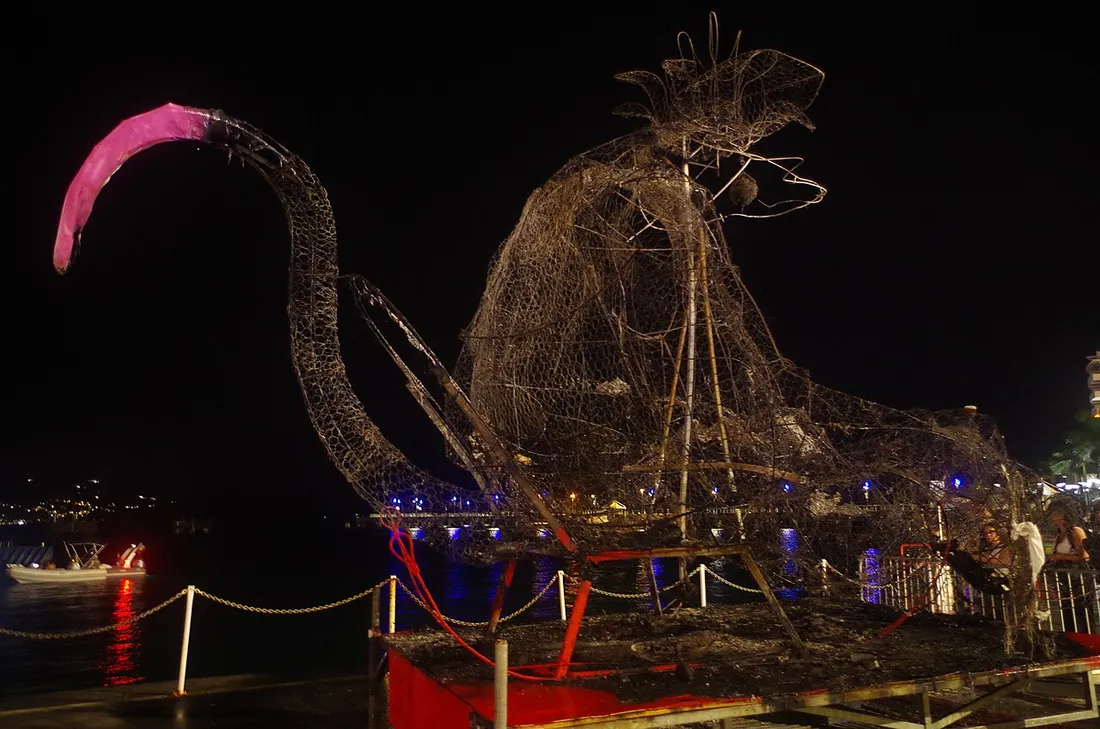
Vaval is the carnival king, embodied by a monumental effigy made of papier-mache, wood and cardboard, built over weeks by neighborhood groups and committees. But he is no mere festive doll: Vaval is a satirical mirror of the year gone by. Depending on the town, he takes on the features of a political figure, a local scandal, a personality in the news or a social theme. He is laughed at, paraded, celebrated like a sovereign… the better to condemn him to the pyre a few days later.
This dimension of social derision is essential. Guadeloupean carnival is historically a space of free speech, born of a culture of resistance, where the mask lets you say what is left unsaid elsewhere. By burning Vaval, the community symbolically exorcises the year’s failings. That is why his cremation stirs so much emotion: it is not just a dummy being burned, it is an entire season being settled.
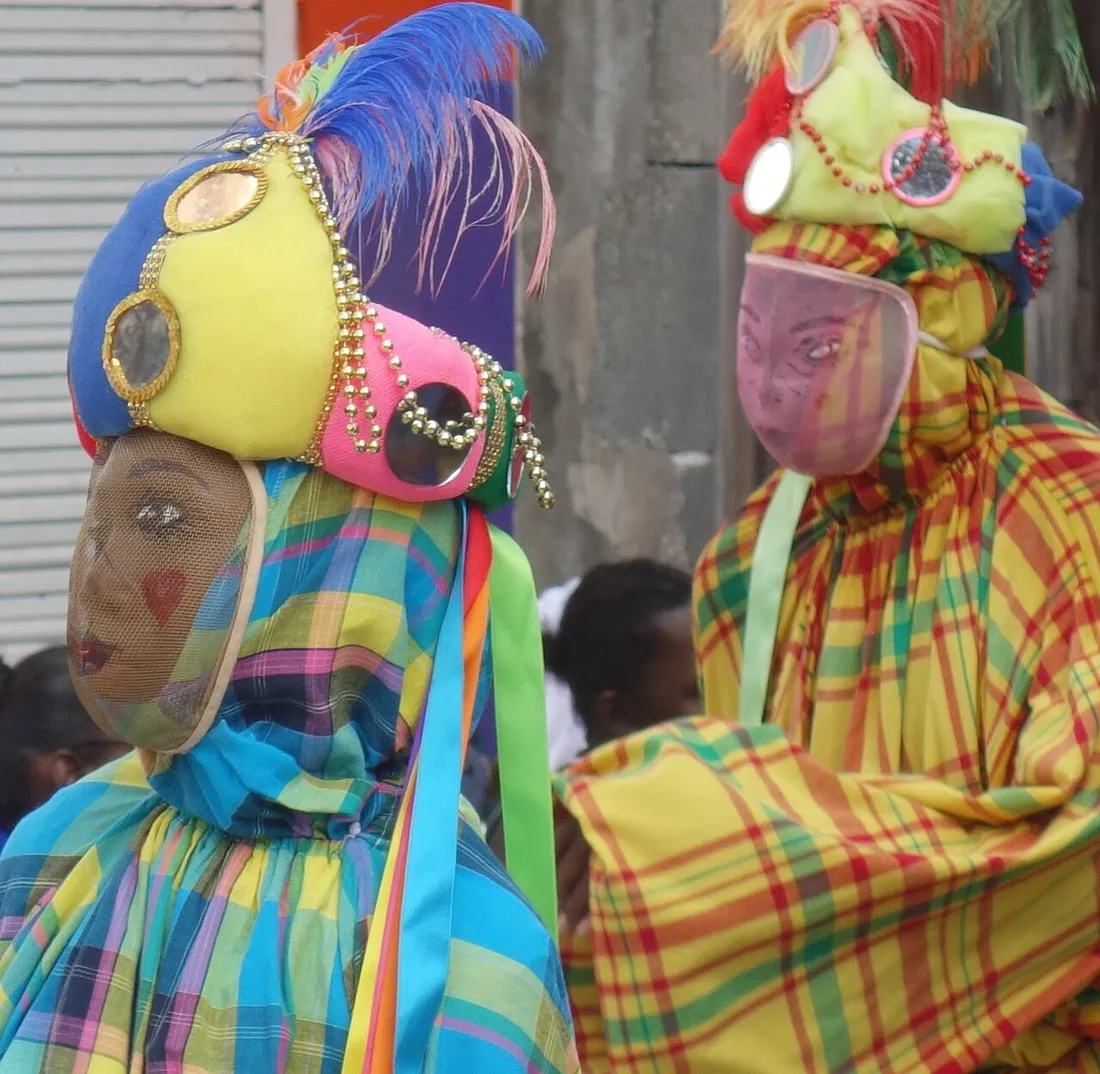
The ritual of Vaval’s cremation
Ash Wednesday marks the entry into the Catholic Lent, and it is on that day, at nightfall, that the cremation of Vaval unfolds. The script, repeated from one town to the next, always follows the same dramaturgy:
- The funeral procession: Vaval is paraded one last time through the streets, often carried or rolled down to the seafront.
- The mourners: participants, men included, play the grieving widows, wailing loudly over the fate of the dead king.
- The ritual chant: the crowd repeats over and over “Vaval pa kite nou” (“Vaval, don’t leave us”), a litany at once funny and poignant.
- The blaze: the effigy is raised and then given to the flames, facing the sea, sometimes accompanied by fireworks.
When the fire catches, the mood shifts: laughter mingles with tears (often feigned, sometimes sincere), the drums slow down, and everyone understands that Lent has begun. The next day, silence settles back over the butterfly-shaped archipelago. It is this swing from exuberance to contemplation that makes Ash Wednesday the most singular moment of the entire season.
The black-and-white code: the day of the diablesses
If you remember just one practical instruction, let it be this: on Ash Wednesday, you dress in black and white. This color code, strictly observed, expresses the mourning of the carnival king. The streets shed the pinks, golds and reds of the previous days to drape themselves in these two funereal shades.
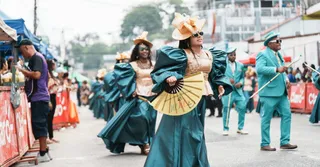
The emblematic figures of the day are the black-and-white diablesses (she-devils, also called mas a Lan Mo, the masks of death). Dressed in long two-tone gowns, their faces powdered or masked, they embody the spirits who come to fetch Vaval. Their slow, theatrical wandering contrasts with the energy of the previous day’s parades. Here is my resident’s advice, if you want to blend into the ceremony rather than watch it from the outside:
- Wear black and white, even something simple (a white top and black bottom will do).
- Stay discreet with the camera: this is a solemn moment, ask before taking close-up photos.
- Arrive before nightfall to get a spot along the seafront, since the blaze takes place after dark.
- Bring water and closed shoes: you walk, you wait, and the crowd is dense near the pyre.
And what about the bradjaks?
You cannot talk about Guadeloupean carnival without mentioning the bradjaks. The word refers to those dilapidated old cars, repainted, jury-rigged and overloaded, turned into noisy rolling floats. Souped-up horns, customized bodywork, occupants clinging to the doors: the bradjaks are the carnival’s popular humor on four wheels, an unabashed reinvention of the automotive wreck into an object of celebration.
You come across them mostly during the fat days, more than on Ash Wednesday itself, which is more solemn. But they belong to the same universe as Vaval: that art of turning rubbish into spectacle, of poking fun at what is worn out or serious. Spotting a well-decorated bradjak means grasping the irreverent spirit that runs through the season and culminates in the king’s burning. To locate the towns and plan your days, our complete guide to Guadeloupe gives the big picture.
Where Vaval’s blaze is most spectacular
The cremation is experienced everywhere across the archipelago, but the intensity varies from town to town. Here, from experience, is where the blaze leaves the strongest mark:
- Pointe-a-Pitre: the economic hub offers the most massive ceremony, around the Place de la Victoire and the seafront. Large crowd, huge effigy, strong emotional charge.
- Basse-Terre: the prefecture, watched over by the Soufriere (1,467 m), offers a more telluric, rugged cremation, carried by the energy of groups like Voukoum facing the bay.
- Le Moule: on the Atlantic coast of Grande-Terre, the seaside blaze, more popular and local, is worth the trip for its authenticity.
- Sainte-Anne and Le Gosier: more intimate ceremonies in Grande-Terre, ideal if you are staying near the turquoise beaches and want to avoid the crush of the big towns.
Allow 45 minutes to 1 hour of driving between the south of Grande-Terre and Basse-Terre: choose your town the day before so you are not rushing on the night itself.
Where to stay to live this moment
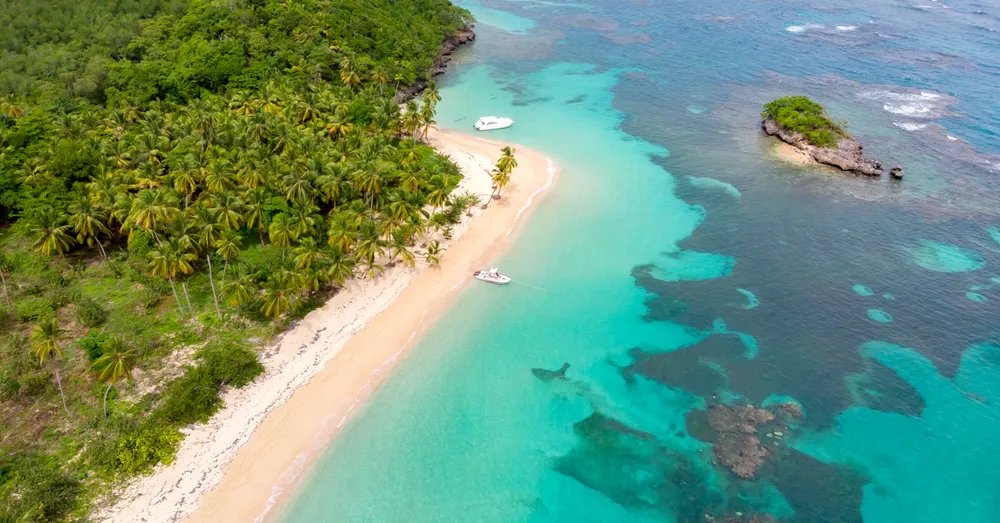
Ash Wednesday closes the fat days, a local high season when accommodation goes fast, in the middle of the dry season (December to April, around 28-30 degrees). My advice: book early and base yourself in Grande-Terre (Le Gosier, Sainte-Anne, Saint-Francois) to combine turquoise beaches by day with the ceremony in the evening, while staying within reach of Pointe-a-Pitre and Basse-Terre. Between two highlights, a morning of snorkeling at the Pigeon Islets in the Cousteau Reserve balances out the stay. For well-located accommodation, browse our rentals in Guadeloupe.
Why book with Hostel Toucan
We live here and we follow the carnival every year, all the way to Vaval’s last fire. By booking directly with us, you get:
- Direct booking with no platform fees: you pay the fair price.
- Free cancellation up to 7 days before arrival, so you can book with peace of mind.
- WhatsApp assistance 7 days a week: the time and place of the cremation, the right seafront, a nighttime route? We answer fast.
Do you own a property in Guadeloupe and are interested in the strong demand of the carnival season? Discover our support on the owners page.
Ash Wednesday is not carnival’s hangover: it is its climax. Once you have seen Vaval burn facing the sea, surrounded by black-and-white diablesses, you will never again look at the festival as a mere parade.
FAQ
Why is Vaval burned on Ash Wednesday in Guadeloupe?
Vaval is the papier-mache effigy that embodies the carnival king and, through derision, the failings of the year gone by. Burning him on Ash Wednesday marks the end of the fat days and the entry into Lent: the community symbolically settles the season by giving the king to the flames, facing the sea, to the sound of “Vaval pa kite nou”.
Why do people dress in black and white on Ash Wednesday?
Black and white expresses the mourning of the carnival king. On that day, the bright colors of the fat days give way to these two funereal shades. The emblematic figures are the black-and-white diablesses, two-tone-gowned silhouettes who embody the spirits coming to fetch Vaval. Wearing these colors lets you take part in the ceremony rather than watch it from the outside.
What are the bradjaks of Guadeloupean carnival?
Bradjaks are dilapidated old cars, repainted and jury-rigged, turned into noisy rolling floats. You come across them mostly during the fat days. They embody the popular, irreverent humor of carnival, the very spirit of derision that culminates in Vaval’s cremation.
In which towns can you see the most spectacular cremation of Vaval?
Pointe-a-Pitre offers the most massive ceremony, around the Place de la Victoire. Basse-Terre offers a more telluric blaze beneath the Soufriere. Le Moule, on the Atlantic coast, is worth the trip for its authenticity, while Sainte-Anne and Le Gosier host more intimate ceremonies in Grande-Terre.