The official viewing sites at the Guiana Space Centre are free, but places are limited and registration fills up fast. Good news: you do not need to be registered to see a launch. Kourou is a small town sitting about ten kilometres from the launch pad, with the ocean in front of it and a wide open horizon. From several entirely public spots, the rocket is clearly visible as it climbs — and clearly audible too. Here is how to go about it, what you will actually see, and the mistakes that spoil the evening.
The principle: find a clear horizon to the north-west
From the town of Kourou, the launch pad lies to the north-west, about ten kilometres away. You will not see the launcher on the ground: vegetation and terrain hide it. But the moment it clears the horizon line — a few seconds after ignition — it becomes perfectly visible, and you can then follow the ascent for several minutes.
Three criteria make a good free spot, in this order:
- A clear horizon to the north-west, with no buildings, no row of coconut palms, no hill.
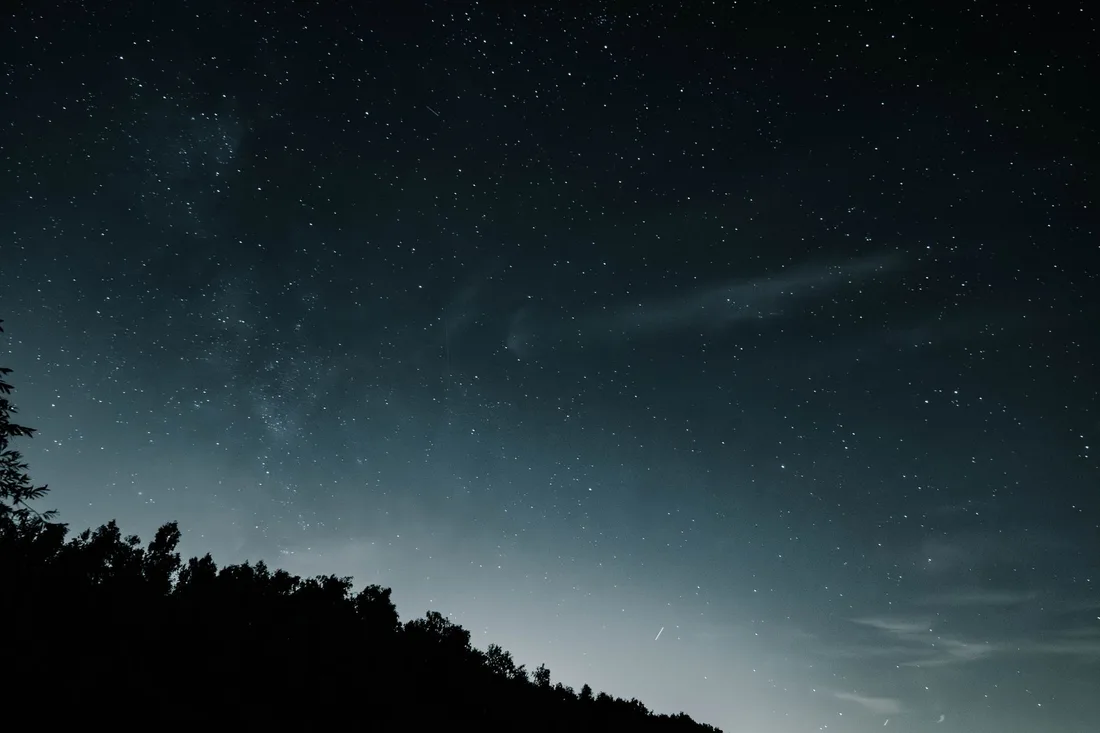
- Little street lighting, decisive for a night launch and for photographs.
- Somewhere to park and an exit that will not trap you in traffic on the way back.
The sound arrives roughly 3 seconds per kilometre after the image: at around ten kilometres, expect a delay of about thirty seconds. Do not leave at lift-off — the best moment comes just after.
The best public spots in Kourou
The seafront and the beaches
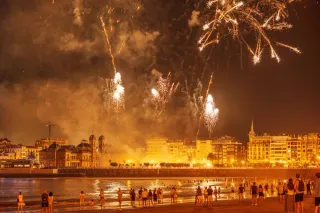
This is the default choice, and the most reliable. The ocean guarantees an obstacle-free view, there is plenty of space, and the atmosphere is good on launch nights: locals gather there with their families. Look for a stretch oriented so that the north-west is clear, and move away from street lamps if the launch is at night.
Watch out for: soft sand with folding chairs, mosquitoes from dusk onwards, and the tide, which can shrink the beach dramatically at certain hours. Bring repellent and check the tide times.
The esplanades and open spaces in town
Kourou has several open squares and esplanades, notably around the public facilities and the place des Fusées. The upside: easier parking, hard ground, and a quicker exit than from the seafront. The downside: more street lighting and sometimes a few buildings in the sightline. Scout the exact spot the day before.
High ground and viewpoints
Any slightly elevated position with a clear view to the north-west works better than a spot at ground level. The Montagne des Singes area, north of Kourou, is often mentioned: the view is lovely, but be warned that access and parking are limited on launch nights, the road is unlit, and the trail cannot be walked in the dark. Save it for daytime launches, and arrive very early. Our guide to the Montagne des Singes trail sets out the access conditions.
From your accommodation
This is the most underrated option. A balcony, a terrace or a roof facing the right way beats the finest public spot reached late and in the crowds. If you are booking a place in Kourou for a launch, ask about the orientation before you book — which is exactly what a video walkthrough lets you check.
From Cayenne and Rémire-Montjoly
At around 60 km, you will see a very bright point of light and a trail, superb at night, discreet by day, and without the sound. It is not the same experience, but it is free and requires no travel. The full breakdown of distances and what you perceive at each one is in our article on what a launch really looks like depending on distance.
What you need to know about closures
On launch day, a safety perimeter is set up around the pad: certain roads and coastal areas are closed, sometimes several hours in advance. These closures do not affect the town of Kourou itself, but they can block an access route you had scouted, particularly towards the north-west of the commune.
Two reflexes:
- Check the restrictions in force on the day with your host or through local information channels.
- Have a plan B less than ten minutes from your plan A.
Our article on roads and beaches closed on launch days explains how these perimeters work.
Planning the evening, hour by hour
- The day before: scout your spot at the same time as the scheduled launch. This is the single most valuable tip on this page: you will see the real lighting, the obstacles and the parking.
- T-2 h: set off. Open spots fill up, and traffic gets heavier in Kourou on launch evenings.
- T-1 h: settle in, set up your camera, work out the exact direction of north-west.
- T-10 min: put away any phones you do not need, switch off the lights around you if the launch is at night.
- T0: do not look at your screen. Look at the sky.
- T+30 s or so: the sound arrives.
- Afterwards: wait 15-20 minutes before leaving, so the traffic can clear.