Contrary to what you might assume, the question is not “when are there the most launches?” — flights are spread across the whole year, and their schedule depends on satellites, not seasons. The real question is: when do I have the best chance of actually seeing the lift-off, at the best price? And there, the answer is clear-cut. Here is how to pick your window.
The only factor that really counts: the sky
A launch goes ahead whether it rains or not — barring extreme conditions. But a low cloud ceiling can swallow the rocket within seconds, and you will have crossed the Atlantic to hear a rumble without seeing a thing. That is risk number one, well ahead of a postponement.
In French Guiana, the sky follows a very readable calendar:
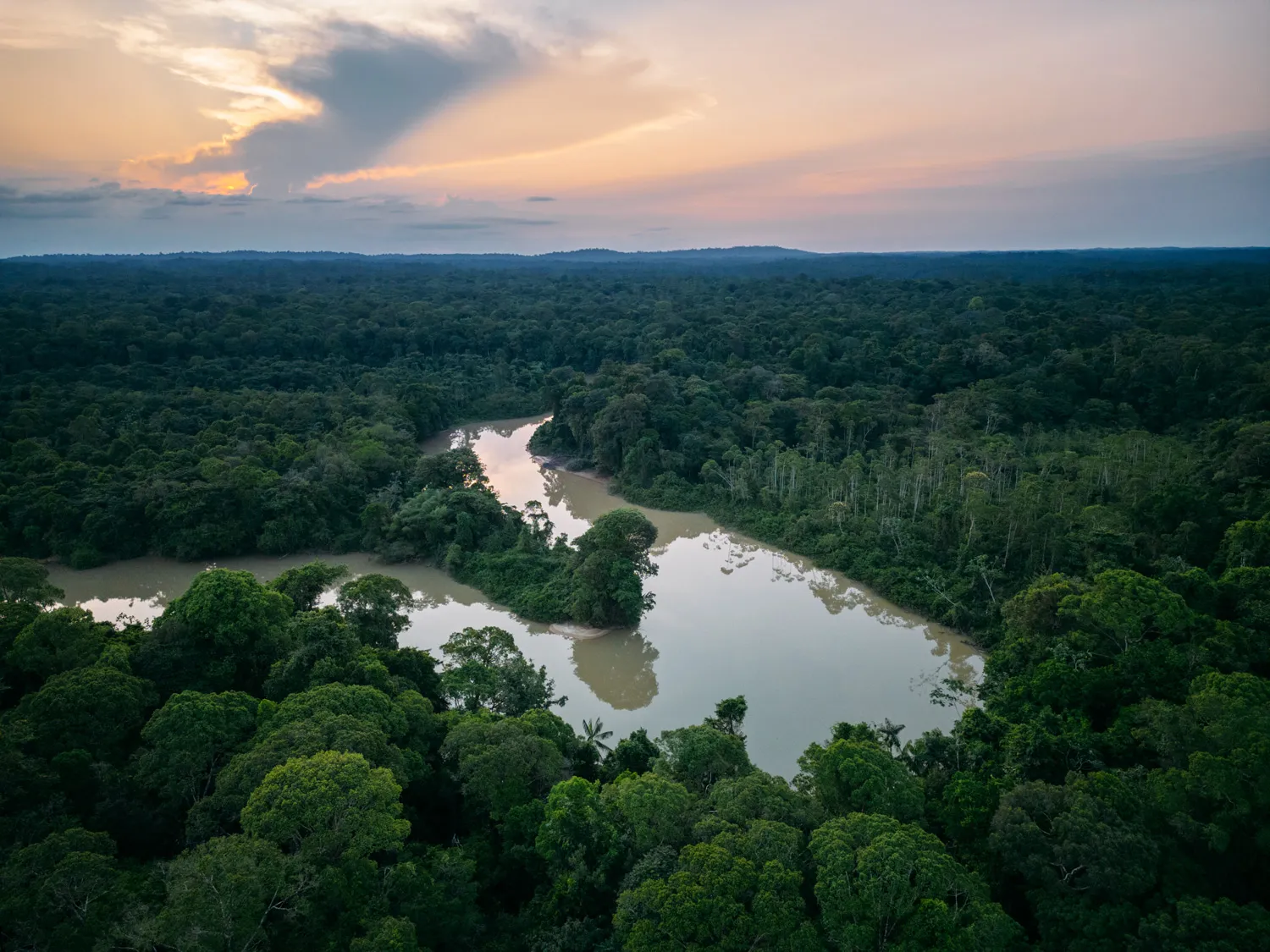
- Main dry season: July to late November. Clear skies most of the time, short showers. This is when your chances of seeing the lift-off in good conditions are highest.
- Rainy season: December to July, peaking from April to June. Frequent showers, low ceilings, persistent cloud cover. It is also the period when weather postponements are statistically most numerous.
- The “little summer of March”: a relative lull, and a useful secondary window.
The climate itself barely varies: 30 to 33 °C during the day all year round, 22 to 24 °C at night. The only thing that changes is the rain. See when to visit French Guiana.
The best compromise of the year: mid-September to mid-November
If you only remember one window, it is this one, for three reasons that stack up:
- You are in the heart of the dry season, so with the best possible sky.
- You are outside French school holidays, so with markedly cheaper flights — the gap can exceed €400 on a return ticket.
- Pressure on accommodation and rental cars is lower than in July and August.
It is the best price/weather ratio of the year, by a long way.
The other periods, upsides and limits
July and August
For: the dry season starts in mid-July, the weather is good, and it is the only time many families can travel.
Against: these are the French school holidays. Flights at their peak, accommodation stretched, rental cars scarce. If it is your only window, book very early — see the booking countdown.
December to March
For: this is the season of the Guianese carnival, the longest in the world, running from Epiphany to Ash Wednesday. A trip combining a launch and the carnival has unbeatable cultural density.
Against: rainy season, so a heightened risk of a blocked sky and a postponement. And accommodation saturates for a second reason, unrelated to launches. See the Guianese carnival in Cayenne and French Guiana in winter.
The end-of-year holidays combine the two worst factors: flights at their most expensive and availability at its lowest.
April to June
For: few people about, spectacular vegetation, waterfalls in full flow.
Against: this is the heart of the rainy season, with the highest rainfall of the year. It is the least favourable period if you hope to see a lift-off in good conditions.
The decision table
| Period | Sky | Flight prices | Verdict |
|---|---|---|---|
| Mid-September to mid-November | Excellent | Low | The best choice |
| July and August | Good | High | Fine if it is your only window |
| December to March | Average | High over the holidays | Worthwhile for the carnival |
| April to June | Poor | Average | Avoid for a launch |
The calendar that really matters: the launch schedule
The season optimises your chances; the launch calendar decides your dates. Two reflexes:
- Check the launch schedule and cross-reference it with the seasonal window. See the 2026 launch calendar in Kourou and the Ariane 6 and Vega-C launch schedule.
- Think in terms of a period, not a date. A launch window is never firm: it can slip by anything from 24 hours to several weeks. See why a launch is postponed.
The format that works: aim for a week in the dry season around an announced slot, rather than a tight return trip pinned to a single date.