Cayenne is as much a place to taste as it is to visit. On a single street, you go from a pot of Creole colombo to a bowl of steaming Vietnamese soup, then to a beef skewer grilled southern-Brazilian style. For anyone wondering where to eat in French Guiana without falling into tourist traps, here’s the map I share with our travellers after several years roaming the carbets, markets and churrascarias of the coast. No official ranking, no sponsored addresses: just the field.
Why Cayenne is a capital of culinary blending
French Guiana is a French overseas department and region of around 290,000 inhabitants, where Creoles, Bushinenge (descendants of the Maroni Maroons), Amerindians, Hmong, Brazilians, Haitians, Chinese and mainland French cross paths. This mosaic reads straight off the plate. You pay in euros, you speak French and Creole, and you often eat at gentler prices than on the mainland for street food, a little higher for imported products.
In practice, expect:
- 5 to 9 EUR for a market dish (bouillon, bami, pho to go)
- 12 to 20 EUR for a sit-down Creole dish
- 20 to 30 EUR for an all-you-can-eat Brazilian churrasco
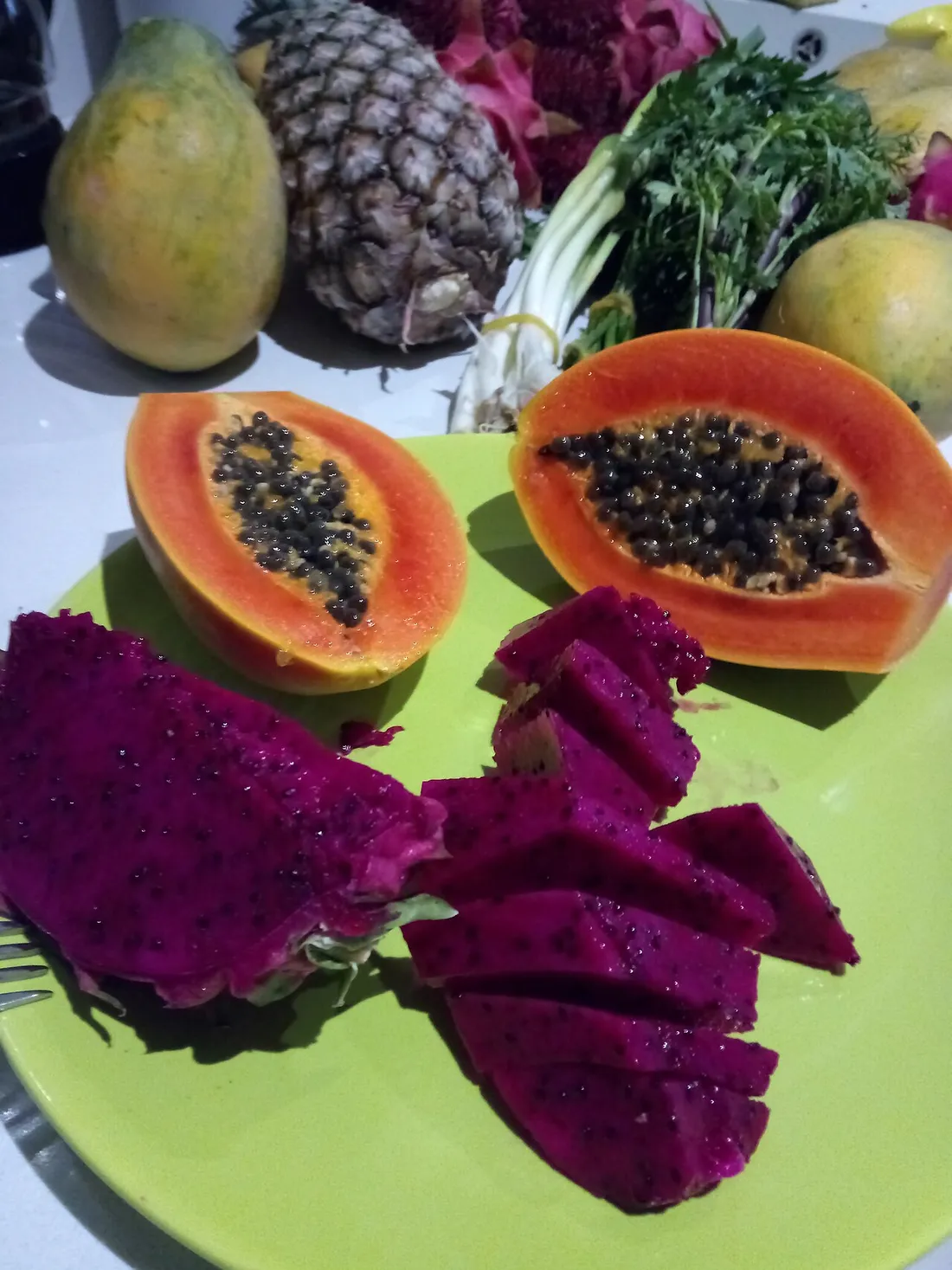
- 2 to 4 EUR for a fresh fruit juice (maracuja, comou, June plum)
A small local reflex: many carbets and family tables close early in the evening and shut on Sunday afternoon or Monday. Call ahead (dialling code +594) and account for the time difference if you book from the mainland: -5h in winter, -6h in summer compared to Paris.
Creole cuisine: the soul of the fish carbets
You can’t talk about Guianese gastronomy without starting with Creole. It’s the foundation: mild spices, coconut milk, chilli you dose yourself, and fish that came out of the water that very morning.
The Cayenne market, your starting point
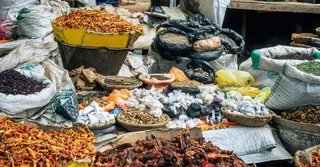
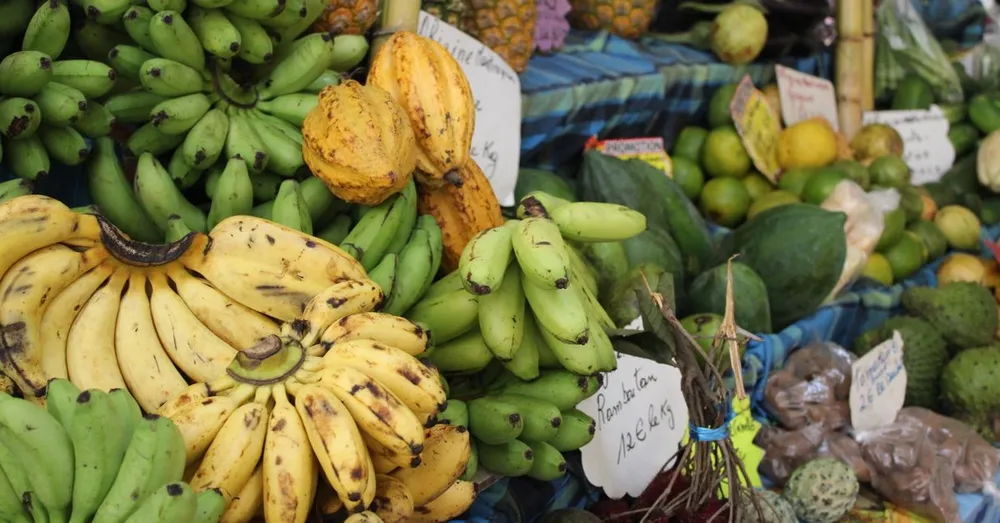
The covered market of Cayenne, right in the centre, is the best training ground. On Wednesday, Friday and Saturday mornings (arrive before 9am for the atmosphere), the Hmong and Creole stalls serve aiwa bouillons, bami and nems for a few euros. This is where you taste the bouillon d’awara, an emblematic dish made from the pulp of the awara fruit, simmered for hours with smoked meats, fish and shrimp. They say that whoever eats it always returns to French Guiana.
The Creole dishes not to miss
- Fish fricassee (atipa, acoupa) in coconut milk
- Colombo of chicken or goat, inherited from Indian indentured labourers
- Blaff, a spiced fish or shrimp court-bouillon
- Pimentade, fish simmered in a tomato-chilli sauce
- Bush game at certain tables in the interior (legal and regulated)
For the setting, look for the fish carbets on the road to Remire-Montjoly and along the coast. A carbet is that open structure roofed with sheet metal or leaves, without walls: you eat facing the mangrove or the estuary, your feet almost in the sand at low tide. Plan for a car, indispensable in French Guiana, as these spots are rarely reachable on foot from the centre.
Cacao and Hmong cuisine: Asia in the heart of the forest
About 75 km from Cayenne, or 1h15 to 1h30 of driving along the N2 then the D6 toward Roura, the village of Cacao is one of French Guiana’s best-kept secrets. This Hmong community, settled in the late 1970s, turned the forest into market gardens and exceptional tables.
Sunday morning in Cacao
The Sunday morning market in Cacao is a ritual. People come from all along the coast for:
- A pho soup or a pork noodle soup, served steaming in generous bowls (around 6 to 8 EUR)
- Nems and spring rolls of rare freshness
- Lemongrass grilled pork and green papaya salads
- Fruit and vegetables grown on site, among the best in French Guiana
Arrive early (before 10am) as the market empties fast, and take the chance to visit the small insect museum, Le Planeur Bleu. Tip: combine the outing with a river trip or a night in a carbet toward Roura. The journey is well worth it, and it’s one of the experiences our travellers cite most often on their return.
Churrascos and Brazilian flavours: the neighbour’s influence
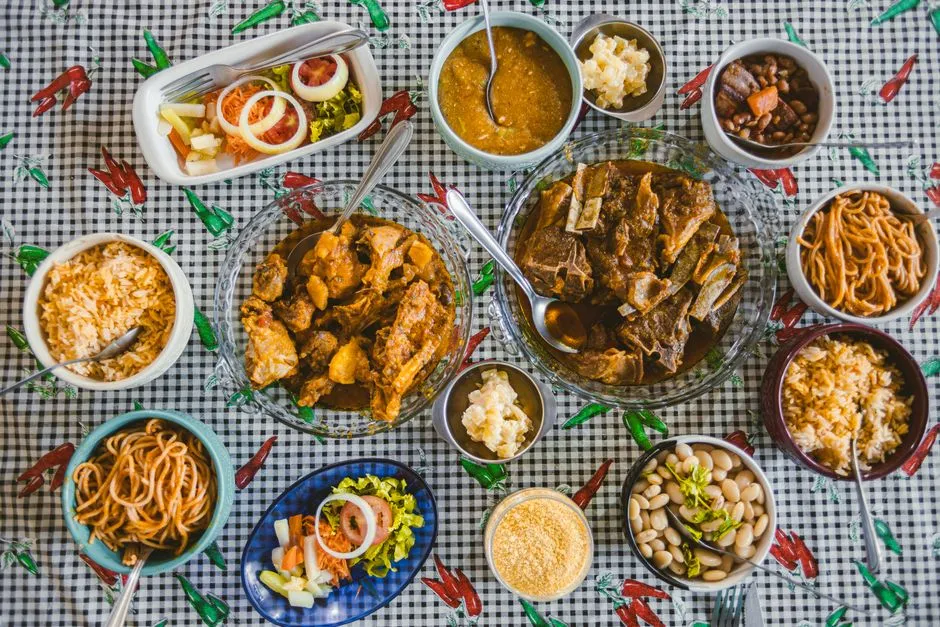
The Brazilian border is just on the other side of the Oyapock, and that proximity is felt everywhere, especially in the working-class neighbourhoods of Cayenne and in Matoury. Brazilian cuisine there is generous, meaty and convivial.
All-you-can-eat churrasco
The churrasco (or rodizio) remains the flagship experience. You’re served at the table, skewer after skewer, picanha, chicken hearts, sausages and grilled offal, until you flip the little green/red token to “no thanks”. Expect 20 to 30 EUR per person for an all-you-can-eat meal, salad buffet and feijoada included. Go with an empty stomach.
Everyday Brazilian snacks
- Tacacá, a tangy soup with shrimp and tucupi, sold in the street at night
- Pastéis, fried fritters stuffed with meat or cheese
- Fresh caipirinha, perfect after a hot day
- Açaí in a thick bowl, the local energiser par excellence
Building your gourmet tour over a few days
To make the most of it, here’s a mini-itinerary I often recommend, built around Cayenne and the neighbouring towns (Remire-Montjoly, Matoury, Macouria, Roura):
- Day 1 — Central Cayenne. Market in the morning (bouillon, bami), Creole lunch near the Place des Palmistes, fresh fruit juice on a terrace.
- Day 2 — The coast. Fish carbet at Remire-Montjoly, a swim and a fricassee facing the sea.
- Day 3 — Cacao (on Sunday). Hmong soup at the market, return via Roura.
- Day 4 — Brazilian evening. All-you-can-eat churrasco at Matoury or Macouria.
A few common-sense practical reminders: the dry season, from mid-July to mid-November, is the best period to drive between these spots (passable tracks, lively markets). The yellow fever vaccine is mandatory to come to French Guiana. And Felix-Eboue airport, in Matoury, drops you about fifteen minutes from the first good tables. To plan the rest of the stay between two meals, our complete guide to French Guiana details the must-sees and logistics: Kourou Space Centre, Salvation Islands, Kaw marshes, Maroni river by pirogue.
Staying well to roam the best tables
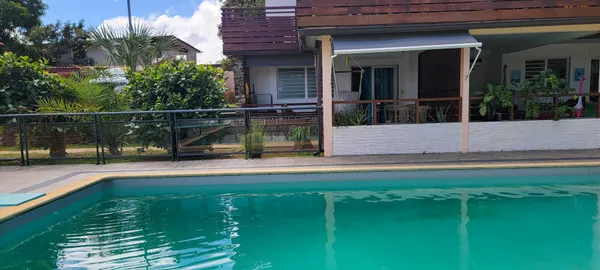
The secret of a good culinary tour is a central, comfortable base, from which to set off for the market in the morning and come back relaxed after a churrasco. At Hostel Toucan, we manage holiday rentals in French Guiana designed for just that: well located in Cayenne and around, with a fully equipped kitchen to cook your market finds.
Booking direct means:
- No platform fees on your reservation
- Free cancellation up to 7 days before arrival
- WhatsApp support 7 days a week for your questions, including our best spots of the moment
Do you own a property on the coast and like the idea of hosting these food-loving travellers? Discover our concierge service for owners: we handle everything, from welcome to cleaning.
French Guiana is discovered through the palate as much as through the eyes. Between a fish carbet at sunset, a bowl of Hmong soup in the forest and a Brazilian skewer shared late at night, you already hold the finest memories of your stay. Bon appetit, or as they say here: bon manjé!
FAQ
Where to eat in French Guiana to discover local cuisine on a budget?
The covered market of Cayenne (Wednesday, Friday and Saturday mornings) is the best starting point: Creole bouillons, bami and Hmong soups for 5 to 9 EUR. For sit-down Creole food, aim for the coastal fish carbets at Remire-Montjoly, and for Hmong cuisine, the Sunday morning market in Cacao.
What is a fish carbet?
It’s an open structure, roofed with sheet metal or leaves and without walls, where fresh fish (fricassee, blaff, pimentade) is served facing the mangrove or the estuary. You’ll find them along the Guianese coast, notably on the road to Remire-Montjoly. A car is essential to get there.
How do you go and eat Hmong in Cacao from Cayenne?
Cacao is about 75 km from Cayenne, or 1h15 to 1h30 of driving along the N2 then the D6 toward Roura. The event is the Sunday morning market: arrive before 10am for the pho soup, the nems and the locally grown fruit. A car is necessary.
What budget should you plan for a Brazilian churrasco in French Guiana?
Expect 20 to 30 EUR per person for an all-you-can-eat churrasco (rodizio), with skewers served at the table, salad buffet and feijoada included. You’ll find them mainly in the working-class neighbourhoods of Cayenne and in Matoury. Come with an empty stomach.